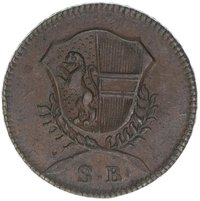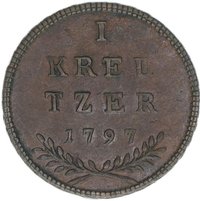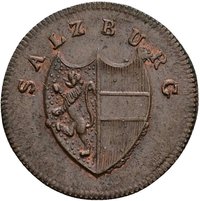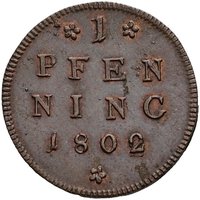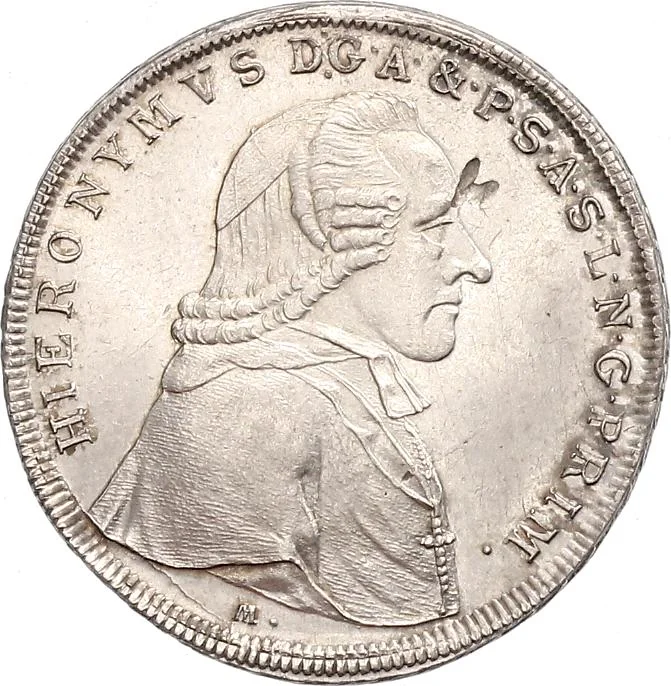
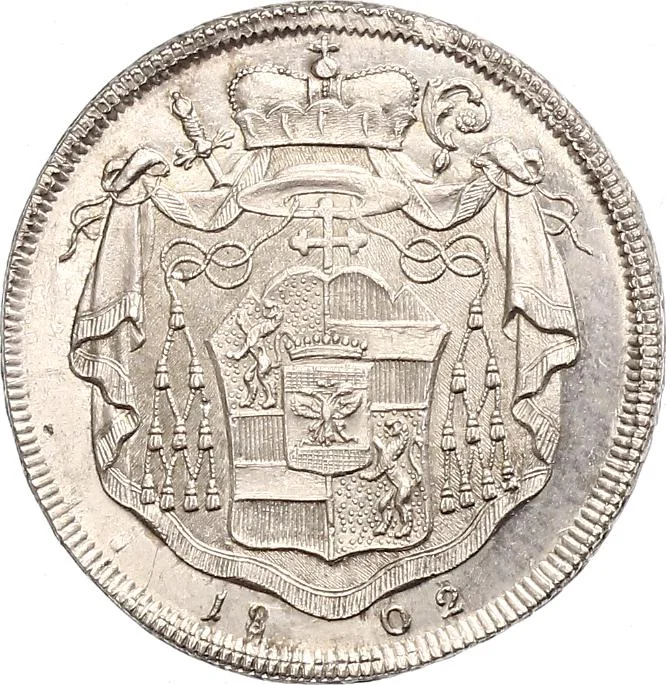
In 1797, the Prince-Archbishopric of Salzburg found itself in a precarious monetary situation, deeply entangled in the wider fiscal and military crises of the Holy Roman Empire. The ongoing French Revolutionary Wars, particularly the campaigns of Napoleon in Italy and Germany, placed immense financial strain on the ecclesiastical state. Salzburg, like its neighbours, was compelled to contribute troops and subsidies to the Imperial war effort, depleting its treasury and forcing it to seek extraordinary revenue. This pressure exacerbated existing weaknesses in the region's complex currency system, which was characterized by a circulation of diverse coins from various German states alongside its own issues.
The core of the problem lay in the debasement of coinage. To meet its urgent obligations, the Salzburg mint, under Prince-Archbishop Hieronymus von Colloredo, increasingly engaged in the practice of issuing
Scheidemünze (small change or token coinage). These coins, such as kreuzers and gulden, had a face value higher than their intrinsic silver or copper content. This inflationary practice, while a short-term fiscal fix, led to a loss of public confidence. Good, full-weight silver coins (specie) were hoarded or exported, leaving the economy flooded with depreciating small change, a classic manifestation of Gresham's Law.
Consequently, by 1797, Salzburg faced a dual crisis: a severe shortage of sound money for major transactions and trade, alongside an oversupply of unstable minor coinage that disrupted everyday commerce. Prices became unstable, and the populace suffered from the effective devaluation of their currency. This unstable monetary environment reflected the broader political fragility of the Archbishopric, which would be secularized and absorbed by the Habsburg Empire just six years later in the wake of further Napoleonic reorganization.