Logo Title
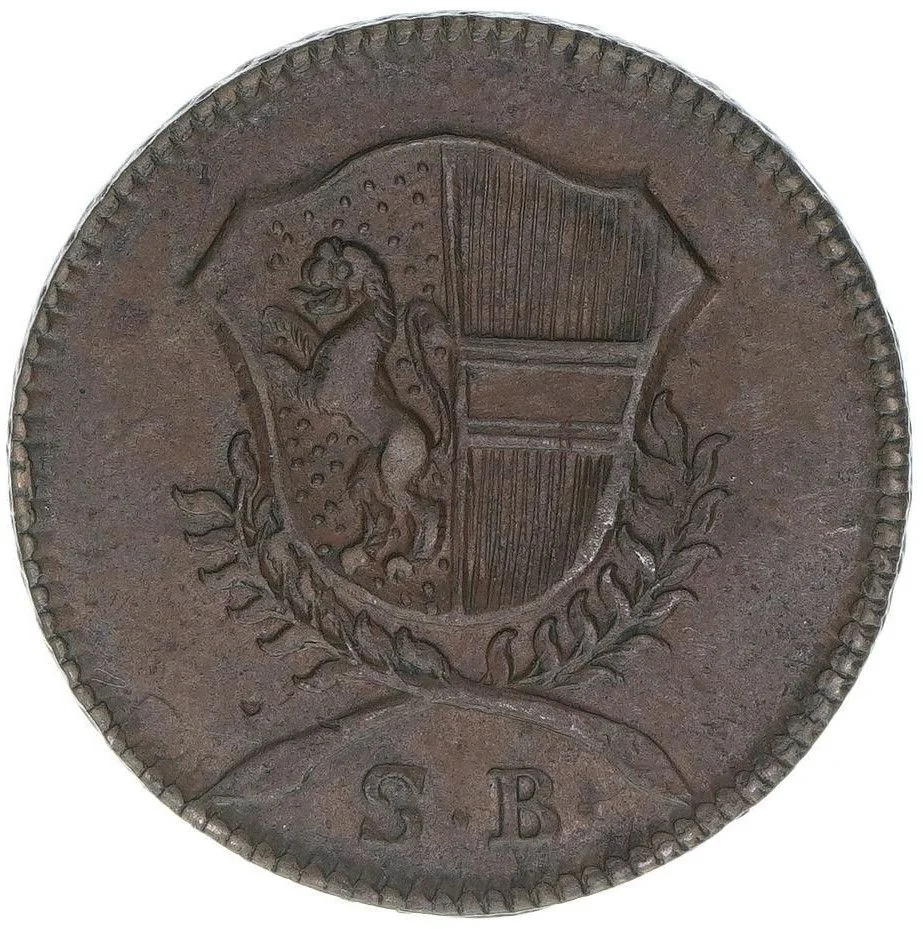
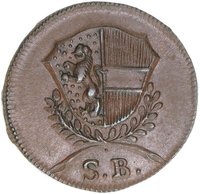
obverse
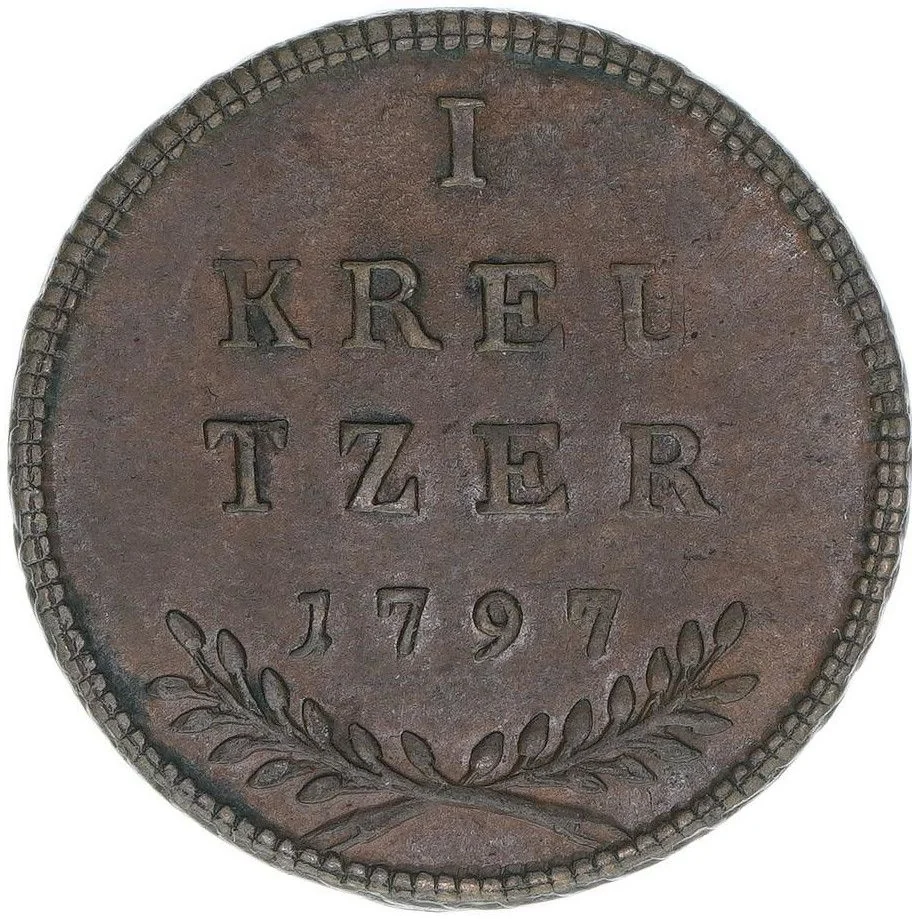
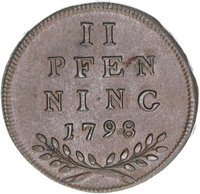
reverse
Numismatik Zöttl

1 Kreuzer – Bishopric of Salzburg

Context
Years: 1795–1799
Currency:
Demonetized: Yes
Material
Diameter: 24 mm
Weight: 5.8 g
Shape: Round
Composition: Copper
Magnetic: No
Technique: Milled
Alignment: Medal alignment
Obverse
OBVERSE ↑
flip
Reverse
REVERSE ↑
References
KM: #Click to copy to clipboard470
Numista: #60104

Obverse

Description:
Shield with Salzburg arms, sprigs below, initials SB.
Inscription:
S.B.
Script: Latin

Reverse

Description:
Value and date
above four sprigs.
Inscription:
1

KREU

TZER

1797
Script: Latin

Edge


Mints

NameMark
Salzburg

Mintings

YearMint MarkMintageQualityCollection
1795
1797
1798
1799

Historical background

In 1795, the Bishopric of Salzburg, a long-independent ecclesiastical principality within the Holy Roman Empire, faced significant monetary instability, largely dictated by external pressures. The period was defined by the inflationary consequences of the French Revolutionary Wars, which had engulfed Europe. While Salzburg itself was not a primary battlefield, it was deeply affected by the economic policies of its powerful neighbour, Austria. To finance its war efforts, Austria heavily debased its coinage, flooding the region with overminted, low-value Reichsthaler and Kreuzer. As a small state within Austria's economic sphere, Salzburg had little choice but to accept this depreciating currency for daily transactions, leading to rising prices and a loss of public confidence in the coinage.

Internally, Prince-Archbishop Hieronymus von Colloredo, an enlightened reformer, struggled to maintain a stable monetary system. His government officially valued currency based on the Conventionsfuß standard (20 Gulden to a Cologne mark of fine silver), but the reality was a chaotic mix of circulating coins. Alongside the official Salzburg Gulden, there was a proliferation of older regional coins, Austrian issues, and even smuggled French assignats. This created a complex and inefficient exchange environment, hindering commerce. The bishopric's mint, active for centuries, could not compete with the volume of foreign money and its output was limited, further reducing local control over the currency supply.

Ultimately, the monetary situation of 1795 reflected Salzburg's political vulnerability. The flood of debased Austrian coinage was a stark reminder of the bishopric's diminishing sovereignty in the face of larger geopolitical forces. This economic instability foreshadowed the territory's impending political demise; within eight years, in 1803, the secularization of the Holy Roman Empire would dissolve the Bishopric entirely, with Salzburg first passing to the Habsburgs and then to Bavaria. Thus, the currency confusion of 1795 was a symptom of an old order crumbling under the weight of war and revolution.
💎 Extremely Rare