Logo Title
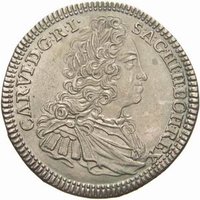
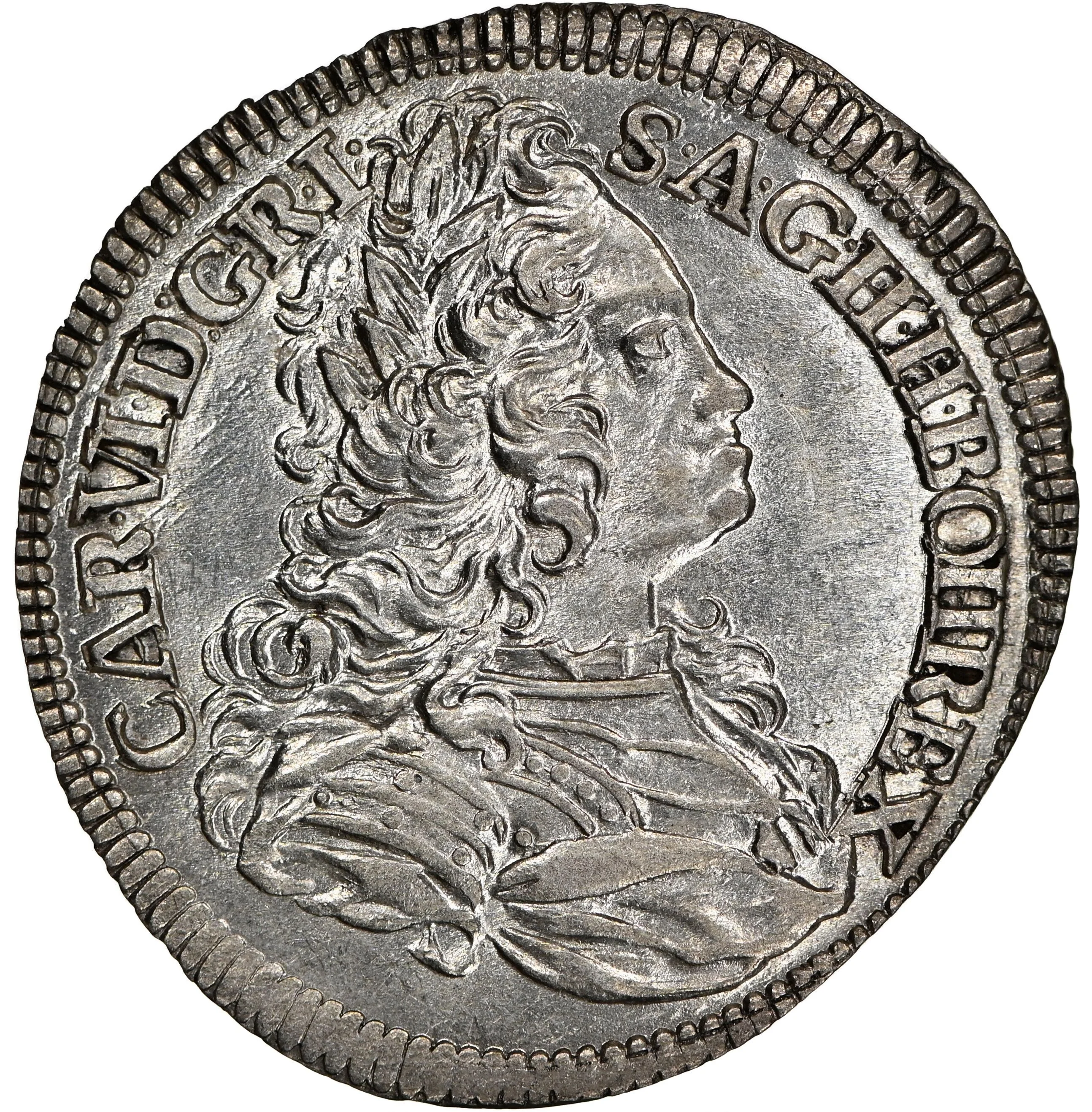
obverse
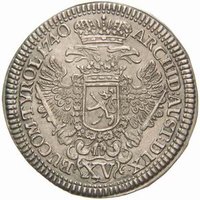
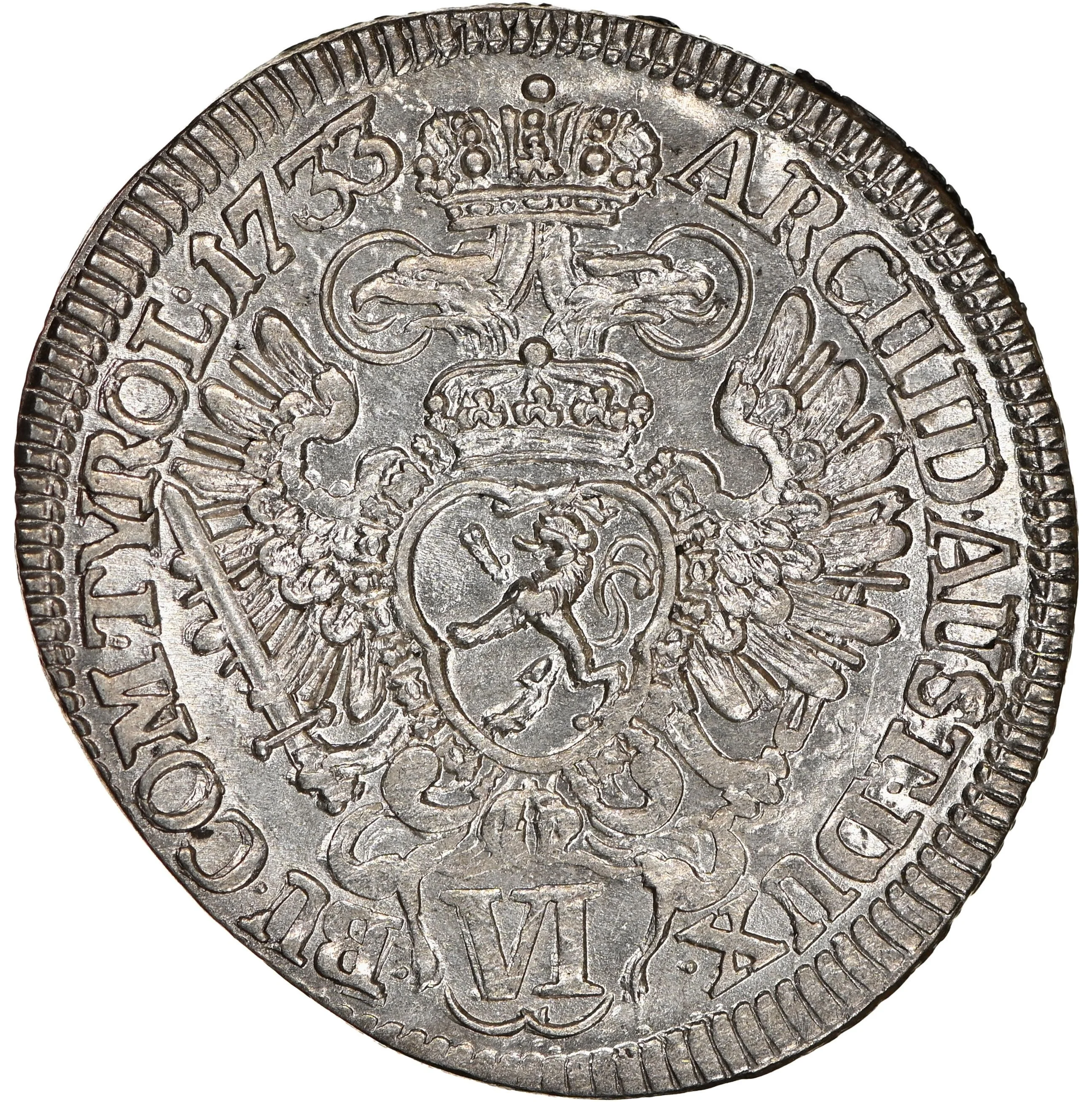
reverse
Heritage Auctions

6 Kreuzers – Kingdom of Bohemia

Context
Years: 1732–1740
Country: Bohemia
Ruler: Charles VI
Currency:
(1520—1754)
Demonetized: Yes
Material
Composition: Silver
Magnetic: No
References
KM: #Click to copy to clipboard722
Numista: #77538

Obverse

Description:
Portrait right of Karl VI. Legend: "Carolus VI Dei Gratia Romanorum Imperator Semper Augustus Germaniae Hispaniae Hungariae Bohemiae Rex".
Inscription:
CAR VI D G R I S A G HI H BOH REX
Script: Latin

Reverse

Description:
Imperial double-headed eagle with Bohemian arms. Value in Roman numerals below. Legend begins at 1 o'clock.
Inscription:
ARCHID AUST DUX BU COM TYROL 1733
Script: Latin

Edge

Plain

Mints

NameMark
Prague

Mintings

YearMint MarkMintageQualityCollection
1732
1733
1734
1735
1736
1740

Historical background

In 1732, the currency situation in the Kingdom of Bohemia, a core crown land of the Habsburg Monarchy, was characterized by instability and the lingering effects of earlier debasements. The primary currency was the Conventionsthaler, a large silver coin standardized across much of the Habsburg Empire by the 1753 Convention, but the monetary landscape was still transitioning. The earlier 18th century had seen severe coinage debasement under Emperor Charles VI to finance the costs of the War of the Spanish Succession and other conflicts, leading to a period of "Kipper- und Wipperzeit" (clipping and culling) where good coin was hoarded and inferior coin flooded circulation, causing inflation and public distrust.

The monetary system operated on a bimetallic standard of silver and gold, but the fixed ratio between the metals often failed to match market rates, causing one metal to disappear from circulation. Alongside the large Conventionsthaler, a plethora of smaller silver and copper coins—kreuzers, groschen, and deniers—facilitated daily trade. However, the supply and quality of these subsidiary coins were inconsistent, leading to frequent shortages of small change, which hampered local commerce and caused hardship for the common population. Counterfeiting was also a persistent problem, further eroding confidence.

Ultimately, Bohemia's currency was not autonomous but was dictated by the central Habsburg financial authorities in Vienna. The year 1732 fell within a period of attempted stabilization after the worst debasements, but before the major reforms that would come with the reign of Maria Theresa. The state's chronic fiscal deficits, driven by military expenditures and the high costs of the imperial court, continued to exert downward pressure on the currency's stability, creating a fragile monetary environment that would challenge the kingdom's economy for decades.
💎 Extremely Rare