


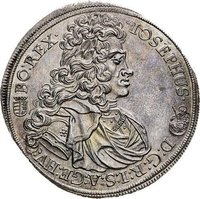
Obverse
Inscription:
CAROLVS • VI • D: G: - R: I: S: A: G: H: H: B: R:
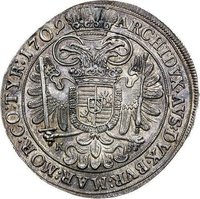
Reverse
Inscription:
PATRONA • REGN • - HUNGARIÆ •
Edge
Mints
| Name | Mark |
|---|---|
| Kremnica | KB |
Mintings
| Year | Mint Mark | Mintage | Quality | Collection |
|---|---|---|---|---|
| 1710 | K-B | — | ||
| 1711 | K-B | — |
Historical background
In 1710, Hungary’s currency situation was one of profound crisis and complexity, deeply entangled with the ongoing War of the Spanish Succession and Rákóczi’s War of Independence against Habsburg rule. The official currency, based on the silver forint (gulden), had become largely theoretical. Decades of warfare had drained the royal treasury, leading the Vienna-based Court Chamber to repeatedly debase the coinage minted in Nagybánya (today Baia Mare, Romania) and Körmöcbánya (today Kremnica, Slovakia). The silver content of coins was drastically reduced, while copper denars were issued in excessive quantities, causing rampant inflation and a loss of public trust in the monetary system.
The economic landscape was further fragmented by the circulation of a multitude of foreign coins, a common practice in early modern Europe. German thalers, Dutch ducats, and Turkish piastres all circulated alongside domestic issues, their value determined by fluctuating exchange rates based on their precious metal content. More critically, the rebellious Kuruc forces under Prince Ferenc Rákóczi II issued their own emergency currency, the so-called "copper money of the insurrection." Stamped from cannon and church bells, these low-value tokens were declared legal tender within controlled territories but held little intrinsic worth, further destabilizing the economy.
Consequently, Hungary operated with a dual monetary system divided along political lines: the debased imperial coinage in Habsburg-held areas and the inflationary Kuruc copper in rebel territories. This period represents the nadir of Hungarian monetary stability in the early 18th century. The chaos only began to subside after the defeat of the independence movement and the signing of the Treaty of Szatmár in 1711, which allowed the Habsburgs to initiate a long process of monetary reform and consolidation.
The economic landscape was further fragmented by the circulation of a multitude of foreign coins, a common practice in early modern Europe. German thalers, Dutch ducats, and Turkish piastres all circulated alongside domestic issues, their value determined by fluctuating exchange rates based on their precious metal content. More critically, the rebellious Kuruc forces under Prince Ferenc Rákóczi II issued their own emergency currency, the so-called "copper money of the insurrection." Stamped from cannon and church bells, these low-value tokens were declared legal tender within controlled territories but held little intrinsic worth, further destabilizing the economy.
Consequently, Hungary operated with a dual monetary system divided along political lines: the debased imperial coinage in Habsburg-held areas and the inflationary Kuruc copper in rebel territories. This period represents the nadir of Hungarian monetary stability in the early 18th century. The chaos only began to subside after the defeat of the independence movement and the signing of the Treaty of Szatmár in 1711, which allowed the Habsburgs to initiate a long process of monetary reform and consolidation.

✨ Legendary