

24 skilling – Denmark
Add to wishlist
Denmark
Context
Years: 1731–1732
Issuer: Denmark
Ruler: Christian VI
Currency:
(1625—1813)
Demonetization: 27 May 1873
Material
References
KM: #
Numista: #76689
Value
Bullion value: $13.28
Obverse
Description:
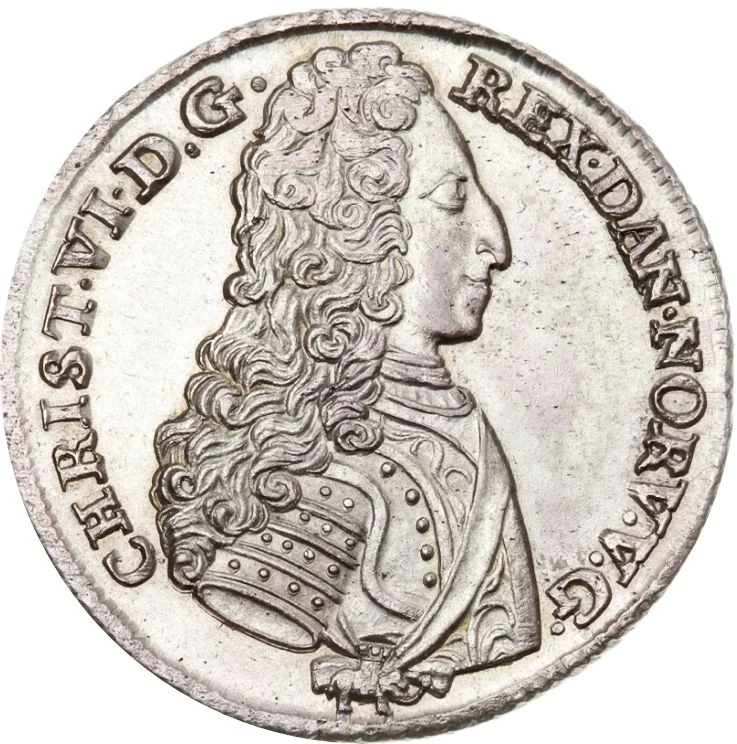
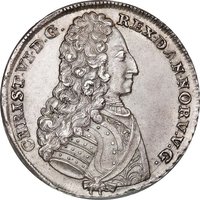
Armored bust of the king facing right, wearing a full peruke and the Order of the Elephant pendant.
Inscription:
CHRIST • VI • D • G • REX • DAN • NORV • V • G •
Script: Latin
Reverse
Description:
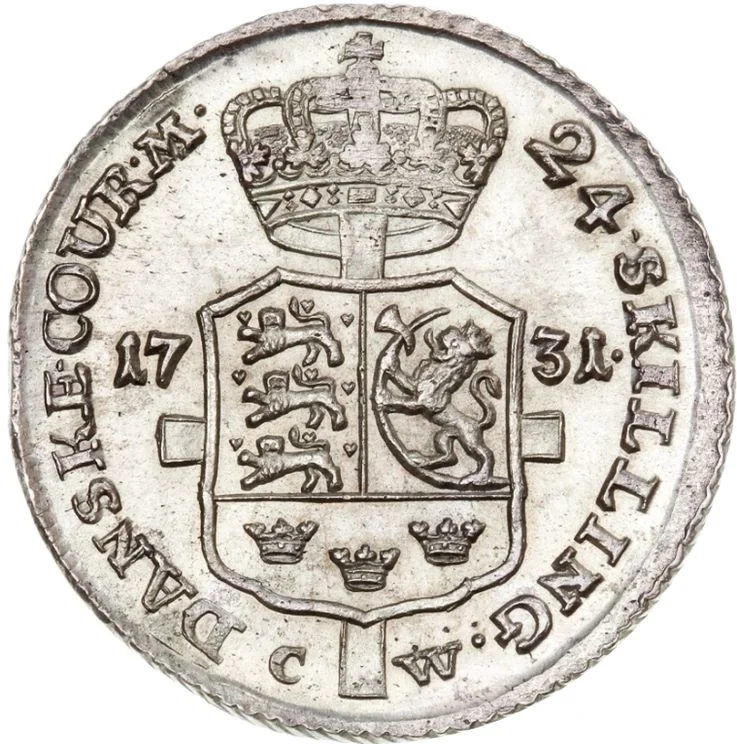
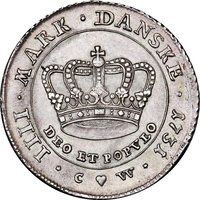
Shield of Denmark, Sweden, and Norway above cross dividing date and mintmark; value in legend.
Inscription:
24 • SKILLING • DANSKE • COUR: M •
17 32
C W
17 32
C W
Script: Latin
Edge
Categories
| Symbols> Coat of Arms |
Mints
| Name | Mark |
|---|---|
| Copenhagen | ♥ |
Mintings
| Year | Mint Mark | Mintage | Quality | Collection |
|---|---|---|---|---|
| 1731 | CW | — | ||
| 1732 | CW | — |
Historical background
In 1731, Denmark operated under a silver-based monetary system, yet the reality was one of significant complexity and disorder. The primary unit of account was the rigsdaler, divided into 96 skilling. However, the circulation was a chaotic mix of domestic and foreign coins, including older Danish issues, German thalers, Dutch ducats, and French louis d’or. These coins circulated not at their face value but at fluctuating market rates based on their actual metal content, leading to constant confusion and facilitating fraud. The state's chronic need for revenue, particularly to finance the expensive absolutist monarchy and its military ventures, had led to repeated debasements—reducing the silver content in coins—which further eroded public trust in the currency.
This instability was exacerbated by a severe shortage of small-change coins for everyday transactions. The government had failed to produce enough skilling and mark coins, leading to a crippled local economy where tradesmen and peasants struggled to conduct basic business. To fill this vacuum, a plethora of private tokens and makeshift solutions emerged, alongside the widespread use of fragmented coins or "cut money," where larger coins were physically cut into pieces. This fragmentation made the monetary system even more opaque and inefficient.
The situation demanded reform, and it was under King Christian VI that serious efforts began. The year 1731 fell within a period of investigation and planning that would culminate in the comprehensive Currency Regulation of 1733. This reform aimed to standardise the coinage, define fixed values for the various coins in circulation, and restore a stable relationship between the rigsdaler and the skilling. Therefore, the currency situation in 1731 was a pivotal moment of acknowledged crisis, directly setting the stage for a major state-led intervention to impose order on Denmark’s fractured monetary landscape.
This instability was exacerbated by a severe shortage of small-change coins for everyday transactions. The government had failed to produce enough skilling and mark coins, leading to a crippled local economy where tradesmen and peasants struggled to conduct basic business. To fill this vacuum, a plethora of private tokens and makeshift solutions emerged, alongside the widespread use of fragmented coins or "cut money," where larger coins were physically cut into pieces. This fragmentation made the monetary system even more opaque and inefficient.
The situation demanded reform, and it was under King Christian VI that serious efforts began. The year 1731 fell within a period of investigation and planning that would culminate in the comprehensive Currency Regulation of 1733. This reform aimed to standardise the coinage, define fixed values for the various coins in circulation, and restore a stable relationship between the rigsdaler and the skilling. Therefore, the currency situation in 1731 was a pivotal moment of acknowledged crisis, directly setting the stage for a major state-led intervention to impose order on Denmark’s fractured monetary landscape.
💎 Extremely Rare