

10 Kreuzers – Landgraviate of Hesse-Darmstadt
Context
Year: 1717
Issuer: Landgraviate of Hesse-Darmstadt
Ruler: Ernest Louis
Currency:
(1568—1805)
Demonetized: Yes
References
KM: #Click to copy to clipboard127
Numista: #75319
Obverse
Description:
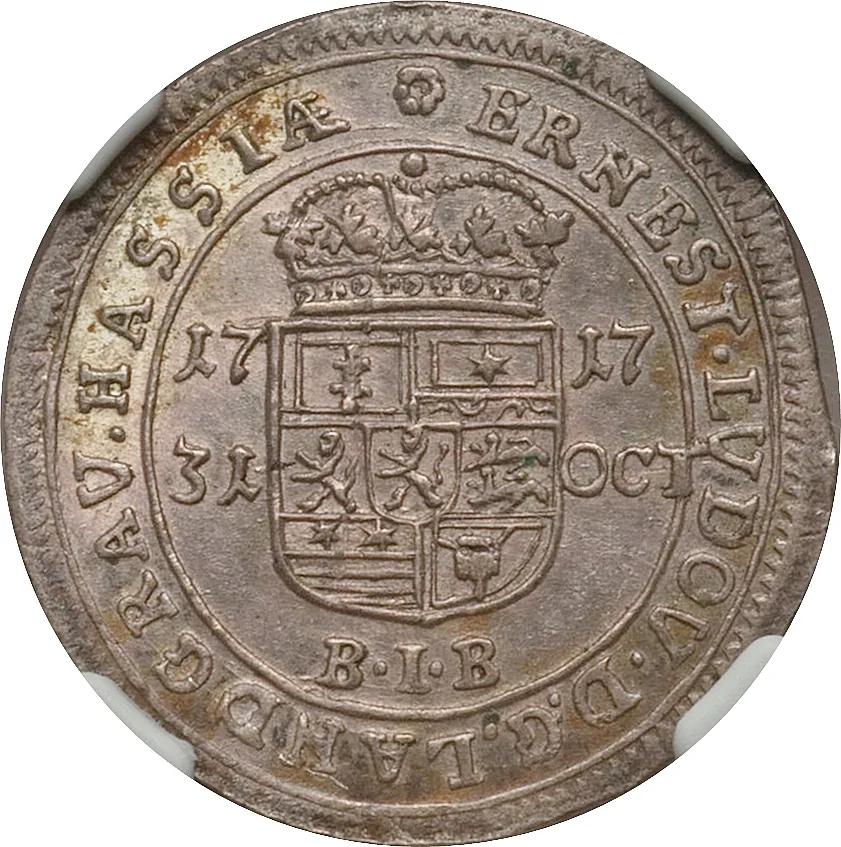
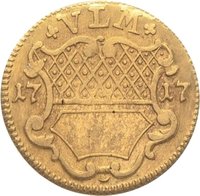
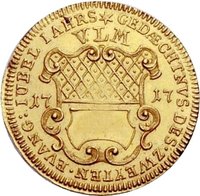
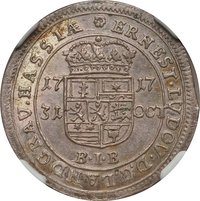
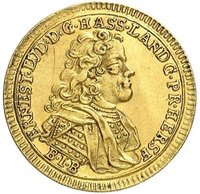
Crowned arms flank date, mintmaster initials below, legend surrounding.
Inscription:
ERNEST.LVDOV.D.G.LANDGRAV.HASSIӔ
1717
31 OCT
B.I.B
1717
31 OCT
B.I.B
Script: Latin
Reverse
Description:
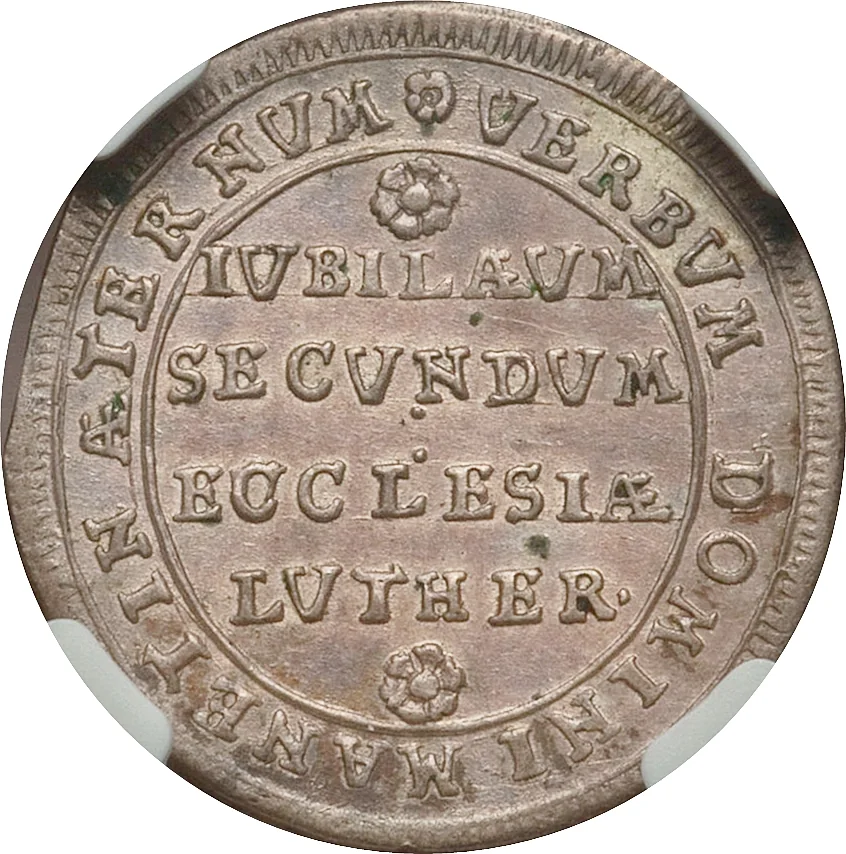
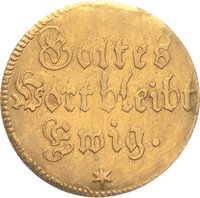
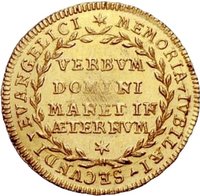
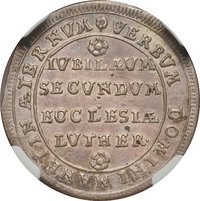
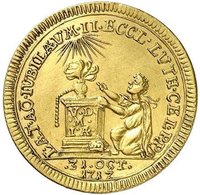
Inscription in circle, legend around.
Inscription:
IVBILӔVM
SECVNDVM
:
ECCLESIӔ
LVTHER.
VERBVM DOMINI MANETIN ӔTERNVM
SECVNDVM
:
ECCLESIӔ
LVTHER.
VERBVM DOMINI MANETIN ӔTERNVM
Script: Latin
Edge
Mints
| Name | Mark |
|---|---|
| Darmstadt | — |
Mintings
| Year | Mint Mark | Mintage | Quality | Collection |
|---|---|---|---|---|
| 1717 | — | — |
Historical background
In 1717, the currency situation in the Landgraviate of Hesse-Darmstadt was characterized by significant complexity and instability, a common challenge across the fragmented German states of the Holy Roman Empire. The landgraviate did not have a monopoly on coinage; its monetary system was a confusing mix of domestic issues and a heavy circulation of foreign coins, particularly from neighboring territories like the Electorate of Mainz and the Free City of Frankfurt. Furthermore, the region was still grappling with the economic aftereffects of the War of the Spanish Succession (1701-1714), which had drained resources and led to debasements of coinage to fund military expenditures.
The primary unit of account was the gulden (florin), subdivided into kreuzer. However, the actual value and silver content of coins bearing the same denomination could vary dramatically depending on when and where they were minted. This period saw the widespread circulation of underweight and debased coins, leading to chronic inflation, loss of public confidence, and difficulties in trade. Landgrave Ernst Ludwig, ruling from 1678 to 1739, faced constant pressure to either devalue the currency to ease short-term fiscal pressures or to pursue reforms to stabilize the monetary system for long-term economic health.
Consequently, 1717 fell within a prolonged era of attempted monetary regulation. The landgraviate, like others, participated in imperial currency conventions (Reichsmünzordnungen) aimed at standardizing coinage across the Empire, but these were often poorly enforced. The immediate background was one of ongoing negotiation and patchwork legislation, as the Darmstadt administration sought to fix exchange rates between the myriad coins in use and to assert control over its monetary sovereignty, a struggle between the ideal of a stable, uniform currency and the harsh fiscal realities of early modern statehood.
The primary unit of account was the gulden (florin), subdivided into kreuzer. However, the actual value and silver content of coins bearing the same denomination could vary dramatically depending on when and where they were minted. This period saw the widespread circulation of underweight and debased coins, leading to chronic inflation, loss of public confidence, and difficulties in trade. Landgrave Ernst Ludwig, ruling from 1678 to 1739, faced constant pressure to either devalue the currency to ease short-term fiscal pressures or to pursue reforms to stabilize the monetary system for long-term economic health.
Consequently, 1717 fell within a prolonged era of attempted monetary regulation. The landgraviate, like others, participated in imperial currency conventions (Reichsmünzordnungen) aimed at standardizing coinage across the Empire, but these were often poorly enforced. The immediate background was one of ongoing negotiation and patchwork legislation, as the Darmstadt administration sought to fix exchange rates between the myriad coins in use and to assert control over its monetary sovereignty, a struggle between the ideal of a stable, uniform currency and the harsh fiscal realities of early modern statehood.
Series: Bicentenary of the Reformation
✨ Legendary