

8 skilling – Norway
Add to wishlist
Norway
Context
Years: 1702–1715
Issuer: Norway
Ruler: Frederick IV
Currency:
(1523—1746)
Demonetized: Yes
Total mintage: 13,980,400
Material
References
KM: #
Numista: #75266
Value
Bullion value: $4.35
Obverse
Description:
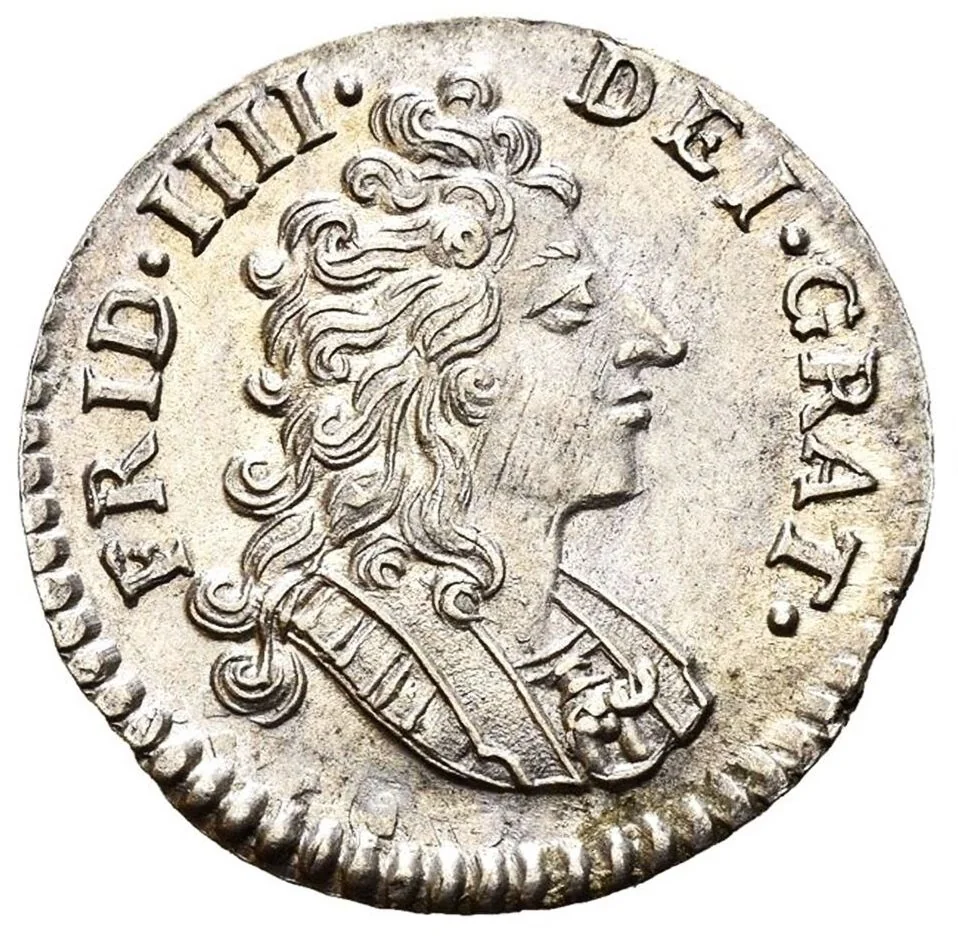
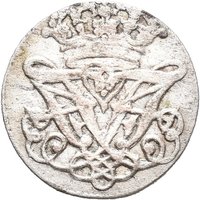
Bust of Frederik IV in armor, facing right, with long hair, surrounded by an inscription and a beaded rim.
Inscription:
FRID·IIII· DEI·GRAT·
Script: Latin
Engraver: Anders Jonsen Lunder
Reverse
Description:
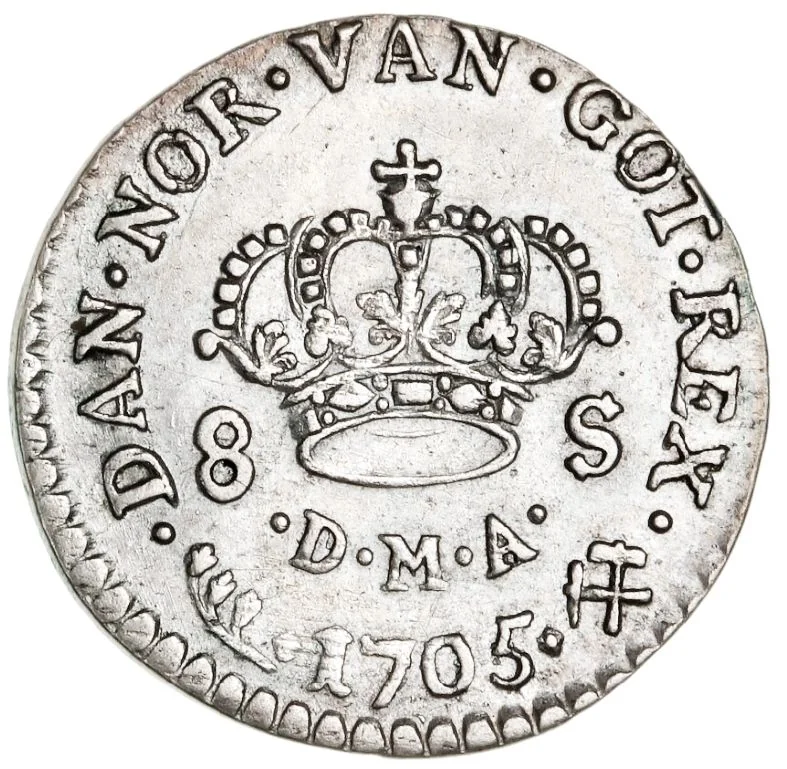
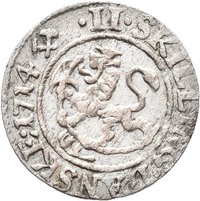
Central crown with motto below. Value flanking crown, encircled by inscription. Date and mintmarks at bottom. Beaded rim.
Inscription:
·DAN·NOR·VAN·GOT·REX·
8 S
·D·M·A·
(mm)⬩1705⬩⚒
8 S
·D·M·A·
(mm)⬩1705⬩⚒
Script: Latin
Engraver: Anders Jonsen Lunder
Edge
Plain
Mints
| Name | Mark |
|---|---|
| Norwegian Mint | — |
Mintings
| Year | Mint Mark | Mintage | Quality | Collection |
|---|---|---|---|---|
| 1702 | — | 169,000 | ||
| 1703 | — | 540,000 | ||
| 1704 | — | 982,000 | ||
| 1705 | — | 953,000 | ||
| 1706 | — | 888,000 | ||
| 1707 | — | 1,011,000 | ||
| 1708 | — | 1,261,000 | ||
| 1709 | — | 1,122,000 | ||
| 1710 | — | 1,164,000 | ||
| 1711 | — | 1,645,000 | ||
| 1712 | — | 1,656,600 | ||
| 1713 | — | 1,350,200 | ||
| 1714 | — | 922,700 | ||
| 1715 | — | 315,900 |
Historical background
In 1702, Norway found itself in a complex monetary situation, deeply entangled with its political union with Denmark under the Danish-Norwegian monarchy. The official currency was the Danish rigsdaler, a silver-based coin, but the system was strained and inefficient. Chronic shortages of small change plagued everyday commerce, leading to widespread use of fragmented coins, private tokens issued by merchants, and even physical goods in barter, particularly in remote rural areas. This scarcity hindered trade and created significant inconvenience for the general population.
The period was further complicated by the Great Northern War (1700-1721), in which Denmark-Norway was a participant. War finances placed enormous pressure on the state, leading to repeated debasements of the coinage. While the rigsdaler remained the unit of account, the actual silver content in minted coins was often reduced to fund military campaigns. This practice eroded public trust in the currency, as the intrinsic value of the coins in one's hand could be less than their face value, fostering inflation and economic uncertainty.
Furthermore, Norway's economy was heavily reliant on the export of raw materials like timber, fish, and metals, with much of its trade conducted through the powerful merchant class of Copenhagen. This meant that monetary policy was dictated by the needs of the Danish crown and the wider kingdom, with little specific regard for Norwegian domestic conditions. Consequently, in 1702, Norwegians navigated a fragmented and unreliable monetary environment, caught between the crown's fiscal demands for war and the practical necessities of local trade, all within a system they did not control.
The period was further complicated by the Great Northern War (1700-1721), in which Denmark-Norway was a participant. War finances placed enormous pressure on the state, leading to repeated debasements of the coinage. While the rigsdaler remained the unit of account, the actual silver content in minted coins was often reduced to fund military campaigns. This practice eroded public trust in the currency, as the intrinsic value of the coins in one's hand could be less than their face value, fostering inflation and economic uncertainty.
Furthermore, Norway's economy was heavily reliant on the export of raw materials like timber, fish, and metals, with much of its trade conducted through the powerful merchant class of Copenhagen. This meant that monetary policy was dictated by the needs of the Danish crown and the wider kingdom, with little specific regard for Norwegian domestic conditions. Consequently, in 1702, Norwegians navigated a fragmented and unreliable monetary environment, caught between the crown's fiscal demands for war and the practical necessities of local trade, all within a system they did not control.
⭐ Rare