

1 Dudu – Madras Presidency
India
Context

Material
References
KM: #Click to copy to clipboard291
Numista: #75247
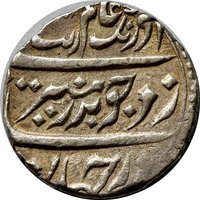
Obverse
Description:
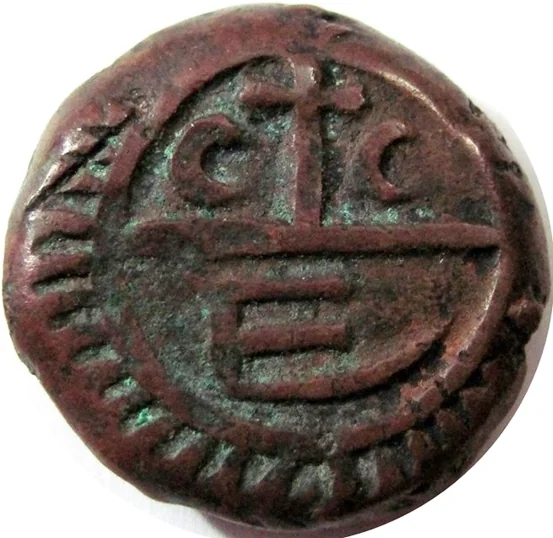
Balemark in GCE/CCE within a decorative border.
Inscription:
CC
E
E
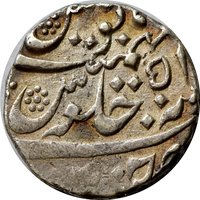
Reverse
Description:
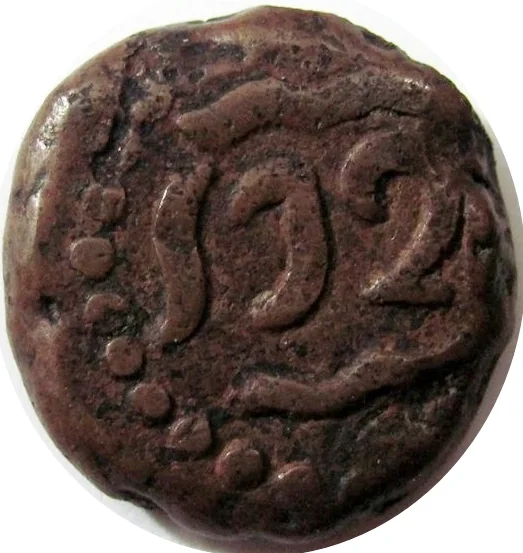
Date inside wavy lines within a beaded circle.
Inscription:
1721
Edge
Plain
Mintings
| Year | Mint Mark | Mintage | Quality | Collection |
|---|---|---|---|---|
| 1691 | — | — | ||
| 1693 | — | — | ||
| 1695 | — | — | ||
| 1700 | — | — | ||
| 1702 | — | — | ||
| 1703 | — | — | ||
| 1704 | — | — | ||
| 1705 | — | — | ||
| 1706 | — | — | ||
| 1709 | — | — | ||
| 1716 | — | — | ||
| 1720 | — | — | ||
| 1721 | — | — | ||
| 1722 | — | — | ||
| 1725 | — | — | ||
| 1726 | — | — | ||
| 1728 | — | — | ||
| 1731 | — | — | ||
| 1739 | — | — | ||
| 1741 | — | — | ||
| 1744 | — | — | ||
| 1745 | — | — | ||
| 1748 | — | — |
Historical background
In 1691, the currency situation within the Madras Presidency of the English East India Company was a complex tapestry of local and foreign systems, reflecting its status as a burgeoning trade hub. The primary medium of exchange was the gold pagoda, a long-established South Indian coin that served as the standard for high-value transactions and revenue assessments. Alongside it circulated a multitude of silver rupees of various origins (Mughal, Arcot, Surat) and countless copper coins for daily petty trade. This multiplicity created constant challenges for merchants and administrators, requiring expert "shroffs" (money-changers) to assess the weight, purity, and fluctuating exchange rates of this heterogeneous coinage.
The English East India Company, based at Fort St. George, sought to impose order by minting its own coins, a right granted by local authorities. The Madras Mint produced gold pagodas imitating local designs to ensure their acceptance, as well as silver coins known as "fanams" and copper "cash." However, these Company issues competed in a crowded marketplace and did not displace the wider circulation of Mughal and regional currencies. A significant complication was the practice of "currency by tale" versus "currency by weight," where worn or clipped coins might be accepted at face value in some contexts but only for their intrinsic bullion value in others, leading to frequent disputes and arbitrage.
This monetary environment was fundamentally shaped by Madras's position in global trade networks. Influxes of silver from Europe, the Americas, and Japan entered the economy through trade, often being recoined into local forms. The year 1691 falls within a period where the Company was still consolidating its territorial and fiscal control, with currency management being a key instrument of that ambition. The lack of a unified system, however, meant that the presidency's economy operated on a pragmatic, albeit cumbersome, blend of indigenous monetary traditions and the Company's attempts at standardization, a situation that would persist for decades.
The English East India Company, based at Fort St. George, sought to impose order by minting its own coins, a right granted by local authorities. The Madras Mint produced gold pagodas imitating local designs to ensure their acceptance, as well as silver coins known as "fanams" and copper "cash." However, these Company issues competed in a crowded marketplace and did not displace the wider circulation of Mughal and regional currencies. A significant complication was the practice of "currency by tale" versus "currency by weight," where worn or clipped coins might be accepted at face value in some contexts but only for their intrinsic bullion value in others, leading to frequent disputes and arbitrage.
This monetary environment was fundamentally shaped by Madras's position in global trade networks. Influxes of silver from Europe, the Americas, and Japan entered the economy through trade, often being recoined into local forms. The year 1691 falls within a period where the Company was still consolidating its territorial and fiscal control, with currency management being a key instrument of that ambition. The lack of a unified system, however, meant that the presidency's economy operated on a pragmatic, albeit cumbersome, blend of indigenous monetary traditions and the Company's attempts at standardization, a situation that would persist for decades.
✨ Legendary