

Obverse
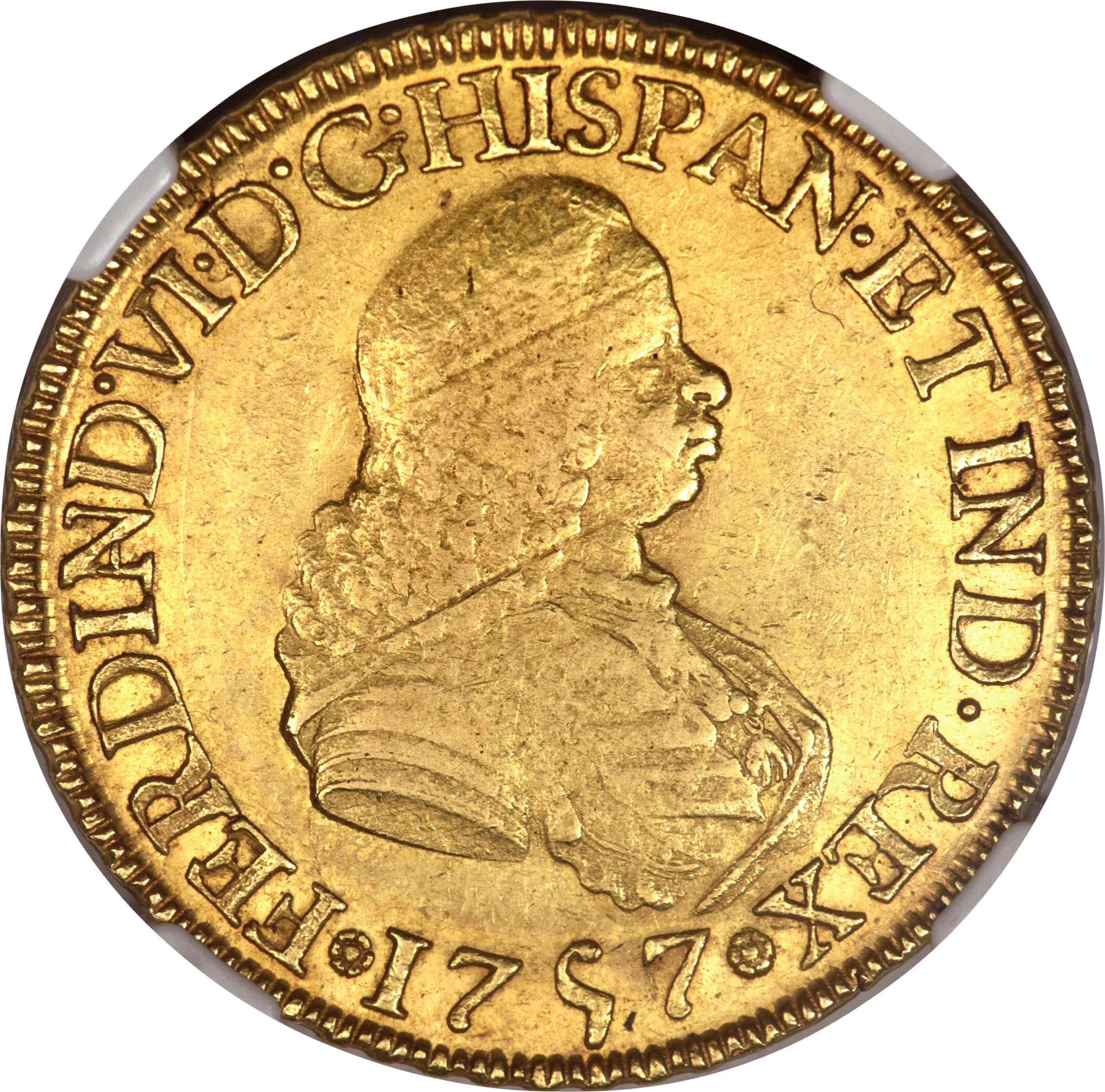
Description:
Small right-facing bust, encircled by legend.
Inscription:
FERDIND • VI • D • G • HISP ETIND • REX
• 1757 •
• 1757 •
Script: Latin
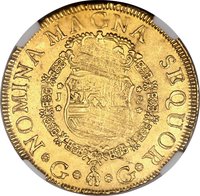
Reverse
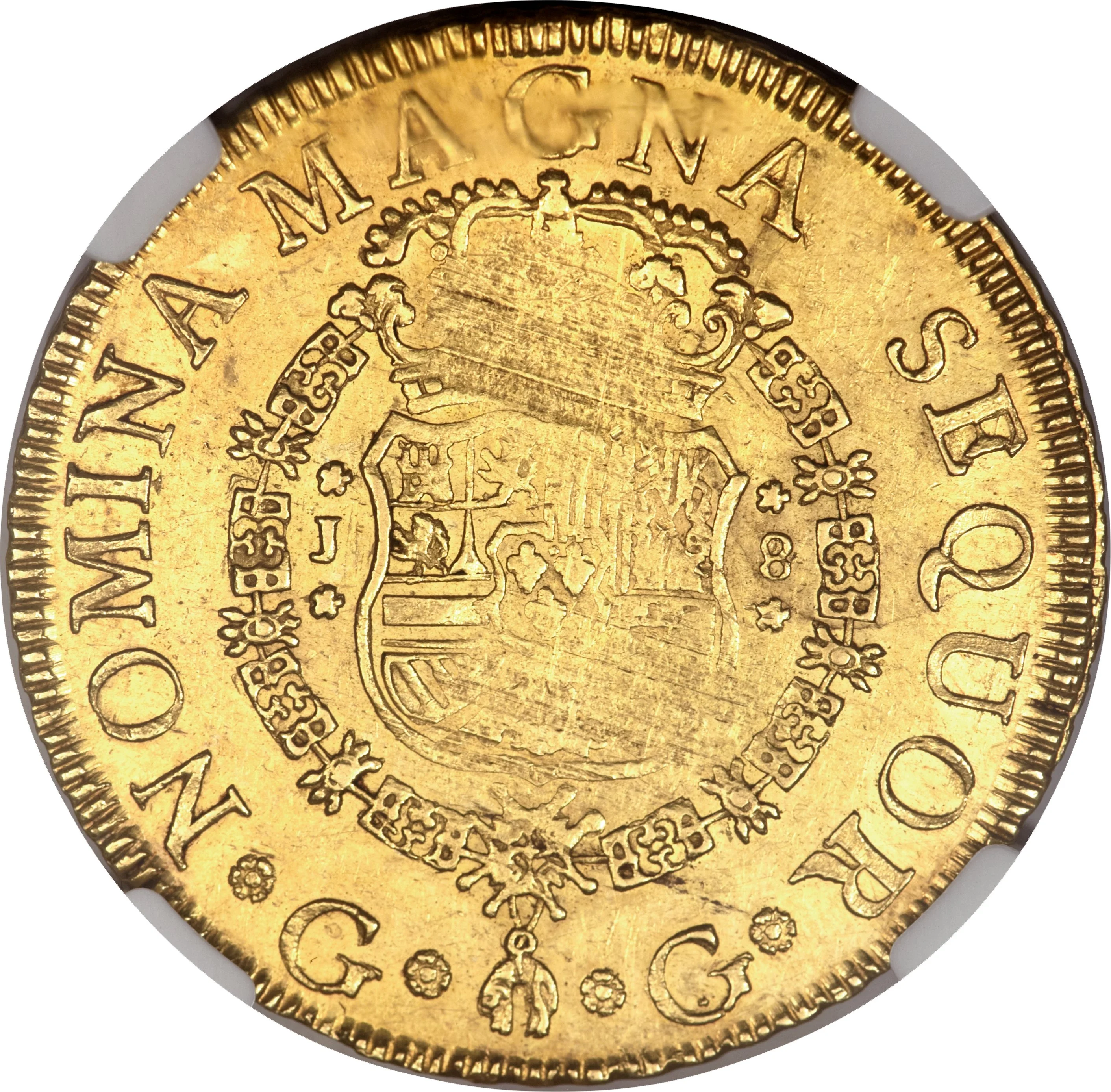
Description:
Shield with crowned arms between initials and value, encircled by legend.
Inscription:
NOMINA MAGNA SEQUOR
J 8
G G
J 8
G G
Script: Latin
Edge
Categories
| Symbols> Coat of Arms |
| Person> Monarch |
Mints
| Name | Mark |
|---|---|
| Casa de Moneda de Guatemala | G |
Mintings
| Year | Mint Mark | Mintage | Quality | Collection |
|---|---|---|---|---|
| 1757 | G | — |
Historical background
In 1757, Guatemala was the heart of the Captaincy General of Guatemala, a Spanish colony encompassing much of Central America. The official currency was the Spanish colonial real, with eight reales equaling one silver peso, often called a "piece of eight." However, a chronic and severe shortage of official coinage defined the monetary situation. The local economy, driven by agriculture (indigo, cochineal, cacao) and trade, struggled with a lack of physical currency for daily transactions, as much of the official silver and gold was siphoned to Spain or used in larger regional commerce.
To overcome this scarcity, a system of alternative and primitive currencies was widely used. The most common substitute was cacao beans, a practice inherited from pre-Columbian times that remained legally recognized for small-scale trade. For larger transactions, goods like indigo cakes or tobacco were used as de facto commodities of exchange. Furthermore, the accounting system relied heavily on the moneda de cuenta (money of account), where values were recorded in pesos and reales in ledgers, even if the actual settlement involved barter or goods, due to the physical absence of coins.
This unstable and complex system created significant economic friction. The fluctuating value of commodity currencies and the inconvenience of barter hampered commerce and tax collection for the colonial administration. The situation in 1757 was part of a prolonged crisis that would eventually lead to a pivotal change: the establishment of the first mint in Central America. Just a few years later, in 1731, the Crown had authorized a mint in Guatemala City, and by 1757, it was operational, beginning to produce the first locally struck coins (known as columnarios or pillar dollars) to finally address the chronic currency shortage and solidify Spanish economic control.
To overcome this scarcity, a system of alternative and primitive currencies was widely used. The most common substitute was cacao beans, a practice inherited from pre-Columbian times that remained legally recognized for small-scale trade. For larger transactions, goods like indigo cakes or tobacco were used as de facto commodities of exchange. Furthermore, the accounting system relied heavily on the moneda de cuenta (money of account), where values were recorded in pesos and reales in ledgers, even if the actual settlement involved barter or goods, due to the physical absence of coins.
This unstable and complex system created significant economic friction. The fluctuating value of commodity currencies and the inconvenience of barter hampered commerce and tax collection for the colonial administration. The situation in 1757 was part of a prolonged crisis that would eventually lead to a pivotal change: the establishment of the first mint in Central America. Just a few years later, in 1731, the Crown had authorized a mint in Guatemala City, and by 1757, it was operational, beginning to produce the first locally struck coins (known as columnarios or pillar dollars) to finally address the chronic currency shortage and solidify Spanish economic control.

✨ Legendary