

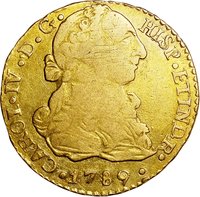
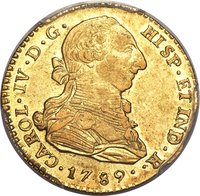
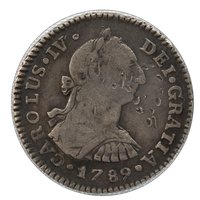
Obverse
Description:
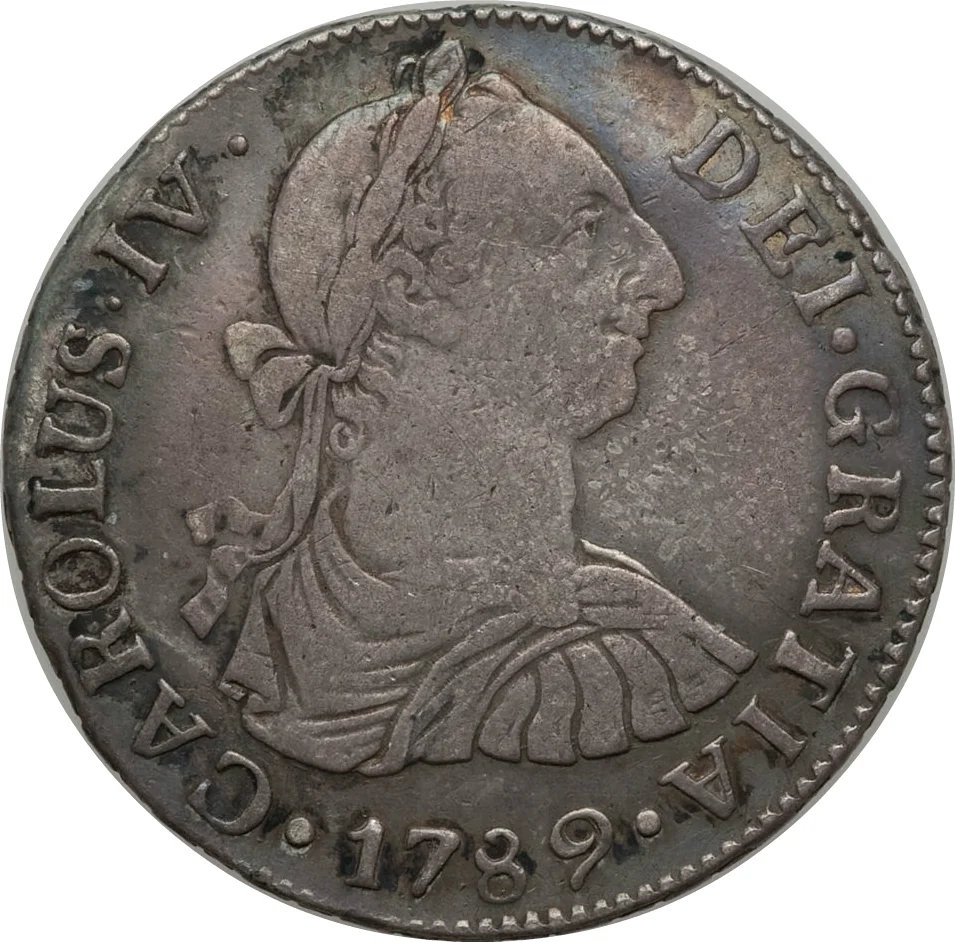
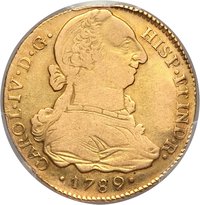
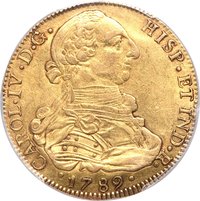
Bust right, legend around, date below.
Inscription:
CAROLUS • IV • DEI • GRATIA
• 1789 •
• 1789 •
Script: Latin
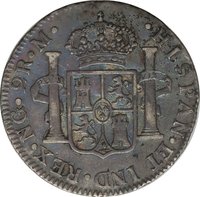
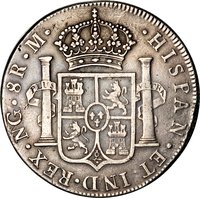
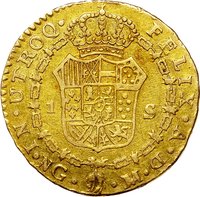
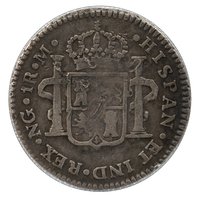
Reverse
Description:
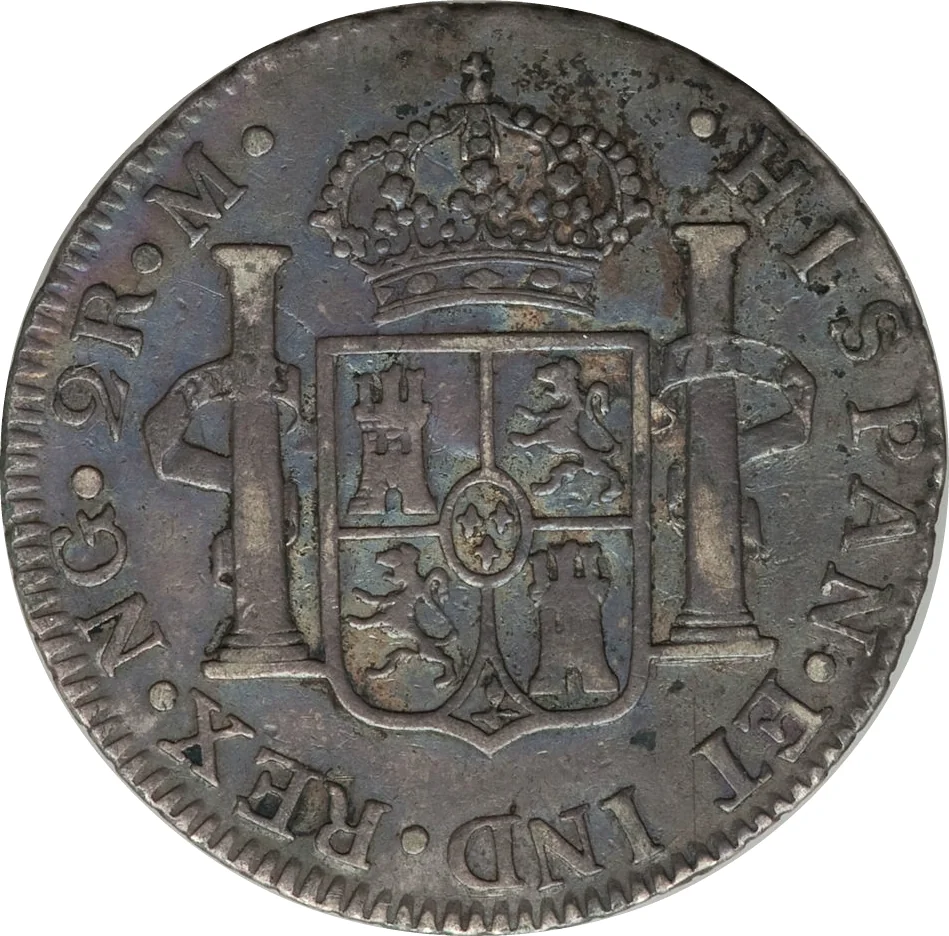
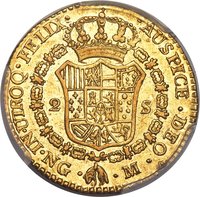
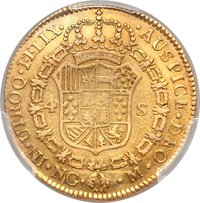
Crowned shield between pillars, encircled by legend.
Inscription:
• HISPAN • ET IND • REX • NG • 2R • M •
Script: Latin
Edge
Categories
| Symbols> Coat of Arms |
| Person> Monarch |
Mints
| Name | Mark |
|---|---|
| Casa de Moneda de Guatemala | NG |
Historical background
In 1789, Guatemala, as the Captaincy General of Guatemala within the Spanish Empire, operated under a complex and often strained monetary system. The official currency was the Spanish colonial real, with eight reales equaling one silver peso (or "piece of eight"). However, the economy suffered from a chronic shortage of specie (coined money), particularly silver, which was the lifeblood of transatlantic trade and local commerce. This scarcity was due to the region's limited silver production compared to richer viceroyalties like New Spain (Mexico) or Peru, and the fact that much of the coinage that did circulate was often exported to pay for imports or remitted as royal taxes.
The monetary landscape was consequently a patchwork of physical and substitute currencies. To facilitate everyday transactions, people relied heavily on tlacos or fichas—token coins issued by local merchants, hacienda owners, and even churches—which promised redemption in real currency. Furthermore, cacao beans, a holdover from pre-Columbian economies, still functioned as a traditional medium of exchange in some local and indigenous markets. This system created a two-tiered economy: one for large-scale and international trade conducted in scarce silver, and another for the internal, often informal, economy dependent on less reliable substitutes.
This currency scarcity was a significant point of administrative concern for the colonial authorities in Guatemala City. It hindered tax collection, complicated trade, and reflected the broader economic challenges of a colony whose main exports (indigo, cochineal, and cacao) were subject to volatile markets and imperial trade restrictions. While the Bourbon Reforms of the late 18th century aimed to modernize and increase revenue from Spain's American colonies, they did little to immediately solve Guatemala's fundamental lack of circulating coinage, a problem that would persist into the early years of independence.
The monetary landscape was consequently a patchwork of physical and substitute currencies. To facilitate everyday transactions, people relied heavily on tlacos or fichas—token coins issued by local merchants, hacienda owners, and even churches—which promised redemption in real currency. Furthermore, cacao beans, a holdover from pre-Columbian economies, still functioned as a traditional medium of exchange in some local and indigenous markets. This system created a two-tiered economy: one for large-scale and international trade conducted in scarce silver, and another for the internal, often informal, economy dependent on less reliable substitutes.
This currency scarcity was a significant point of administrative concern for the colonial authorities in Guatemala City. It hindered tax collection, complicated trade, and reflected the broader economic challenges of a colony whose main exports (indigo, cochineal, and cacao) were subject to volatile markets and imperial trade restrictions. While the Bourbon Reforms of the late 18th century aimed to modernize and increase revenue from Spain's American colonies, they did little to immediately solve Guatemala's fundamental lack of circulating coinage, a problem that would persist into the early years of independence.
Series: 1789 Guatemala circulation coins
✨ Legendary