

5 Cents – Rhodesia
Zimbabwe
Context

Material
Diameter: 19.3 mm
Weight: 3 g
Thickness: 1.62 mm
Shape: Round
Composition: Copper-nickel
Technique: Milled
Alignment: Medal alignment
flip
References
KM: #Click to copy to clipboard12
Numista: #11985
Value
Exchange value: 0.05 RHD
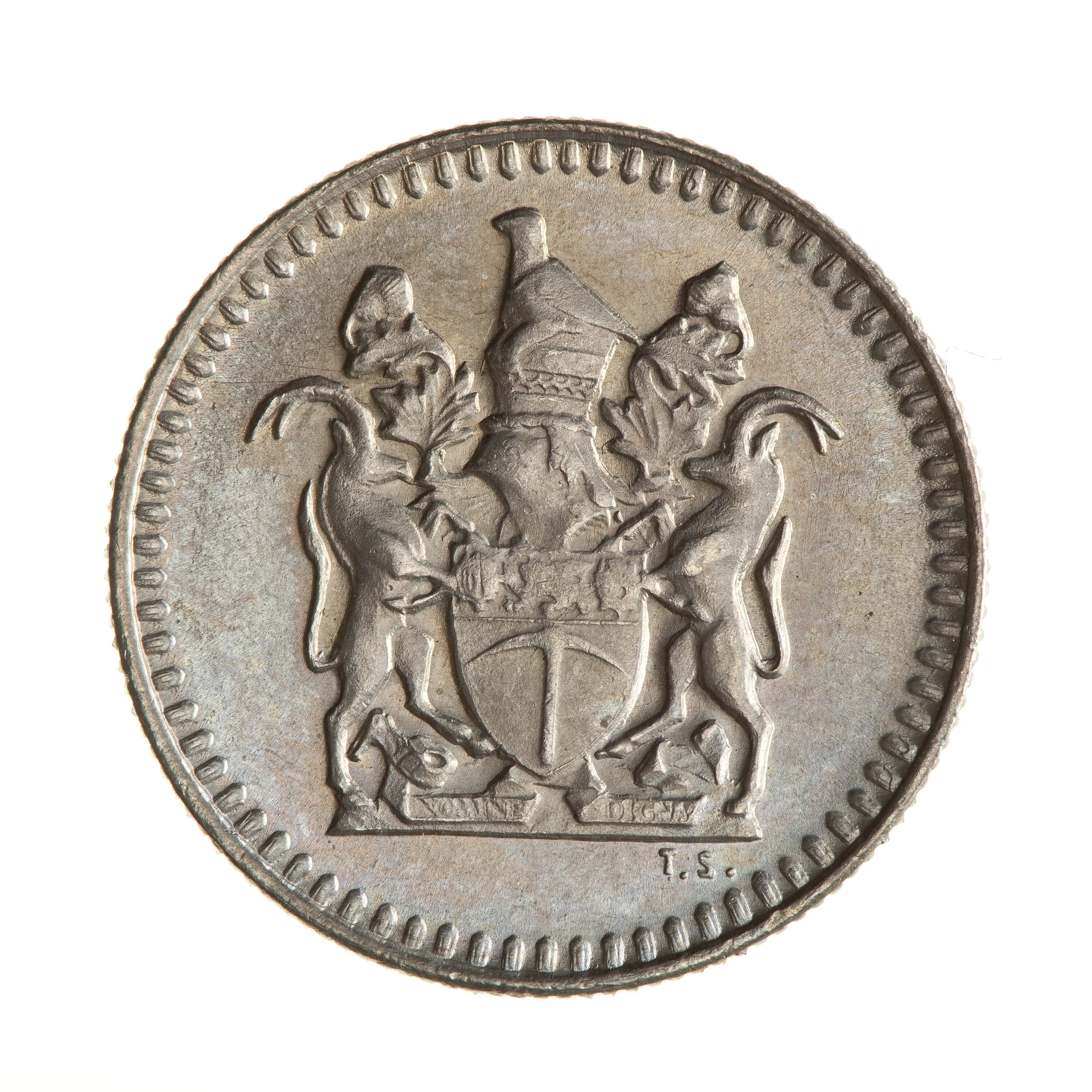
Obverse
Description:
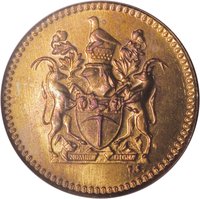
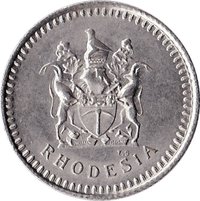
Rhodesian coat of arms, text removed.
Inscription:
T.S.
Script: Latin
Engraver: Tommy Sasseen
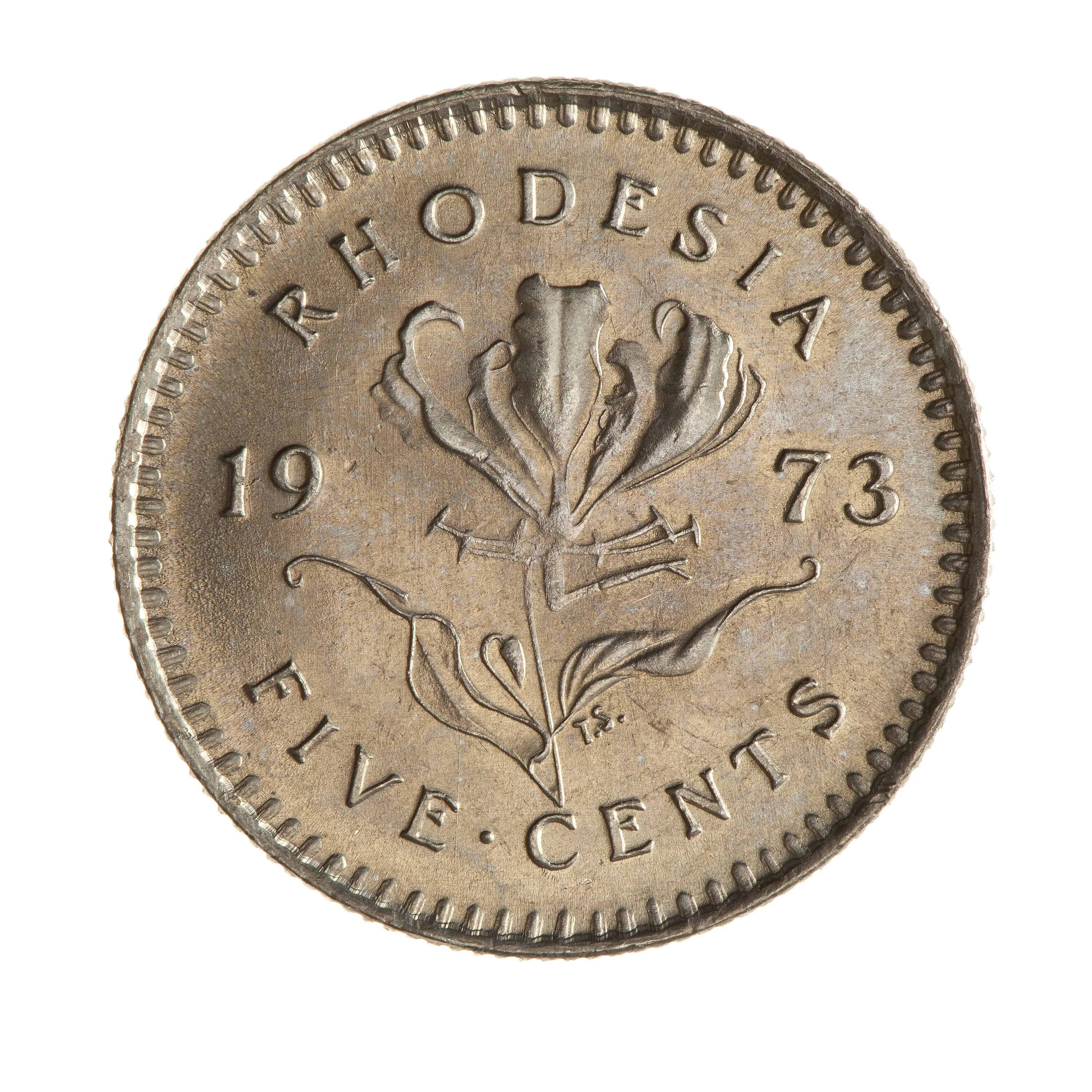
Reverse
Description:
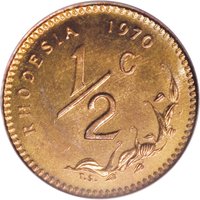
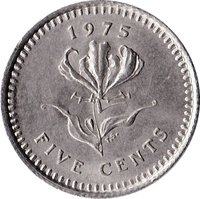
Date/Name above, denomination below.
Inscription:
RHODESIA
19 73
T.S.
FIVE · CENTS
19 73
T.S.
FIVE · CENTS
Script: Latin
Engraver: Tommy Sasseen
Edge
Reeded
Mints
| Name | Mark |
|---|---|
| Pretoria | — |
Mintings
| Year | Mint Mark | Mintage | Quality | Collection |
|---|---|---|---|---|
| 1973 | — | — | ||
| 1973 | — | 10 | Proof |
Historical background
In 1973, Rhodesia’s currency situation was defined by the economic pressures of international isolation and a protracted guerrilla war. Having unilaterally declared independence (UDI) from Britain in 1965 to preserve minority rule, the nation faced comprehensive UN sanctions. This forced the Rhodesian government, led by Ian Smith, to operate a sophisticated siege economy. The Rhodesian dollar (R$), introduced in 1970 to replace the pound, was not internationally recognized and its value was artificially maintained by strict exchange controls and a fixed parity with sterling. Internally, the currency remained stable and in circulation, but its external worth was largely confined to a clandestine network of trade with South Africa, Portugal (until 1974), and other nations circumventing the sanctions regime.
The economy was further strained by the escalating Bush War, which diverted an increasing share of the national budget to military spending—over 30% by the mid-1970s. While agricultural exports like tobacco and sugar continued to find covert markets, the costs of the conflict and sanctions began to manifest in rising inflation and growing import difficulties for essential goods, including machinery and oil. The government managed these pressures through heavy regulation, including price controls and import substitution industries, creating a distorted but still functioning domestic economy where the currency retained its face value for daily transactions.
Ultimately, the 1973 currency situation represented a precarious equilibrium. The Rhodesian dollar was a symbol of national defiance, administratively propped up by a resilient but increasingly stressed economic model. However, the underlying fundamentals were deteriorating. The intensifying war, the global oil crisis of 1973 which increased costs, and the impending collapse of Portuguese Mozambique in 1974—which would deprive Rhodesia of a vital sanction-busting route—foreshadowed severe future instability. The facade of monetary normalcy was thus fragile, masking the deepening structural weaknesses that would lead to a severe economic crisis later in the decade.
The economy was further strained by the escalating Bush War, which diverted an increasing share of the national budget to military spending—over 30% by the mid-1970s. While agricultural exports like tobacco and sugar continued to find covert markets, the costs of the conflict and sanctions began to manifest in rising inflation and growing import difficulties for essential goods, including machinery and oil. The government managed these pressures through heavy regulation, including price controls and import substitution industries, creating a distorted but still functioning domestic economy where the currency retained its face value for daily transactions.
Ultimately, the 1973 currency situation represented a precarious equilibrium. The Rhodesian dollar was a symbol of national defiance, administratively propped up by a resilient but increasingly stressed economic model. However, the underlying fundamentals were deteriorating. The intensifying war, the global oil crisis of 1973 which increased costs, and the impending collapse of Portuguese Mozambique in 1974—which would deprive Rhodesia of a vital sanction-busting route—foreshadowed severe future instability. The facade of monetary normalcy was thus fragile, masking the deepening structural weaknesses that would lead to a severe economic crisis later in the decade.
🌱 Fairly Common