

1 Real – New Spain
Mexico
Context
Years: 1785–1789
Country: Mexico 
Issuer: New Spain
Ruler: Charles III
Currency:
(1535—1897)
Demonetized: Yes
Material
References
KM: #Click to copy to clipboard78.2a
Numista: #74705
Value
Bullion value: $8.75
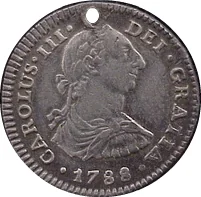
Obverse
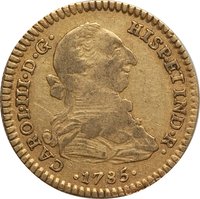
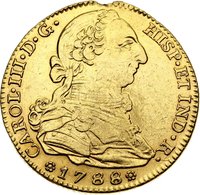
Description:
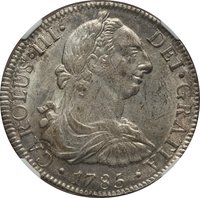
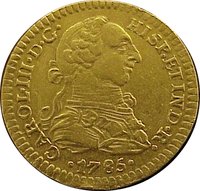
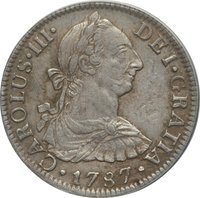
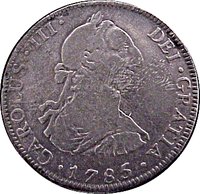
Armored bust of Charles III, facing right.
Inscription:
CAROLUS•III•DEI•GRATIA
•1788•
•1788•
Script: Latin
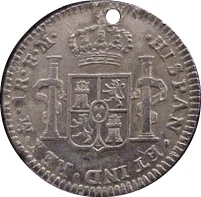
Reverse
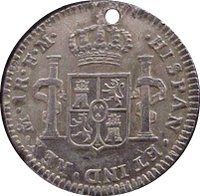
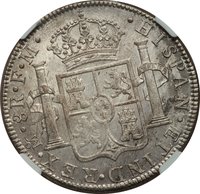
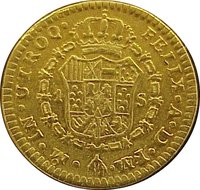
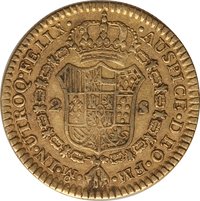
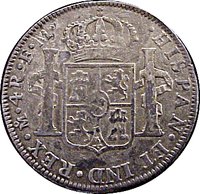
Description:
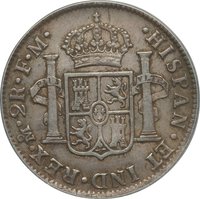
Crowned shield between pillars, encircled by legend.
Inscription:
•HISPAN•ET IND•REX•Mo•1R•F•M•
Script: Latin
Edge
Chain reeding.
Mintings
| Year | Mint Mark | Mintage | Quality | Collection |
|---|---|---|---|---|
| 1785 | FF | — | ||
| 1785 | FM | — | ||
| 1786 | FM | — | ||
| 1787 | FF | — | ||
| 1787 | FM | — | ||
| 1788 | FF | — | ||
| 1788 | FM | — | ||
| 1789 | FM | — |
Historical background
In 1785, the Viceroyalty of New Spain, encompassing modern-day Mexico and much of the southwestern United States, was grappling with a severe and multifaceted currency crisis. The core of the problem was a chronic shortage of fractional coinage—the low-denomination reales and cuartillas (half-reales) essential for daily market transactions. This scarcity, stemming from the Crown's historical focus on minting high-value silver pesos for export to Spain, created a paralyzed internal economy. Artisans, laborers, and small vendors struggled to make change, leading to the widespread use of makeshift substitutes like cacao beans, clipped coins, and privately issued tokens, which fostered confusion and commercial distrust.
The situation was exacerbated by a recent and disastrous attempt at monetary reform. In 1781, the Spanish Crown introduced new, machine-struck copper coins (macuquinas de cobre) of higher intrinsic value to replace the debased and counterfeit-ridden billon (base metal) coins. However, the public, deeply suspicious of copper and accustomed to silver, utterly rejected them. This failed introduction further eroded confidence in the currency system and worsened the small-change famine, pushing the colonial economy toward a state of dysfunction that threatened royal authority and tax revenues.
Recognizing the urgency, Viceroy Bernardo de Gálvez and the royal administration in Mexico City were actively seeking a solution in 1785. Their efforts would culminate the following year with the implementation of a comprehensive reform under Charles III. This 1786 ordinance mandated the production of new, high-quality silver fractional coinage at the Mexico City Mint, featuring the iconic "pillar and globe" design on one side and the royal portrait on the other. This successful reform finally provided a stable and trustworthy subsidiary coinage, restoring liquidity to the markets and demonstrating the Crown's belated but necessary intervention in the colony's monetary infrastructure.
The situation was exacerbated by a recent and disastrous attempt at monetary reform. In 1781, the Spanish Crown introduced new, machine-struck copper coins (macuquinas de cobre) of higher intrinsic value to replace the debased and counterfeit-ridden billon (base metal) coins. However, the public, deeply suspicious of copper and accustomed to silver, utterly rejected them. This failed introduction further eroded confidence in the currency system and worsened the small-change famine, pushing the colonial economy toward a state of dysfunction that threatened royal authority and tax revenues.
Recognizing the urgency, Viceroy Bernardo de Gálvez and the royal administration in Mexico City were actively seeking a solution in 1785. Their efforts would culminate the following year with the implementation of a comprehensive reform under Charles III. This 1786 ordinance mandated the production of new, high-quality silver fractional coinage at the Mexico City Mint, featuring the iconic "pillar and globe" design on one side and the royal portrait on the other. This successful reform finally provided a stable and trustworthy subsidiary coinage, restoring liquidity to the markets and demonstrating the Crown's belated but necessary intervention in the colony's monetary infrastructure.
Series: 1785 New Spain circulation coins
⭐ Rare