

1 Rupee – Bengal Presidency
India
Context

Material
References
KM: #Click to copy to clipboard84.1
Numista: #74115
Value
Bullion value: $33.56
Obverse
Description:
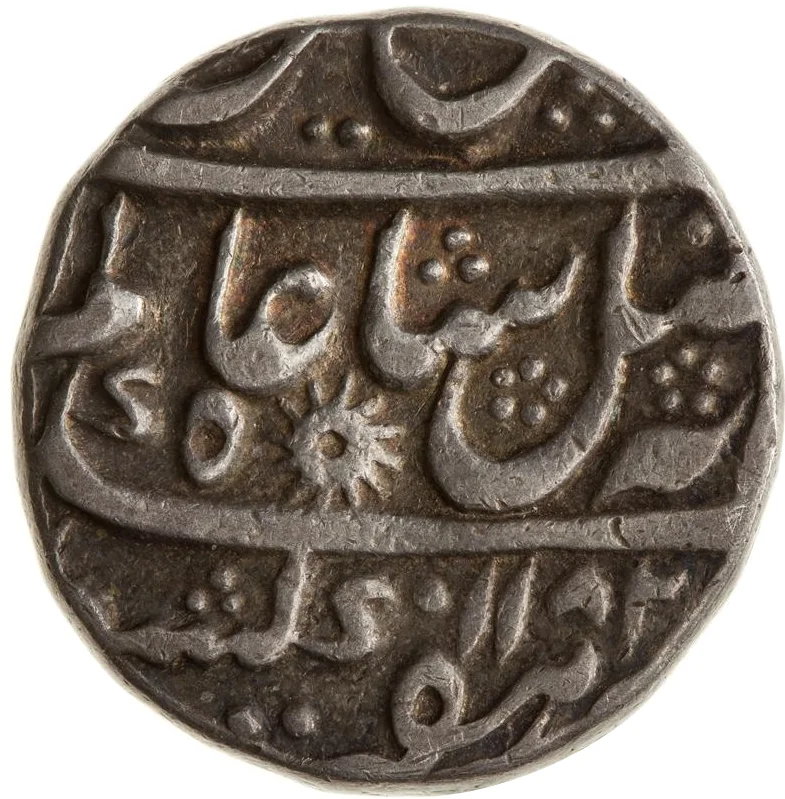
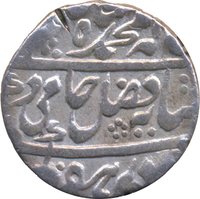
Sikka zad bar haft kishwar: "Fazl Ilah, Hami ud-din Muhammad Shah Alam Badshah" (AH 1182).
Inscription:
شاه عالم بادشاه
حامي دين محمد
ساى فضل لله
سكة زد بر حفت كشور
١١٨٢
حامي دين محمد
ساى فضل لله
سكة زد بر حفت كشور
١١٨٢
Reverse
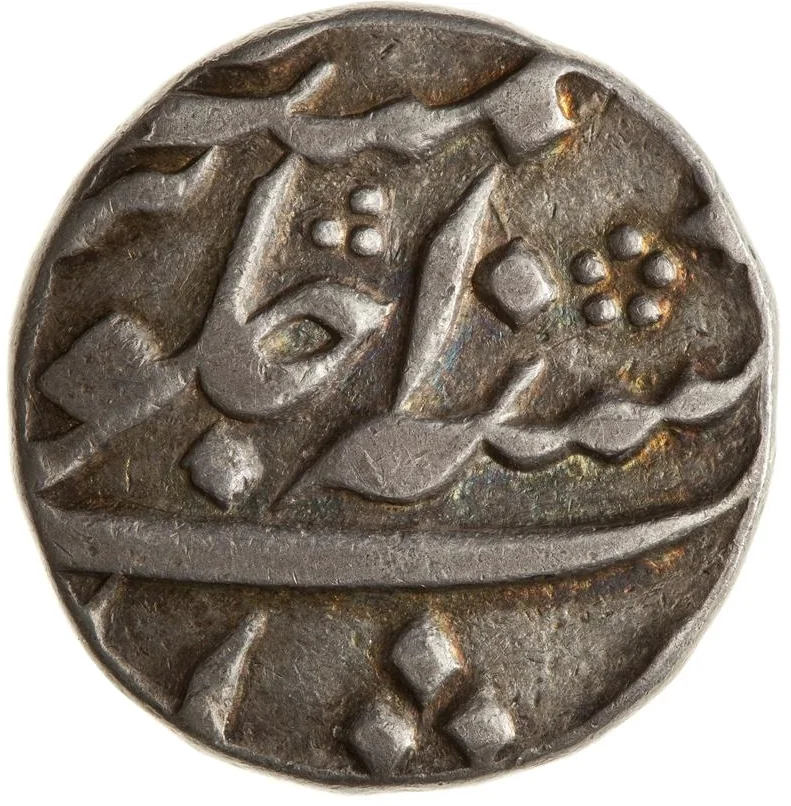
Description:
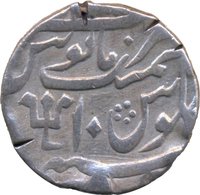
Zarb Murshidabad, Year 10 of Reign.
Edge
Plain
Mintings
| Year | Mint Mark | Mintage | Quality | Collection |
|---|---|---|---|---|
| 1765 | — | — | ||
| 1765 | — | — | ||
| 1766 | — | — | ||
| 1766 | — | — | ||
| 1767 | — | — | ||
| 1767 | — | — | ||
| 1768 | — | — | ||
| 1768 | — | — | ||
| 1769 | — | — | ||
| 1769 | — | — |
Historical background
In 1765, the currency situation in the Bengal Presidency was complex and fragmented, reflecting both the lingering Mughal system and the disruptive influence of the East India Company following its military victories. The primary circulating medium was the silver rupee, a Mughal coin whose weight and purity were theoretically standardized. However, in practice, a bewildering variety of rupees were in use—struck at different mints (like those in Murshidabad, Calcutta, and Patna), bearing the names of past emperors (Alamgiri, Farrukhsiyar, Sicca), and varying in age and intrinsic silver content. This created a chaotic exchange environment where coins were valued not just by face value but by their weight and assay, leading to widespread confusion and fraud.
This monetary disorder was severely exacerbated by the Company's own actions. After the Battle of Plassey in 1757 and the acquisition of the diwani (right to collect revenue) in 1765, vast sums of silver were extracted from Bengal's treasury and sent to China or used for Company investments, causing a severe drain of specie. Furthermore, the Company began minting its own rupees at the Calcutta mint, but these new "Sicca Rupees" were often overvalued against older, worn coins, despite containing less silver. This policy, intended to generate profit for the Company, distorted trade and revenue collection, as the populace was forced to accept the inferior Sicca Rupees for tax payments.
Consequently, the currency crisis of 1765 was a critical factor in Bengal's economic distress. The scarcity of reliable silver coinage stifled commerce, while the Company's manipulation of the coinage for seigniorage profit added to the administrative confusion and public resentment. This unstable monetary foundation, set amidst a backdrop of famine and heavy revenue demands, underscored the Company's transition from a trading entity to a territorial ruler, one whose financial policies were destabilizing the very economy it now sought to control.
This monetary disorder was severely exacerbated by the Company's own actions. After the Battle of Plassey in 1757 and the acquisition of the diwani (right to collect revenue) in 1765, vast sums of silver were extracted from Bengal's treasury and sent to China or used for Company investments, causing a severe drain of specie. Furthermore, the Company began minting its own rupees at the Calcutta mint, but these new "Sicca Rupees" were often overvalued against older, worn coins, despite containing less silver. This policy, intended to generate profit for the Company, distorted trade and revenue collection, as the populace was forced to accept the inferior Sicca Rupees for tax payments.
Consequently, the currency crisis of 1765 was a critical factor in Bengal's economic distress. The scarcity of reliable silver coinage stifled commerce, while the Company's manipulation of the coinage for seigniorage profit added to the administrative confusion and public resentment. This unstable monetary foundation, set amidst a backdrop of famine and heavy revenue demands, underscored the Company's transition from a trading entity to a territorial ruler, one whose financial policies were destabilizing the very economy it now sought to control.
✨ Legendary