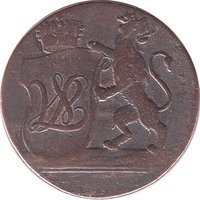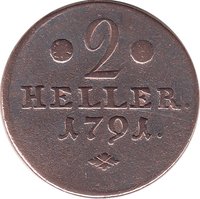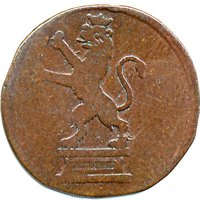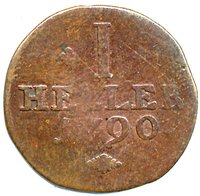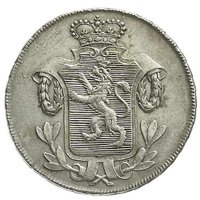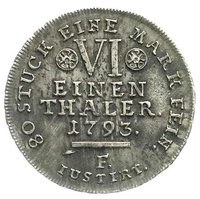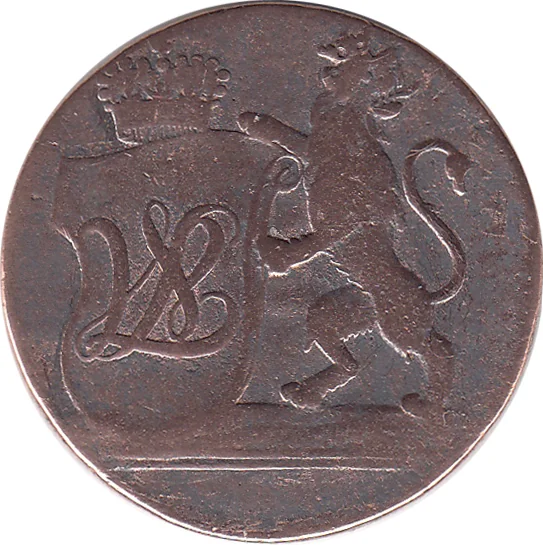
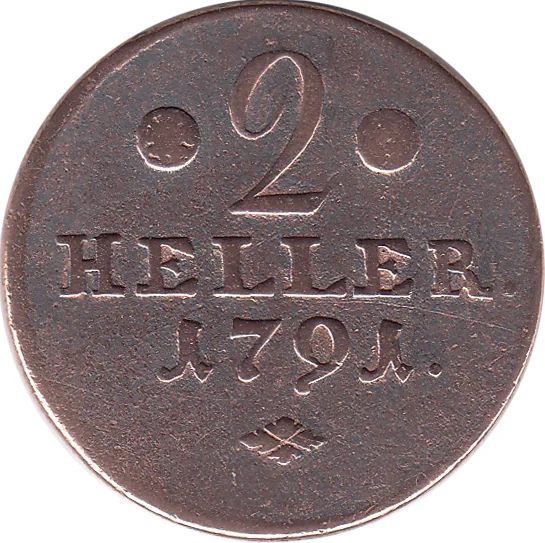
In 1790, the Landgraviate of Hesse-Cassel operated within the complex and fragmented monetary landscape of the Holy Roman Empire. The primary unit of account was the
Reichsthaler, a standardized silver coin defined by imperial decree, which was divided into 24
Gutegroschen or 288
Pfennigs. However, this theoretical framework was complicated by the simultaneous circulation of numerous physical coins, both domestic and foreign. The landgraviate minted its own
Thaler and smaller denominations, but these competed in daily commerce with coins from neighboring German states and even older, debased regional currencies, leading to frequent calculations and exchanges.
This monetary plurality was a source of administrative challenge and public inconvenience. The value of many circulating coins was not based on their face value but on their intrinsic silver content, which required merchants and officials to constantly assess and convert between different types. Furthermore, the landgraviate's fiscal health was notably robust for the period, largely due to its infamous practice of hiring out its well-trained soldiers as mercenaries to foreign powers, most recently and lucratively to Great Britain during the American War of Independence. The resulting influx of British subsidy payments, often in silver, bolstered the state treasury and provided specie for coinage, making Hesse-Cassel relatively stable compared to its debt-ridden contemporaries.
Despite this fiscal strength, the currency system itself was ripe for reform. The late 18th century saw enlightened administrators across Europe seeking to standardize and simplify monetary systems to facilitate trade and centralize control. In Hesse-Cassel, Landgrave William IX (who became Elector William I in 1803) was a financially astute ruler managing a modernizing state. While major standardization would come later, the year 1790 represents a point where a solvent treasury coexisted with an antiquated, multi-layered currency system, highlighting the tension between the old order of the Empire and the emerging demands of a centralized fiscal state.