Logo Title
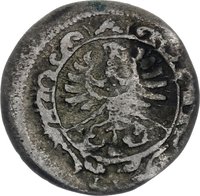
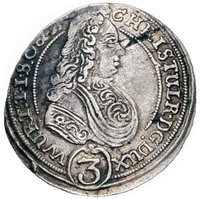
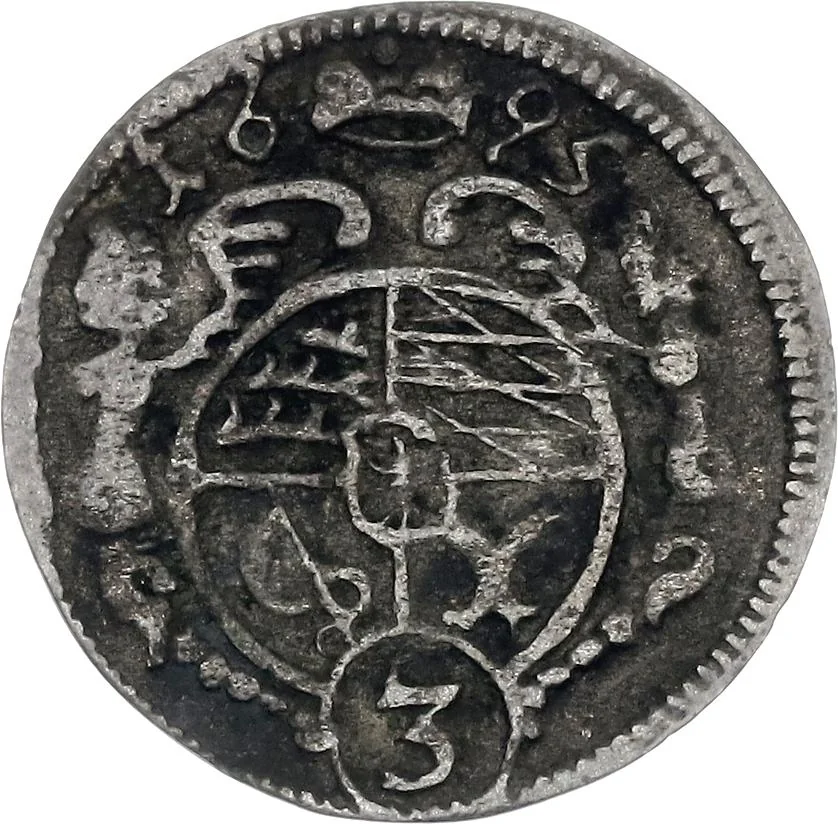
obverse
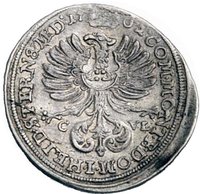
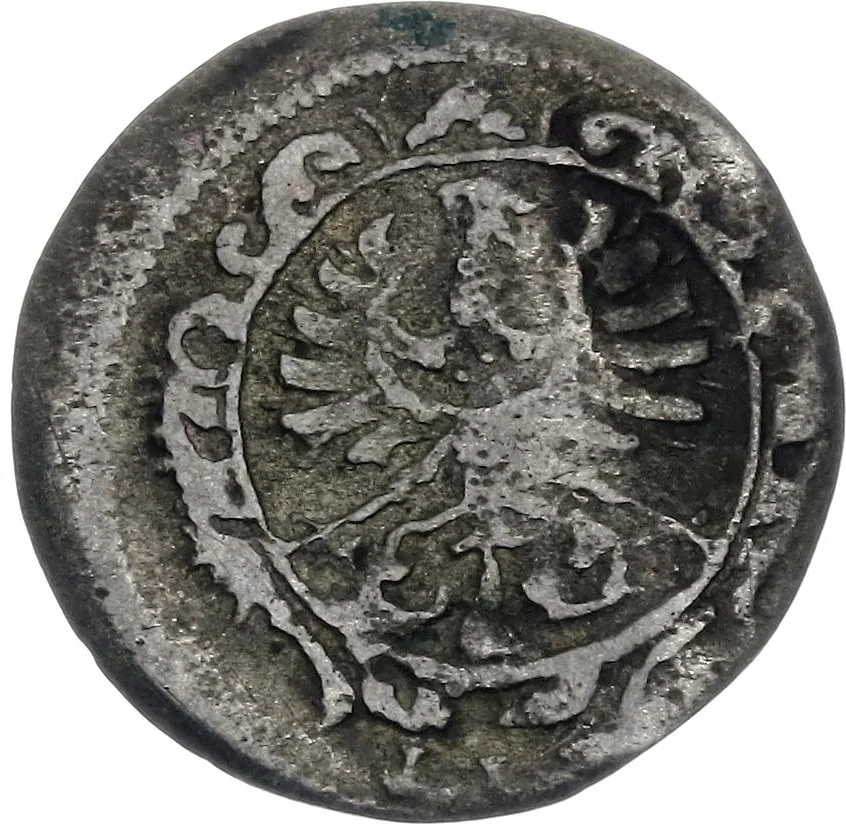
reverse
Katz Coins Notes & Supplies Corp.

1 Gröschl – Duchy of Württemberg-Oels

Context
Years: 1691–1704
Country: Bohemia
Currency:
Subdivision: 1 Gröschl = 3 Pfennig = 1⁄84 Thaler
Demonetized: Yes
Material
Diameter: 16 mm
Weight: 0.76 g
Silver weight: 0.76 g
Shape: Round
Composition: Silver
Magnetic: No
Alignment: Medal alignment
Obverse
OBVERSE ↑
flip
Reverse
REVERSE ↑
References
KM: #Click to copy to clipboard58
Numista: #73095
Value
Bullion value: $2.12

Obverse

Description:
Oval shield of Öls in baroque frame, supported by a mermaid. Princely hat over date, '3' in oval below.
Inscription:
1698

3

Reverse

Description:
Silesian eagle in baroque oval, with mintmaster initials if present.
Inscription:
L L

Edge

Mints

NameMark
Oleśnica

Mintings

YearMint MarkMintageQualityCollection
1691
1694LL
1695
1696
1696LL
1697LL
1698LL
1698T
1699LL
1700CVL
1701CVL
1702CVL
1703CVL
1704CVL

Historical background

In 1691, the currency situation in the Duchy of Württemberg-Oels was characterized by the complex and fragmented monetary systems of the Holy Roman Empire. As a small Silesian duchy, Württemberg-Oels did not possess its own independent minting rights (Münzregal) but operated within the broader economic and monetary framework of the Habsburg Crown of Bohemia, to which Silesia belonged. Consequently, the circulating medium was a mixture of coins issued by regional Silesian mints (like those in Breslau), imperial thalers from the Reichsmünzordnung, and a plethora of foreign coins from neighboring German states and trade partners, leading to chronic instability and valuation difficulties.

The period was marked by the lingering effects of the Kipper und Wipper inflation crisis of the early 17th century, which had eroded trust in small coinage. While larger silver Reichsthaler coins retained their intrinsic value, the everyday small change—primarily kreuzers, groschen, and pfennigs—was often debased by various issuing authorities. For Duke Christian Ulrich I, this created significant fiscal challenges in managing state revenues and expenses, as the value of collected taxes could fluctuate wildly depending on the mix of coins received, necessitating constant exchange and assay.

Furthermore, the duchy’s economy was still recovering from the devastation of the Thirty Years' War, which had ended only four decades earlier. This fragile recovery, combined with the impending military and financial pressures of the Nine Years' War (1688-1697), placed additional strain on the monetary system. The duke’s administration likely had to engage in meticulous accounting and periodic currency ordinances to fix exchange rates between the myriad coins in circulation, attempting to bring a semblance of order to a system inherently prone to disorder and speculative exploitation.
Rare