Logo Title
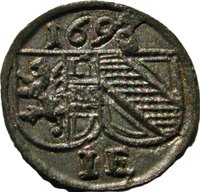
obverse
reverse
lorstuff CC BY
Context
Years: 1688–1709
Currency:
Demonetized: Yes
Material
Diameter: 11 mm
Weight: 0.33 g
Silver weight: 0.33 g
Shape: Round
Composition: Silver
Magnetic: No
References
KM: #Click to copy to clipboard268
Numista: #72975
Value
Bullion value: $0.93

Obverse

Description:
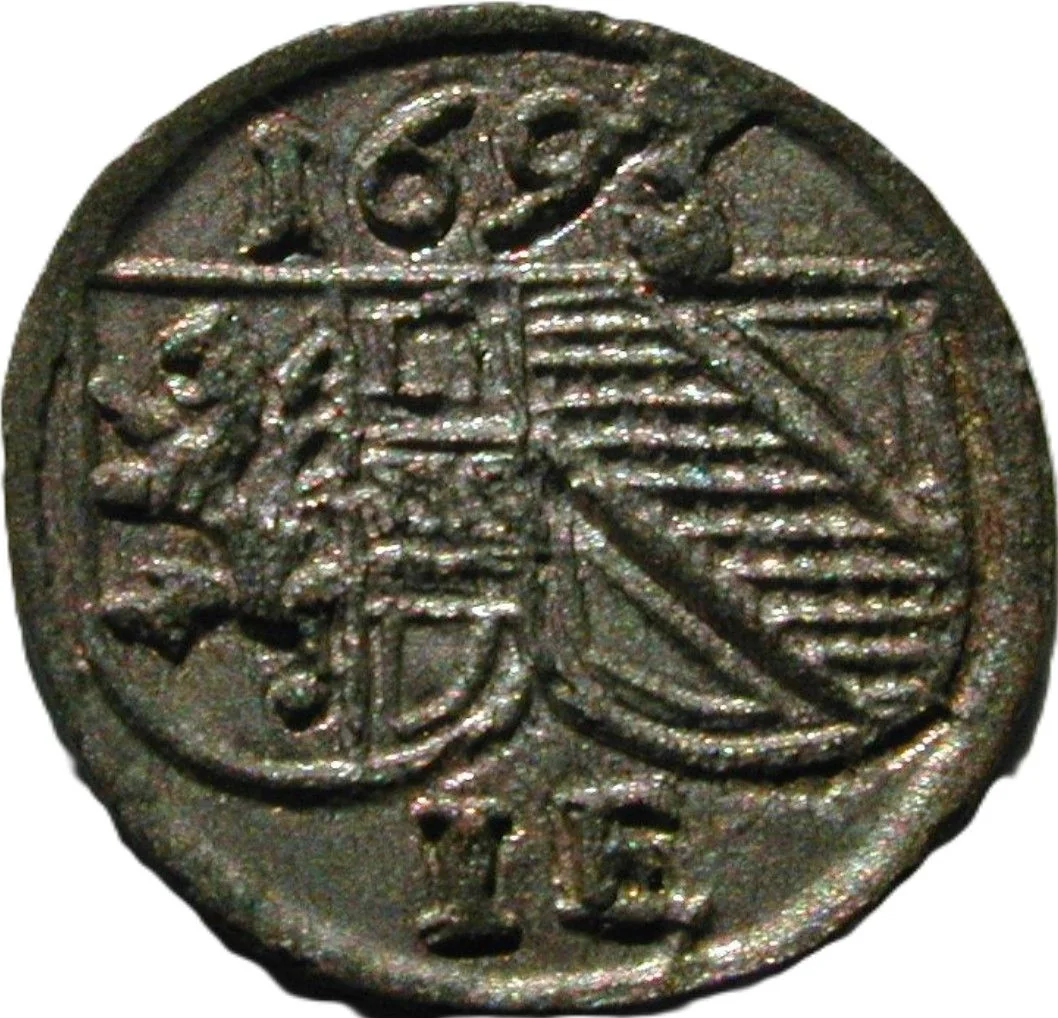
Salzburg and archiepiscopal arms, dated, with "IE" for Johann Ernst.
Inscription:
1693

IE
Script: Latin

Reverse

Description:
Uniface blank coin.

Edge

Plain

Mints

NameMark
Salzburg

Mintings

YearMint MarkMintageQualityCollection
1688
1689
1690
1691
1692
1693
1694
1695
1696
1697
1698
1699
1700
1701
1702
1703
1704
1705
1706
1707
1708
1709

Historical background

In 1688, the Prince-Archbishopric of Salzburg operated within the complex monetary landscape of the Holy Roman Empire. The territory did not possess a central, unified minting authority of its own for large-scale coin production. Instead, its currency system was a patchwork of externally minted coins that circulated alongside local issues. The most important of these were the silver Reichsthaler and Gulden, whose values were defined by Imperial ordinances, particularly the Reichsmünzordnung (Imperial Minting Ordinance). However, the actual circulating medium consisted heavily of smaller denomination coins, often minted locally by the archbishops or by neighboring states, leading to frequent issues of debasement and inconsistent value.

The reigning prince-archbishop at the time, Johann Ernst von Thun (ruled 1687-1709), inherited a financial system strained by the military demands of the ongoing Great Turkish War (1683-1699). Salzburg, like other German states, contributed troops and funds to the Imperial Habsburg war effort against the Ottoman Empire. This fiscal pressure often tempted authorities to engage in Kipper- und Wipperzeit practices—clipping coins or issuing lightweight, debased coinage to generate short-term revenue—which eroded public trust in the currency. While von Thun was a noted reformer in administration and construction, the economic realities of 1688 meant maintaining a stable currency was a significant challenge amidst broader imperial turmoil.

Consequently, daily commerce in Salzburg relied on a mix of coins whose real value was determined by their precious metal content and the often-fluctuating exchange rates between them. Alongside official Reichsthalers, smaller Kreuzer and Pfennig coins facilitated local trade. The lack of a strong, centralized minting policy meant that the bishopric's monetary stability was vulnerable to regional economic shifts and the inflationary practices of other states, whose coins flooded the market. Thus, the currency situation in 1688 was one of fragile dependency on imperial frameworks and susceptible to the destabilizing fiscal policies common across the Empire during a period of prolonged warfare.

Series: 1688 Bishopric of Salzburg circulation coins

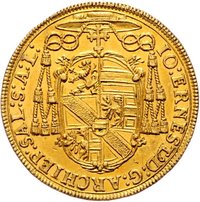
1 Pfennig obverse
1 Pfennig reverse
1 Pfennig
1688-1709
2 Ducats obverse
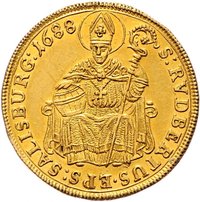
2 Ducats reverse
2 Ducats
1688-1708
2 Ducats obverse
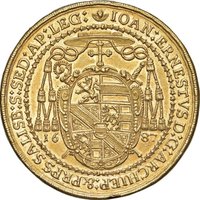
2 Ducats reverse
2 Ducats
1688
💎 Extremely Rare