

1 Shilling – Biafra
Nigeria

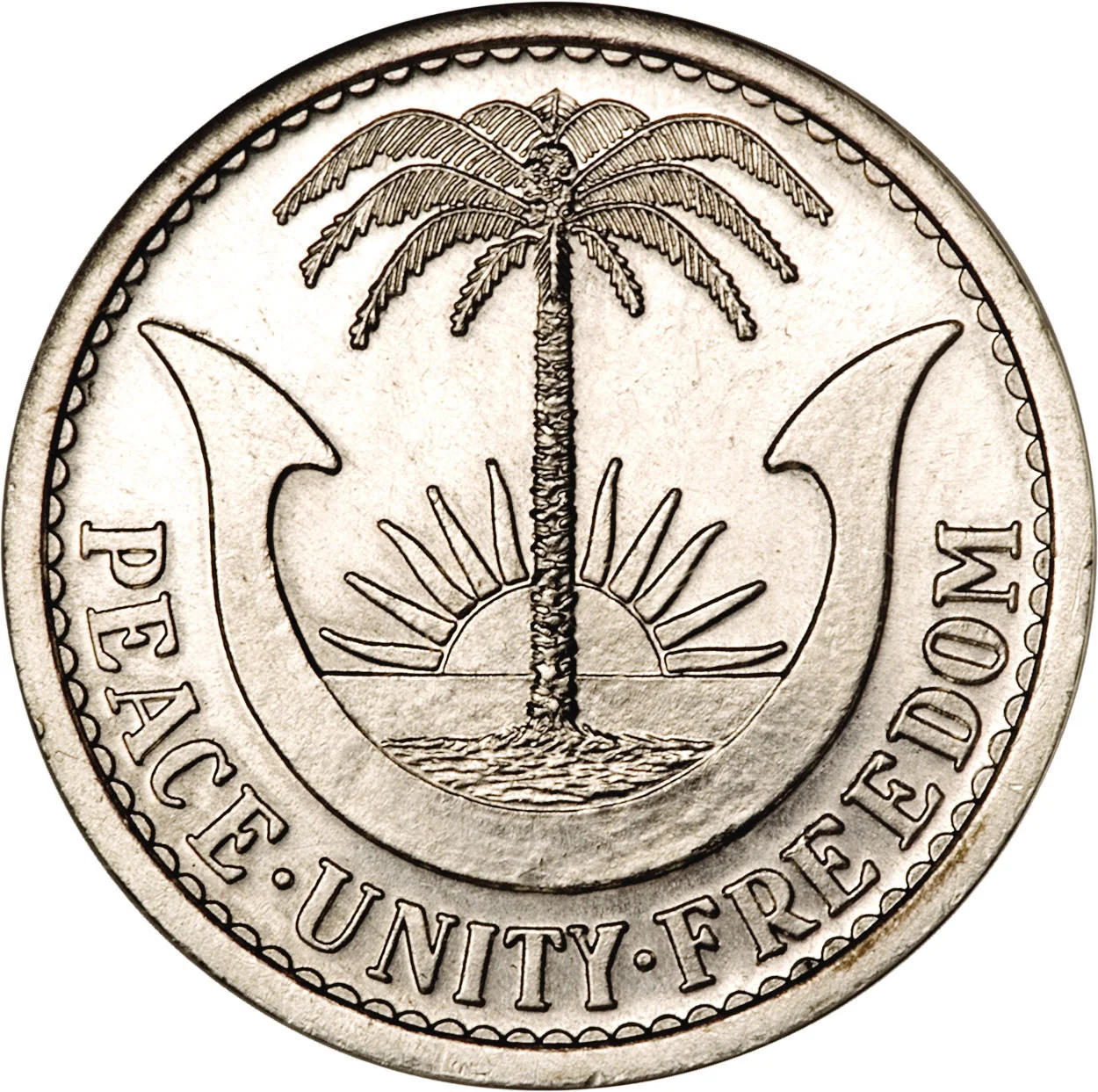
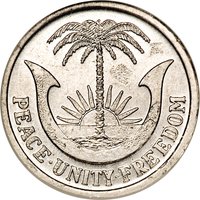
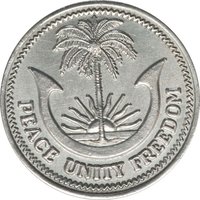
Obverse
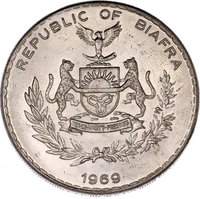
Inscription:
PEACE·UNITY·FREEDOM
Script: Latin
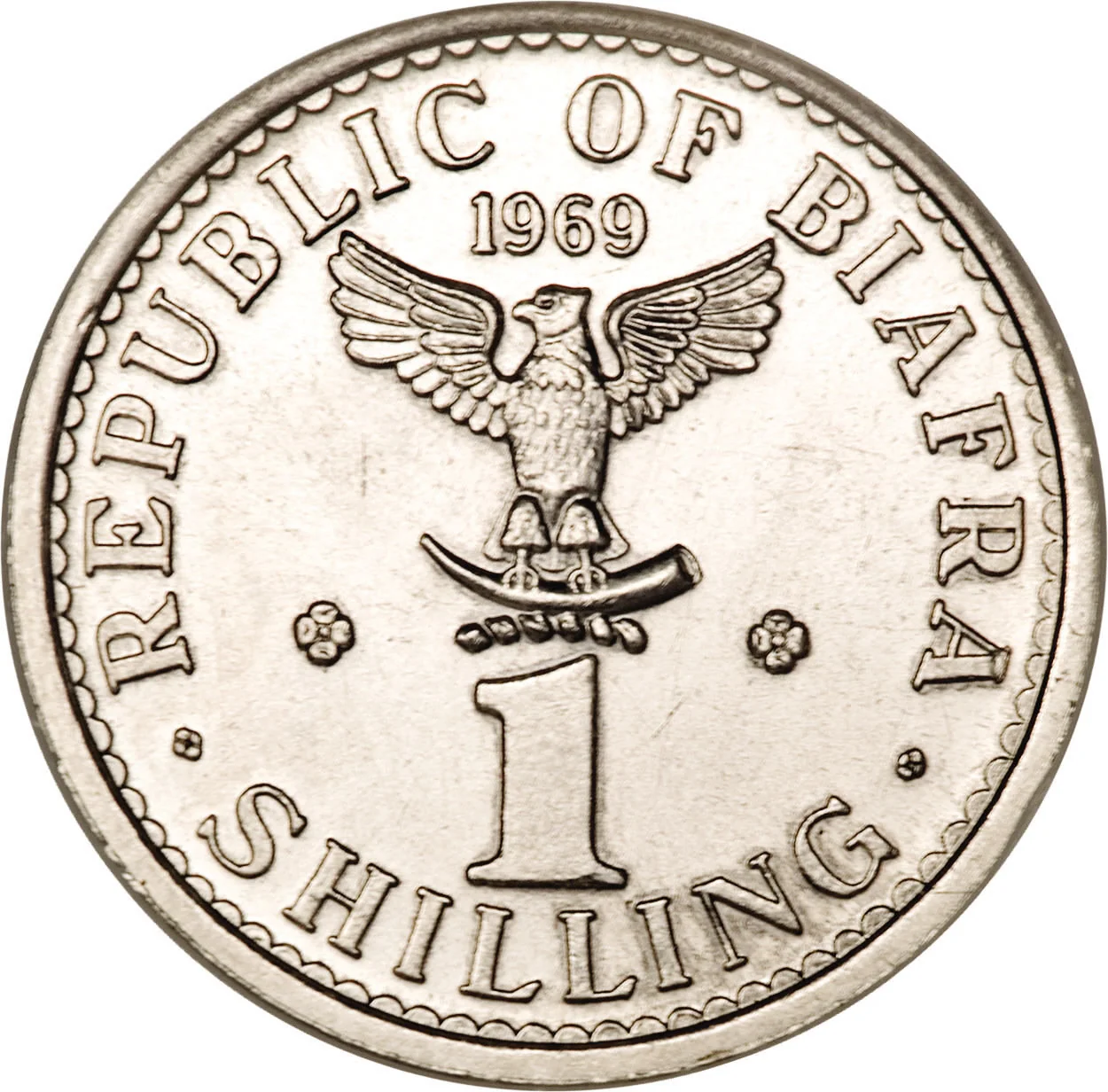
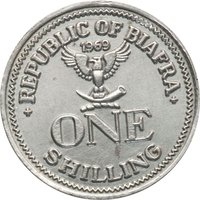
Reverse
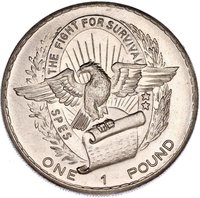
Inscription:
REPUBLIC OF BIAFRA
1969
1
SHILLING
1969
1
SHILLING
Script: Latin
Edge
Plain
Mintings
| Year | Mint Mark | Mintage | Quality | Collection |
|---|---|---|---|---|
| 1969 | — | — |
Historical background
By 1969, the currency situation in the Republic of Biafra was one of hyperinflation and collapsing confidence, reflecting the dire military and economic pressures of the final year of the Nigerian Civil War. The Biafran government, having introduced the Biafran Pound in 1968 to assert sovereignty and replace Nigerian currency, saw its value evaporate as federal forces tightened a blockade and captured key economic areas, including the oil-rich coast and the banknote printing works in Enugu. With no foreign reserves, limited international recognition, and a shrinking territory, the government resorted to printing money excessively to fund the war effort, leading to a catastrophic devaluation.
The physical currency itself became problematic. New notes, printed abroad and airlifted in, were often of poor quality and easy to counterfeit, further undermining trust. In the besieged enclave, essential goods were scarce, and what little was available through risky blockade-running was traded at astronomical prices. The Biafran Pound became virtually worthless for practical commerce; a situation where a basket of physical banknotes might not buy a basket of food. Barter—using cigarettes, stockfish, or alcohol—became a more reliable medium of exchange than the official currency.
Ultimately, the currency crisis was a symptom of Biafra's impending collapse. The hyperinflation eroded civilian morale and the government's remaining authority, as salaries and savings were rendered meaningless. When Biafra surrendered in January 1970, the Biafran Pound ceased to exist overnight, leaving holders with worthless paper. The Central Bank of Nigeria later offered a modest exchange, but the episode remained a stark illustration of the economic disintegration that accompanied the war's tragic humanitarian catastrophe.
The physical currency itself became problematic. New notes, printed abroad and airlifted in, were often of poor quality and easy to counterfeit, further undermining trust. In the besieged enclave, essential goods were scarce, and what little was available through risky blockade-running was traded at astronomical prices. The Biafran Pound became virtually worthless for practical commerce; a situation where a basket of physical banknotes might not buy a basket of food. Barter—using cigarettes, stockfish, or alcohol—became a more reliable medium of exchange than the official currency.
Ultimately, the currency crisis was a symptom of Biafra's impending collapse. The hyperinflation eroded civilian morale and the government's remaining authority, as salaries and savings were rendered meaningless. When Biafra surrendered in January 1970, the Biafran Pound ceased to exist overnight, leaving holders with worthless paper. The Central Bank of Nigeria later offered a modest exchange, but the episode remained a stark illustration of the economic disintegration that accompanied the war's tragic humanitarian catastrophe.
Series: 1969 Biafra circulation coins
🌱 Fairly Common