

1 Thaler – Hungary
Hungary
Context

Material
Diameter: 45 mm
Weight: 27.34 g
Silver weight: 27.34 g
Shape: Irregular round
Composition: Silver
Magnetic: No
References
KM: #Click to copy to clipboard205
Numista: #72247
Value
Bullion value: $79.30
Obverse
Description:
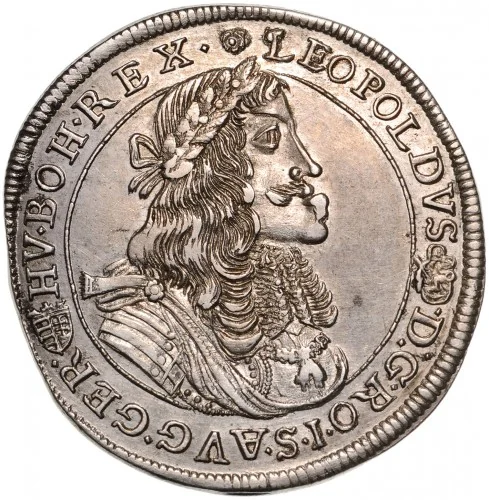
Laureate head right. Pearl circle encloses Hungarian shield; Madonna and Child in legend.
Inscription:
LEOPOLDVS·D·G·RO·I·S·AVG·GER·HV·BOH·REX
Script: Latin
Reverse
Description:
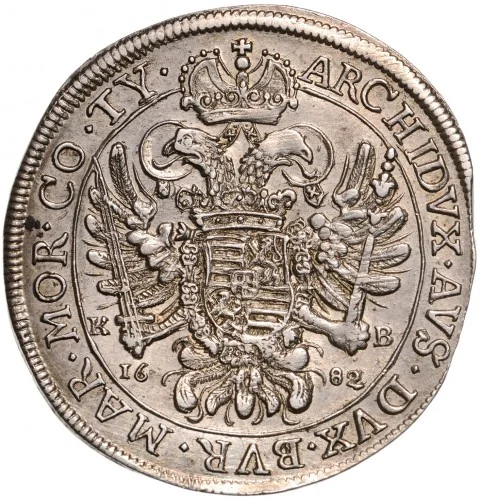
Imperial Eagle divides date and mintmark.
Inscription:
ARCHIDVX·AVS·DVX·BVR·MAR·MOR·CO·TY
K B
16 81
K B
16 81
Script: Latin
Edge
Mints
| Name | Mark |
|---|---|
| Kremnica | KB |
Historical background
In 1681, the currency situation in the Kingdom of Hungary, then part of the Habsburg Monarchy, was characterized by severe instability and debasement, a direct consequence of prolonged warfare. The ongoing Great Turkish War (1683-1699) was in its preparatory phase, following the Habsburgs' liberation of Buda in 1686, placing immense financial strain on the imperial treasury. To fund military campaigns and fortifications, the Habsburg authorities, particularly under Emperor Leopold I, repeatedly resorted to debasing the silver coinage, notably the thaler and its fractional kreuzers, by reducing their precious metal content.
This monetary policy led to rampant inflation, a loss of public trust in the currency, and economic hardship, especially for soldiers and fixed-income earners. The circulation was a chaotic mix of older, full-value coins, new debased issues, and various foreign currencies, creating a complex and unfavorable exchange environment. The Hungarian diet and estates frequently protested these measures, as the debasement effectively acted as a hidden tax that drained wealth from the kingdom to finance Vienna's imperial ambitions, exacerbating tensions between the Hungarian nobility and the central Habsburg government.
Furthermore, the Ottoman occupation of central Hungary, which would only fully recede after the 1699 Treaty of Karlowitz, had previously fragmented the kingdom's economic space. This fragmentation meant that no unified monetary policy could be effectively implemented across all Hungarian territories. Thus, in 1681, the currency crisis was both a symptom of the fiscal demands of impending total war and a reflection of the deep political and territorial divisions within the lands of the Crown of St. Stephen.
This monetary policy led to rampant inflation, a loss of public trust in the currency, and economic hardship, especially for soldiers and fixed-income earners. The circulation was a chaotic mix of older, full-value coins, new debased issues, and various foreign currencies, creating a complex and unfavorable exchange environment. The Hungarian diet and estates frequently protested these measures, as the debasement effectively acted as a hidden tax that drained wealth from the kingdom to finance Vienna's imperial ambitions, exacerbating tensions between the Hungarian nobility and the central Habsburg government.
Furthermore, the Ottoman occupation of central Hungary, which would only fully recede after the 1699 Treaty of Karlowitz, had previously fragmented the kingdom's economic space. This fragmentation meant that no unified monetary policy could be effectively implemented across all Hungarian territories. Thus, in 1681, the currency crisis was both a symptom of the fiscal demands of impending total war and a reflection of the deep political and territorial divisions within the lands of the Crown of St. Stephen.

✨ Legendary