

6 Kreuzers – County of Tyrol
Austria
Context

Material
Diameter: 25 mm
Weight: 3.06 g
Silver weight: 1.53 g
Shape: Round
Composition: 50% Silver
Standard: Gold tenth ounce
Magnetic: No
Alignment: Medal alignment
flip
References
KM: #Click to copy to clipboard1569
Numista: #72111
Value
Bullion value: $4.29
Obverse
Description:
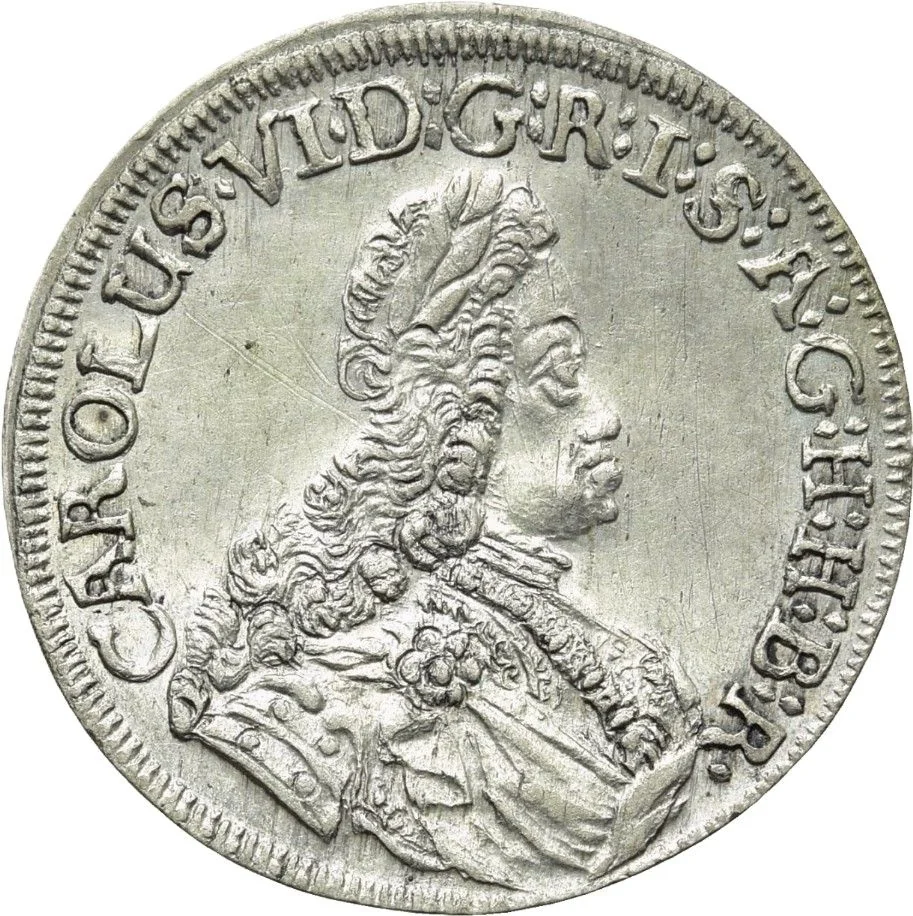
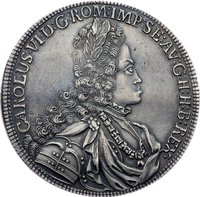
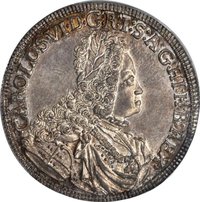
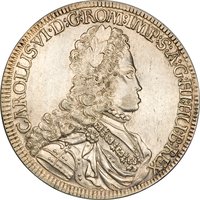
Bust of Charles VI facing right, touching the rim. Legend encircles from 8 o'clock.
Inscription:
CAROLUS VI D R I S A G H H B R
Script: Latin
Engravers: Johann Anton König, Josef Christof König
Reverse
Description:
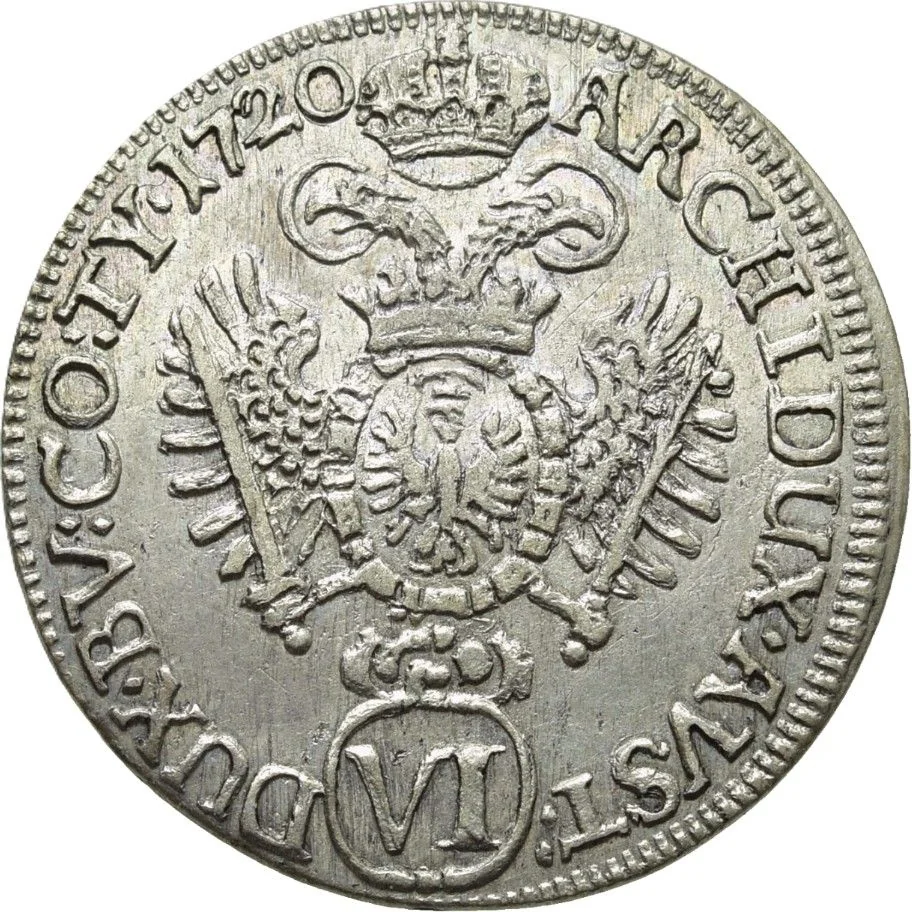
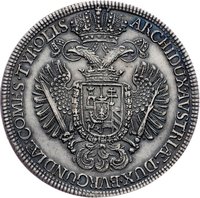
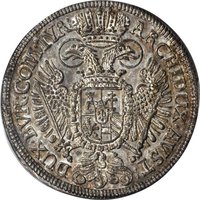
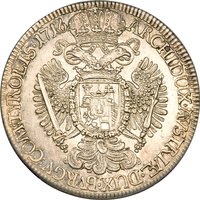
Imperial double-headed eagle with Tyrol shield, encircled by the Golden Fleece chain. Legend around, value in Roman numerals in cartouche below.
Inscription:
ARCHIDUX AVST DUX BV CO TY 1720
(VI)
(VI)
Script: Latin
Engravers: Johann Anton König, Josef Christof König
Edge
Plain
Mints
| Name | Mark |
|---|---|
| Hall | — |
Mintings
| Year | Mint Mark | Mintage | Quality | Collection |
|---|---|---|---|---|
| 1714 | — | — | ||
| 1715 | — | — | ||
| 1717 | — | — | ||
| 1718 | — | — | ||
| 1719 | — | — | ||
| 1720 | — | — | ||
| 1721 | — | — | ||
| 1722 | — | — | ||
| 1723 | — | — | ||
| 1724 | — | — | ||
| 1726 | — | — |
Historical background
In 1714, the County of Tyrol, a hereditary possession of the Habsburg Monarchy, operated within a complex and challenging monetary landscape. The region was not immune to the widespread currency debasement and instability that plagued much of the Holy Roman Empire in the aftermath of the War of the Spanish Succession and decades of conflict. While the official currency was based on the Convention standard (following the 1707 Wiener Münzvertrag or Vienna Coinage Treaty), which aimed to standardize silver gulden and kreuzer across southern Germany and Austria, the reality in Tyrol was a chaotic circulation of both domestic and foreign coins. These included older Tyrolean issues, coins from other German states, and Italian specie, all trading at fluctuating values against the official standard.
This monetary fragmentation was exacerbated by Tyrol's strategic position as a transit hub between the German lands and Italy. The flow of trade across the Brenner Pass brought a constant influx of foreign currency, particularly Venetian ducats and other Italian coins, which complicated local transactions. Furthermore, the financial strains on the Habsburg treasury often led to the issuance of debased coinage to generate revenue, a practice that eroded public trust. Local authorities and merchants therefore relied on published exchange lists (Wechseltabellen) to navigate the daily confusion, but these were only a partial remedy.
Consequently, the year 1714 represents a point within a prolonged period of adjustment. The Habsburg state's efforts to impose monetary order through conventions and treaties were slowly working toward centralization, but in Tyrol, the practical economy still functioned with a cumbersome multiplicity of coins. This situation created significant hurdles for commerce, taxation, and daily life, as the value of money remained uncertain and subject to both official manipulation and the pressures of cross-border trade.
This monetary fragmentation was exacerbated by Tyrol's strategic position as a transit hub between the German lands and Italy. The flow of trade across the Brenner Pass brought a constant influx of foreign currency, particularly Venetian ducats and other Italian coins, which complicated local transactions. Furthermore, the financial strains on the Habsburg treasury often led to the issuance of debased coinage to generate revenue, a practice that eroded public trust. Local authorities and merchants therefore relied on published exchange lists (Wechseltabellen) to navigate the daily confusion, but these were only a partial remedy.
Consequently, the year 1714 represents a point within a prolonged period of adjustment. The Habsburg state's efforts to impose monetary order through conventions and treaties were slowly working toward centralization, but in Tyrol, the practical economy still functioned with a cumbersome multiplicity of coins. This situation created significant hurdles for commerce, taxation, and daily life, as the value of money remained uncertain and subject to both official manipulation and the pressures of cross-border trade.
💎 Very Rare