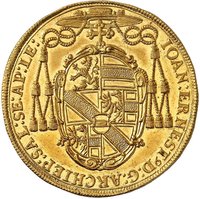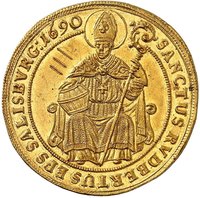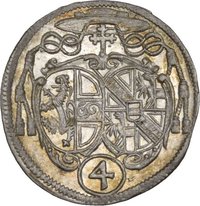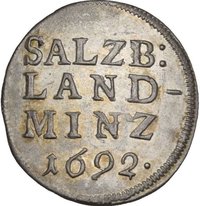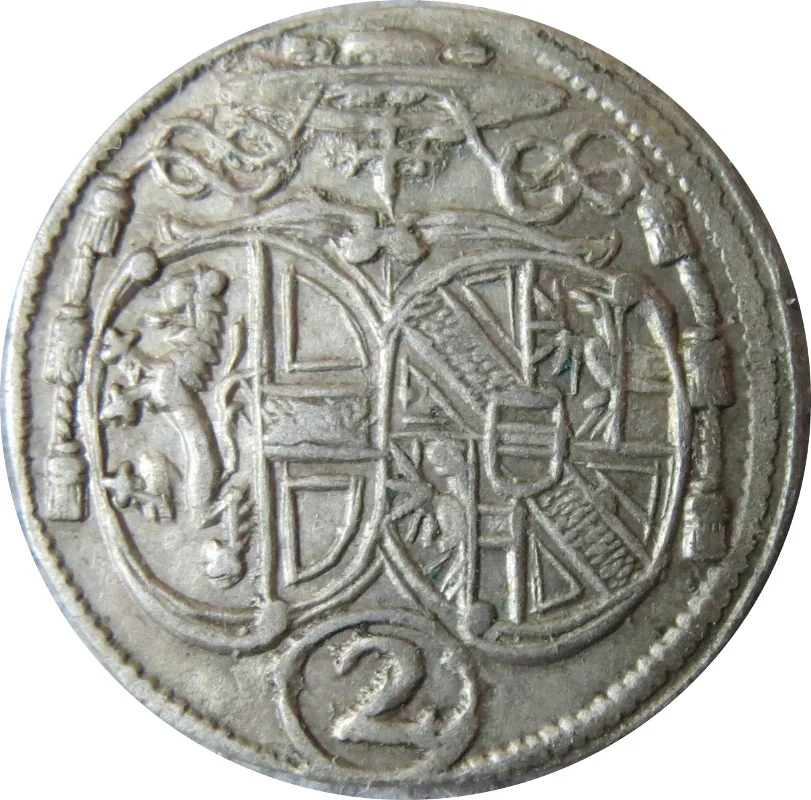
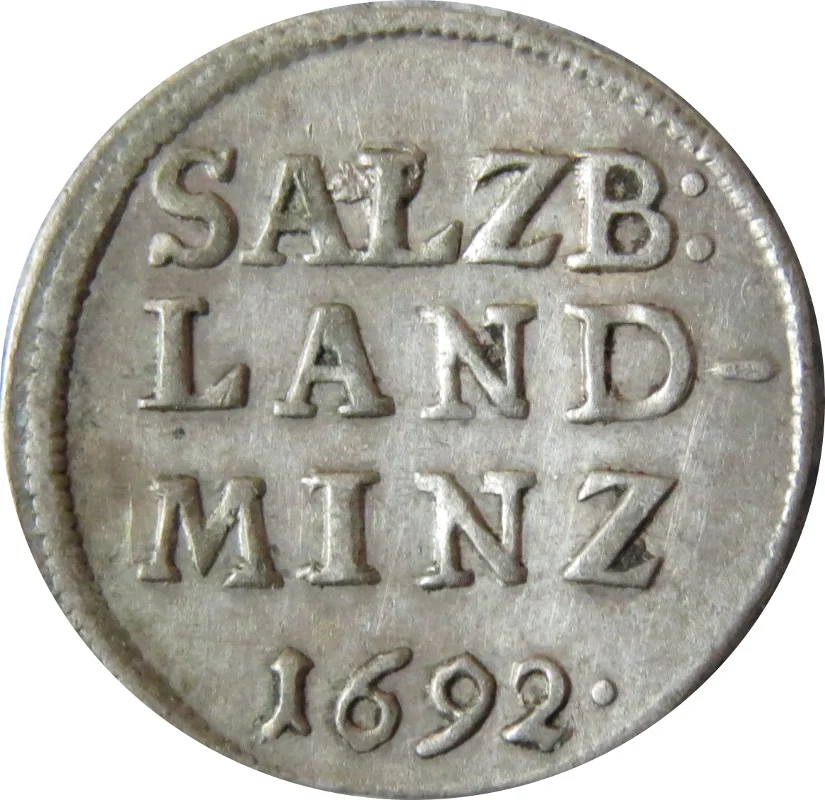
In 1692, the Bishopric of Salzburg, a wealthy and independent ecclesiastical principality within the Holy Roman Empire, operated within a complex and fragmented monetary landscape. Like most German states, it did not possess an exclusive right to mint its own coins; this privilege was shared with other local authorities, most notably the powerful archbishops themselves and the cathedral chapter. Consequently, a variety of silver and smaller denomination coins circulated, not only those struck locally in Salzburg but also currencies from neighboring states like Bavaria and the Tyrol, as well as ubiquitous large-scale trade coins like the Reichsthaler. The value and acceptance of these coins were governed by official
Münzordnungen (currency ordinances), which set exchange rates and standards, but maintaining monetary stability was a constant challenge.
The primary currency unit was the Gulden (florin), divided into 60 Kreuzer. In practice, the most important large silver coin was the Reichsthaler, officially valued at 90 Kreuzer (or 1.5 Gulden) according to the imperial
Reichsmünzordnung of 1566. However, by the late 17th century, this standard was under severe pressure. The Thirty Years' War had left a legacy of debased coinage and inflation across the Empire. Archbishop Johann Ernst von Thun (ruled 1687-1709), in power in 1692, faced the ongoing task of upholding the quality of Salzburg's coinage to protect the prince-bishopric's economic credibility and the value of its substantial revenues from salt, mining, and transit trade.
Therefore, the currency situation in 1692 was one of cautious management amidst regional instability. While Salzburg's own coins, such as the silver Thaler and smaller Batzen, were generally respected for their reliable silver content, the monetary environment was fluid. The archbishopric's authorities had to continuously monitor and regulate the influx of inferior foreign coins to prevent local economic disruption. This period was thus characterized by the effort to maintain a sound currency system as a cornerstone of Salzburg's political independence and economic prosperity, a challenge that required constant vigilance against the inflationary tendencies and debasements prevalent in the wider Empire.