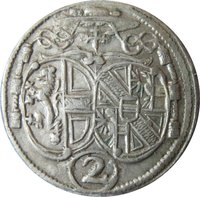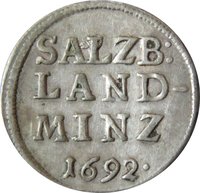
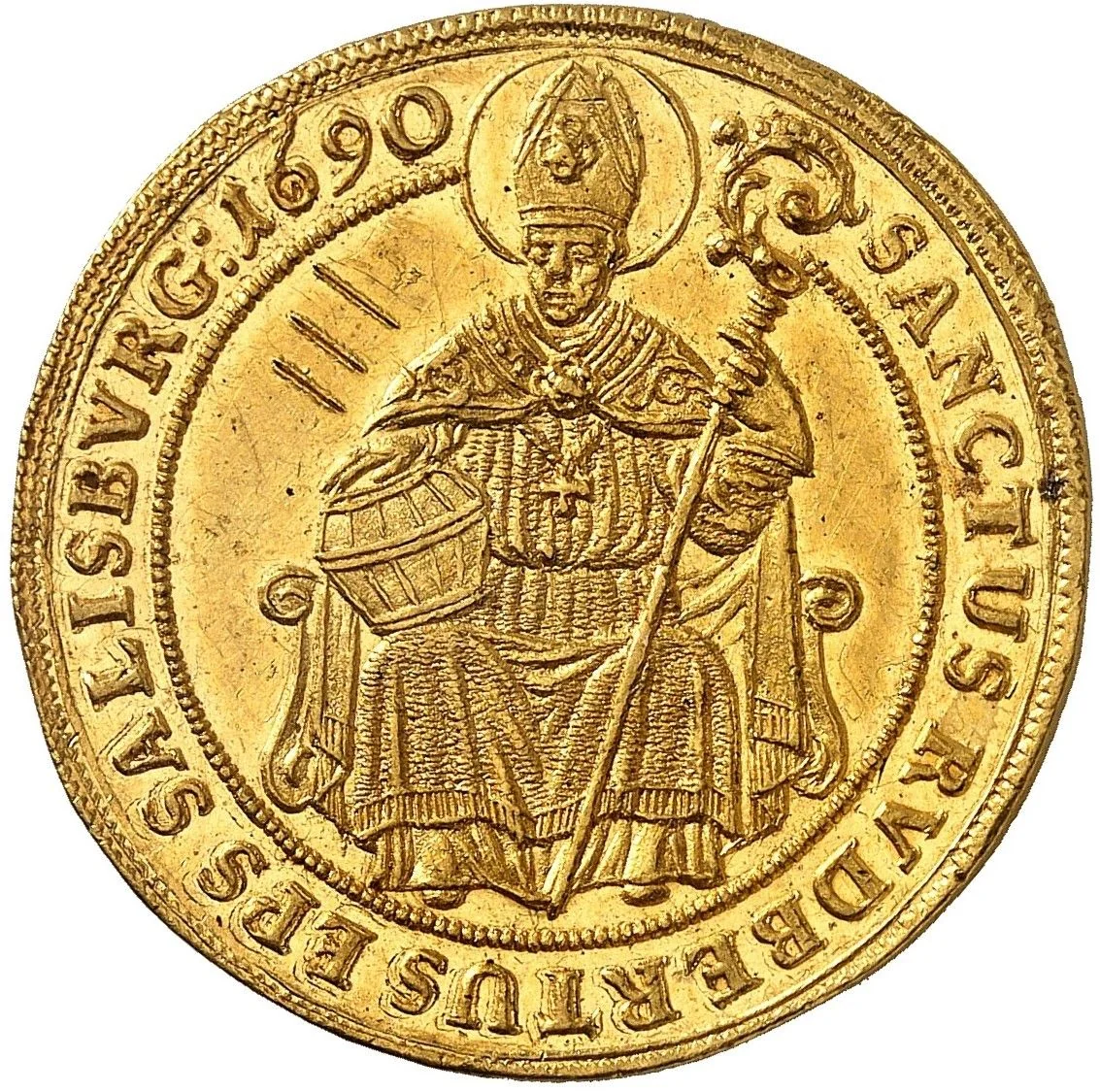
In 1690, the currency situation within the Prince-Archbishopric of Salzburg was complex and challenging, reflecting the fragmented monetary landscape of the Holy Roman Empire. The principality did not possess its own major mint for large-scale coinage; instead, it primarily issued smaller
Heller and
Kreuzer coins for local use. The wider circulating medium was a chaotic mix of foreign and domestic currencies, including silver
Reichsthalers (imperial thalers) from various German states, gold ducats from Italian and Dutch mints, and the ubiquitous
Gulden (florins). The value of these coins was not fixed by a central authority but fluctuated based on their precious metal content and the decreed "valuation" (
Kurant) set by the Salzburg government, leading to constant confusion and potential for debasement.
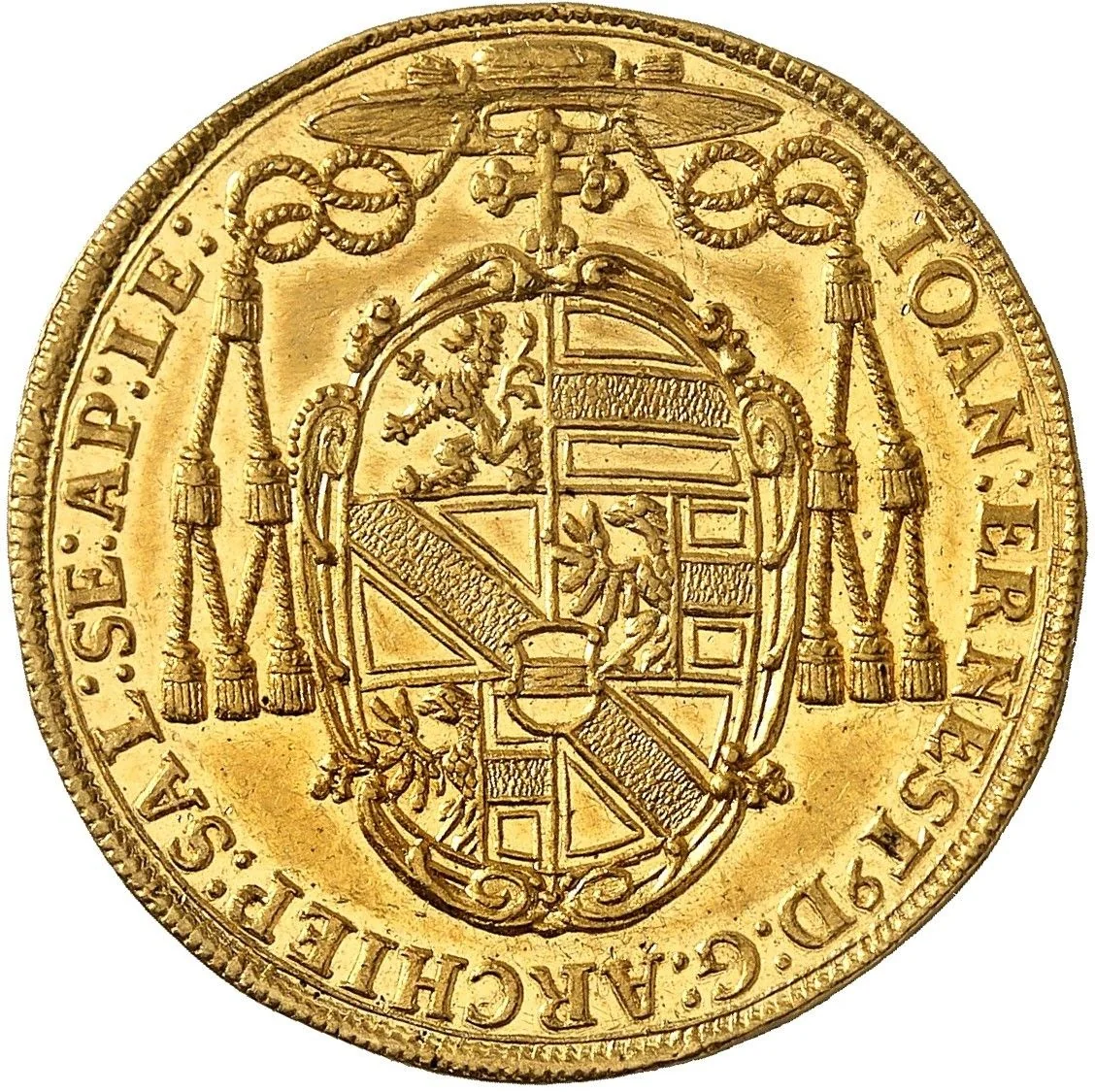
This monetary fragmentation was exacerbated by the economic policies of Prince-Archbishop Johann Ernst von Thun (r. 1687-1709). While a great builder in the Baroque style, his projects required substantial revenue, increasing the temptation to engage in currency manipulation. The government frequently issued
Münzmandate (currency decrees) that attempted to revalue or devalue specific coins in circulation, often to gain seigniorage profit or to stem the outflow of good silver coinage. For merchants and peasants alike, this created an unstable environment where the real value of payments and savings could be arbitrarily altered by decree, hindering commerce and fostering distrust.
Furthermore, Salzburg's economy was still fundamentally agrarian, with significant income derived from its salt mines and transit trade. The need to settle larger transactions, especially with foreign merchants, forced reliance on high-quality silver thalers and gold coins from abroad, making the local economy vulnerable to external monetary shocks. Consequently, the year 1690 would have been typical of a period marked by a chronic shortage of reliable small change for daily wages and market purchases, alongside the simultaneous circulation of overvalued debased coins and undervalued full-weight foreign coins, which were often hoarded or melted down. This unstable system placed a heavy burden on the populace and complicated the principality's fiscal administration.