Logo Title
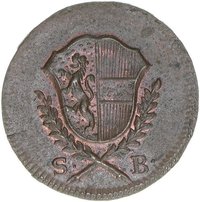
obverse
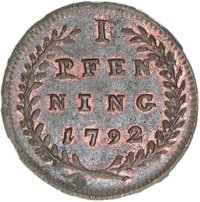
reverse
Numismatik Zöttl
Context
Years: 1792–1802
Currency:
Demonetized: Yes
Material
Diameter: 17 mm
Weight: 1.4 g
Thickness: 0.65 mm
Shape: Round
Composition: Copper
Magnetic: No
Technique: Milled
Alignment: Medal alignment
Obverse
OBVERSE ↑
flip
Reverse
REVERSE ↑
References
KM: #Click to copy to clipboard474
Numista: #71911

Obverse

Description:
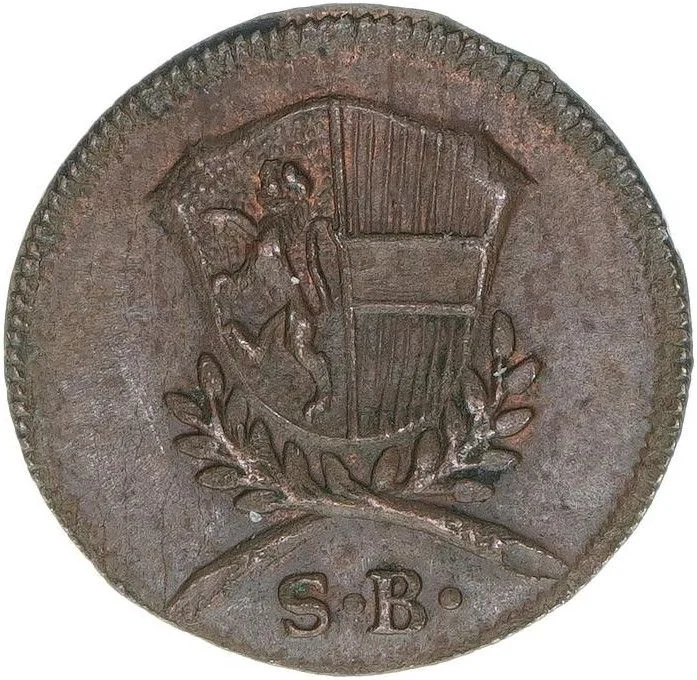
Salzburg arms on a U-shaped shield above a wreath, with "SB" below.
Inscription:
S.B.
Script: Latin

Reverse

Description:
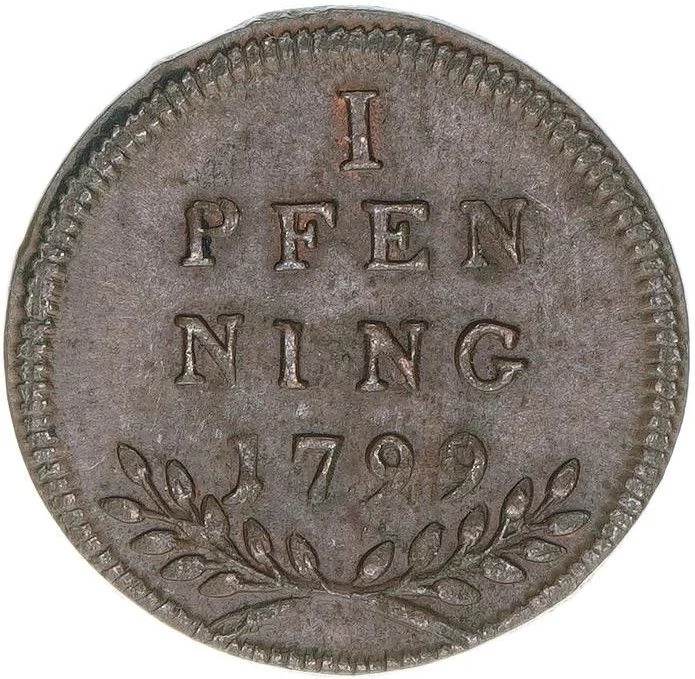
Value and date
in four lines,
wreath below.
Inscription:
I

PFEN

NING

1799
Script: Latin

Edge

Plain

Mints

NameMark
Salzburg

Mintings

YearMint MarkMintageQualityCollection
1792SB
1793SB
1794SB
1795SB
1796SB
1797SB
1797SP
1798SB
1798SP
1799SB
1799SP
1800SB
1801SB
1802SB

Historical background

In 1792, the Prince-Archbishopric of Salzburg operated within the complex monetary landscape of the Holy Roman Empire. It did not mint its own principal silver coinage but instead relied on the widely accepted Reichsthaler and Kreuzer system established by imperial ordinances. The most important coin in daily circulation was the Conventionsthaler, a standard adopted by the southern German states, including Salzburg, after 1753. This provided a degree of monetary stability, as the Conventionsthaler was defined by a fixed silver content, ensuring its acceptance across regional borders for trade and taxation.

However, the reality of everyday commerce was characterized by a bewildering variety of physical currency. Alongside the official Conventionsthaler and its fractional coins (like 20 and 10 Kreuzer pieces), numerous other German state thalers, Austrian coins, and even foreign currency circulated. Furthermore, a chronic shortage of small change was often filled by low-value Notmünzen (emergency coins) and tokens issued by the prince-archbishopric itself, as well as by local merchants and religious houses. This created a fragmented system where the value of coins was determined not only by their denomination but also by their metal content and the credibility of the issuing authority.

This monetary environment existed under the shadow of broader political and economic pressures. The French Revolution (1789) had already triggered financial uncertainty across Europe, and in 1792, revolutionary wars were beginning. While not yet directly engaged, Salzburg, under the rule of Prince-Archbishop Hieronymus von Colloredo, faced inflationary pressures and the threat of economic disruption. The stability offered by the Conventionsthaler standard was therefore crucial, but the system remained vulnerable to the influx of debased coinage and the impending geopolitical shocks that would ultimately end Salzburg's independent existence within a decade.

Series: 1792 Bishopric of Salzburg circulation coins

1 Pfennig obverse
1 Pfennig reverse
1 Pfennig
1792
1 Pfennig obverse
1 Pfennig reverse
1 Pfennig
1792-1802
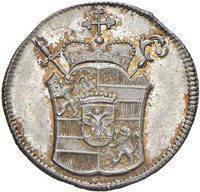
5 Kreuzer obverse
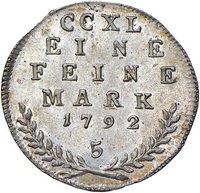
5 Kreuzer reverse
5 Kreuzer
1792
Rare