Logo Title
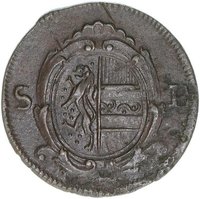
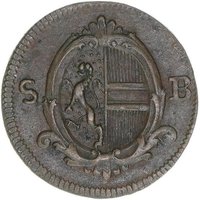
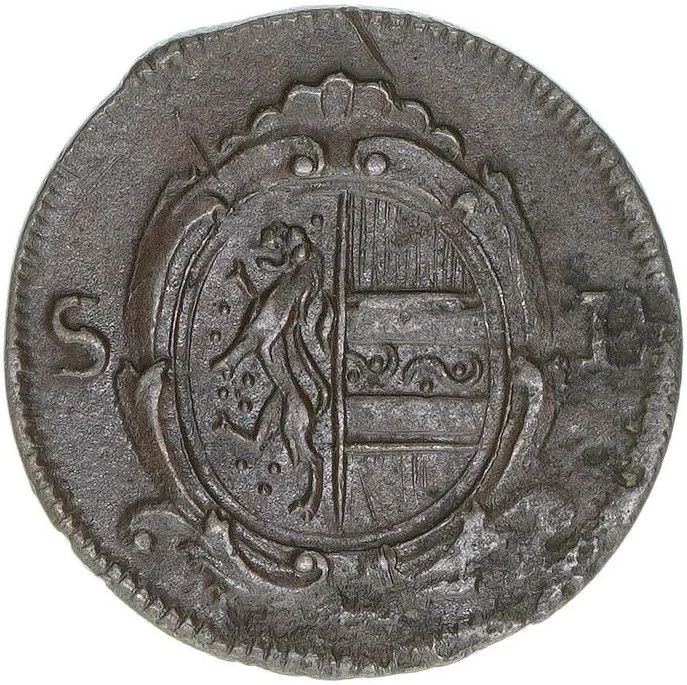
obverse
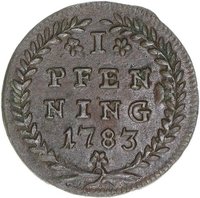
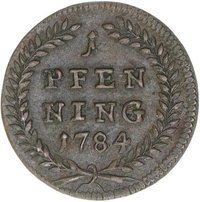
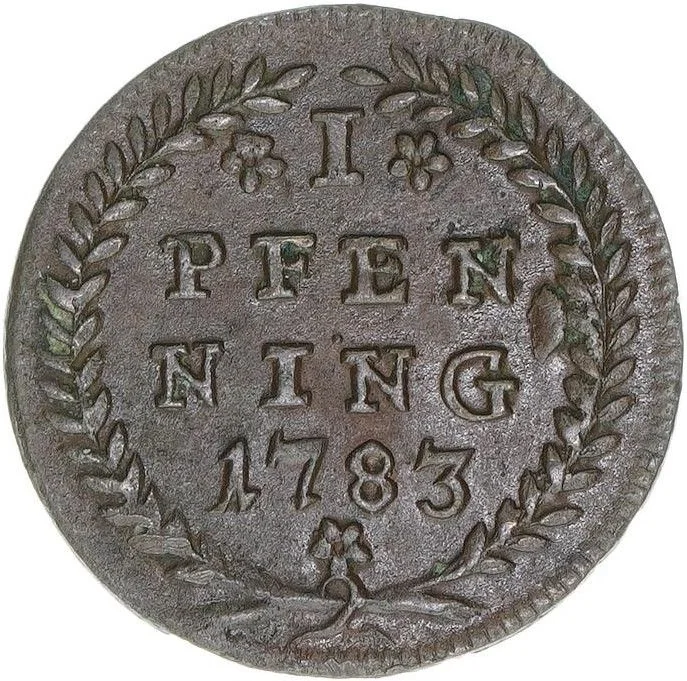
reverse
Numismatik Zöttl
Context
Year: 1783
Currency:
Demonetized: Yes
Material
Diameter: 17.5 mm
Weight: 1.45 g
Shape: Round
Composition: Copper
Magnetic: No
Technique: Milled
Alignment: Medal alignment
Obverse
OBVERSE ↑
flip
Reverse
REVERSE ↑
References
KM: #Click to copy to clipboard454
Numista: #71905

Obverse

Description:
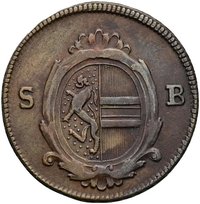
Salzburg arms in a shield between "S B."
Inscription:
S B
Script: Latin

Reverse

Description:
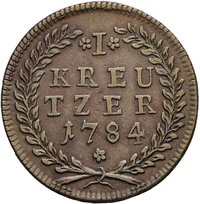
Value and date
in four lines
within a wreath
up to the top.
Inscription:
*I*

PFEN

NING

1783

*
Script: Latin

Edge

Plain

Mints

NameMark
Salzburg

Mintings

YearMint MarkMintageQualityCollection
1783

Historical background

In 1783, the currency situation within the Prince-Archbishopric of Salzburg was characterized by a complex and often unstable monetary system, typical of the Holy Roman Empire's fragmented political landscape. The territory did not mint its own distinctive coinage but operated within the wider South German monetary sphere, primarily using the Conventionsthaler as a large silver standard. This standard, established by the Bavarian monetary convention of 1753, was pegged to the Reichsthaler and aimed to bring uniformity across the region. In daily commerce, however, a multitude of smaller coins circulated, including Kreuzers and Gulden, with values often tied to the fluctuating silver content of the Conventionsthaler.

The system faced significant practical challenges. The circulation included not only Salzburg's own issued coins (struck under the authority of the reigning Prince-Archbishop, Hieronymus von Colloredo) but also a flood of foreign coins from neighboring states like Bavaria and Austria. This proliferation led to frequent confusion, exchange rate disputes, and the debasement of coinage, which eroded public trust. Furthermore, the archbishopric's economy was still largely agrarian, with limited sophisticated financial institutions, making monetary policy reactive rather than proactive.

Archbishop Colloredo, an enlightened reformer, was aware of these inefficiencies and had undertaken various administrative modernizations. However, the currency's inherent instability persisted as a symptom of Salzburg's political and economic constraints as a medium-sized ecclesiastical state. This fragile monetary environment would soon be overtaken by larger historical forces: just two years later, in 1803, the Reichsdeputationshauptschluss would secularize the archbishopric, ending its independent existence and ultimately integrating its monetary system into that of the Austrian Empire.

Series: 1783 Bishopric of Salzburg circulation coins

1 Kreuzer obverse
1 Kreuzer reverse
1 Kreuzer
1783-1784
1 Pfennig obverse
1 Pfennig reverse
1 Pfennig
1783
1 Pfennig obverse
1 Pfennig reverse
1 Pfennig
1783-1784
Legendary