

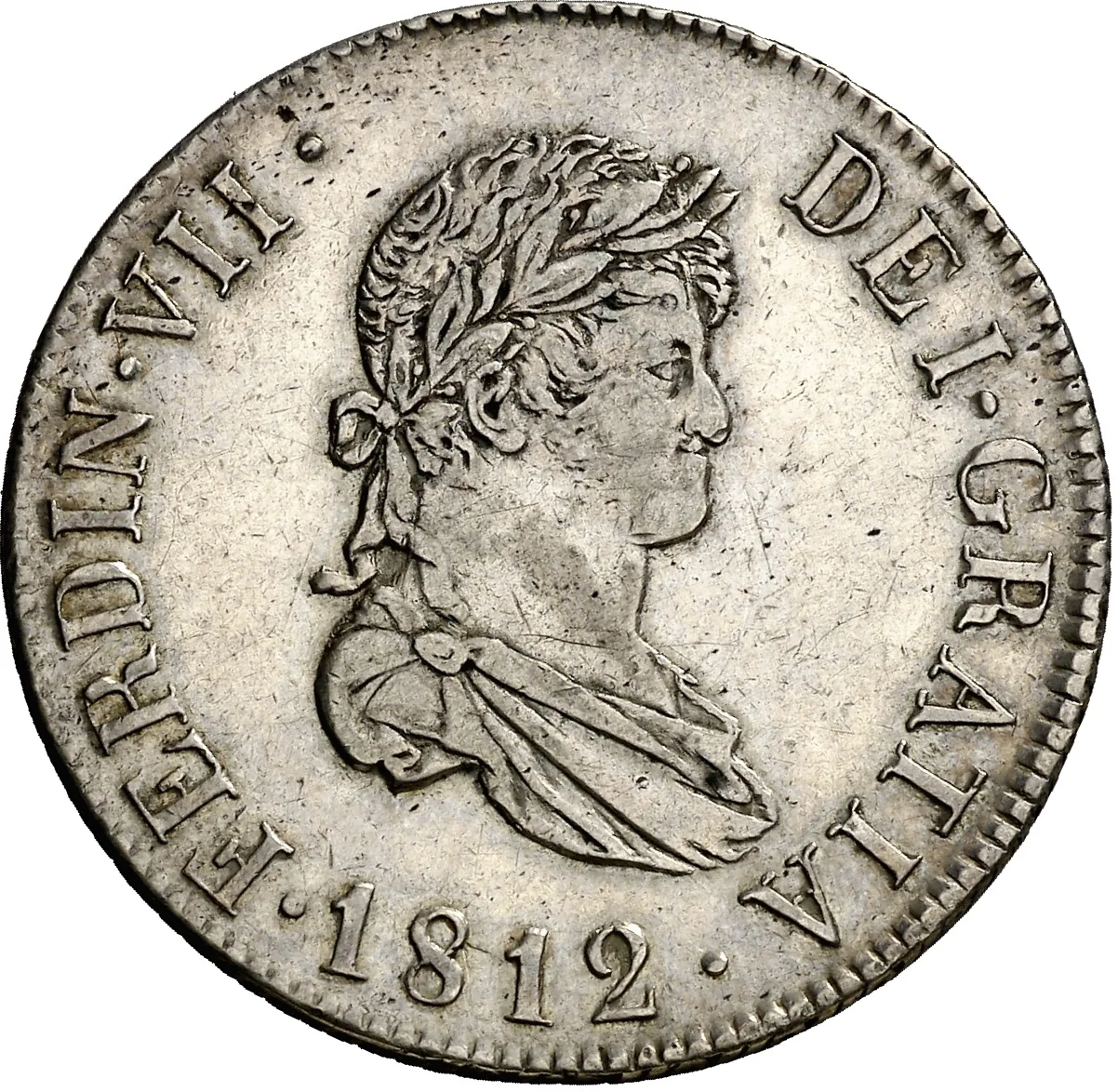
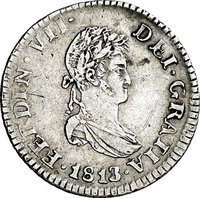
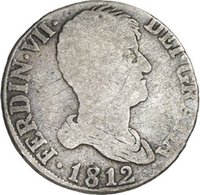
Obverse
Description:
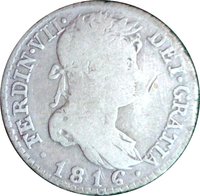
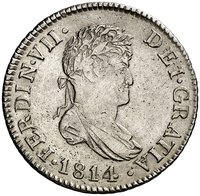
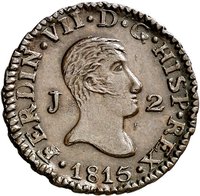
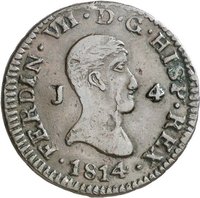
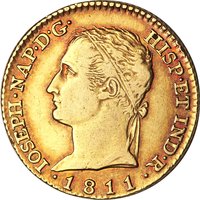
Ferdinand VII laureate bust facing right.
Inscription:
FERDIN · VII · DEI · GRATIA
· 1812 ·
· 1812 ·
Translation:
FERDINAND VII BY THE GRACE OF GOD
1812
1812
Script: Latin
Language: Latin
Engraver: Félix Sagau y Dalmau de Galcerán
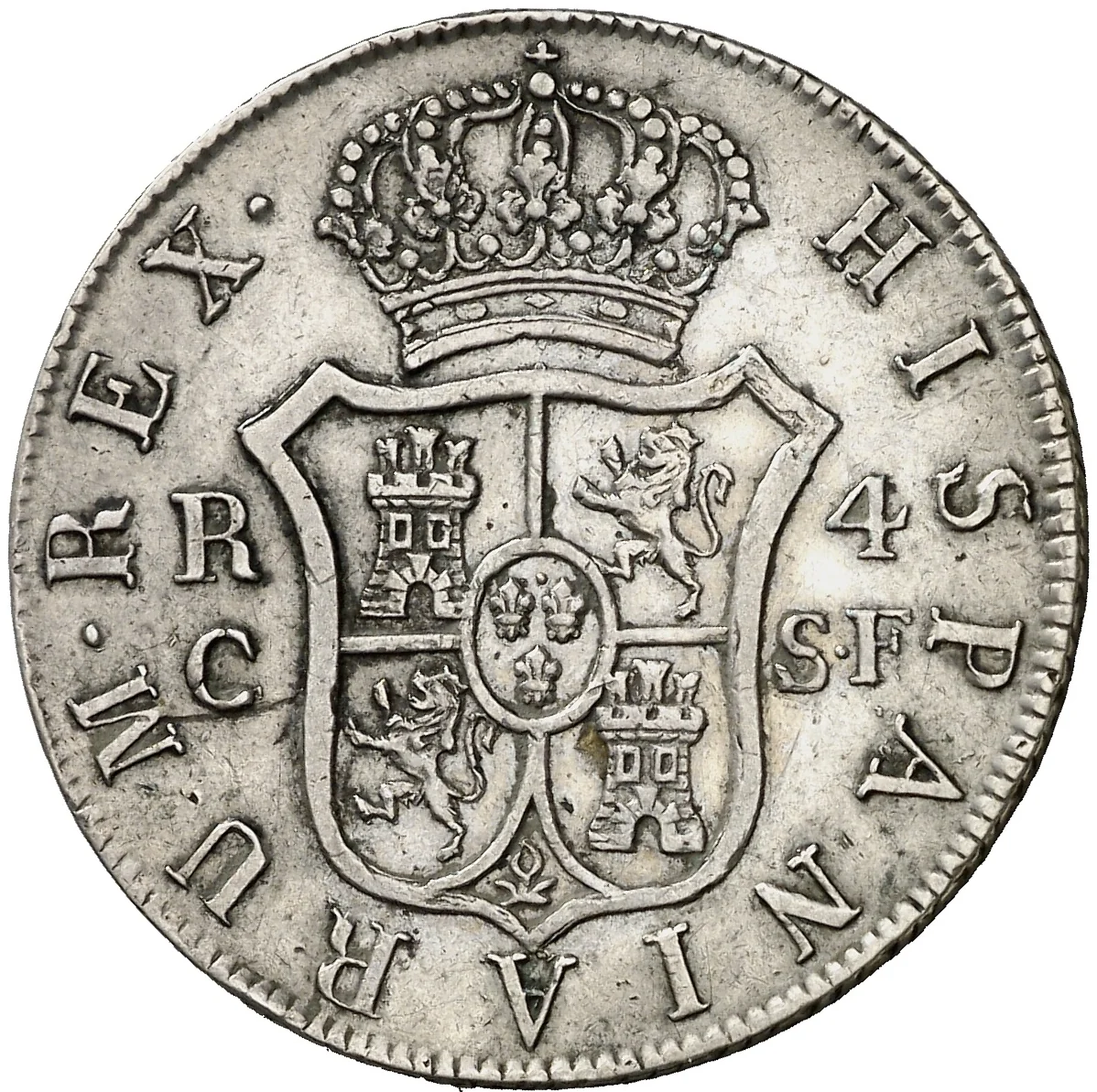
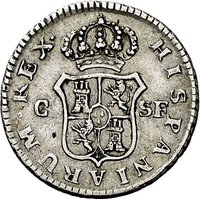
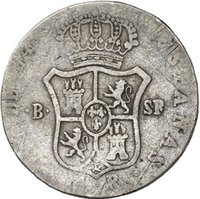
Reverse
Description:
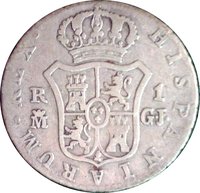
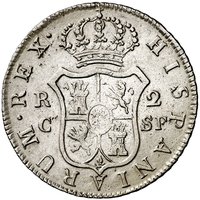
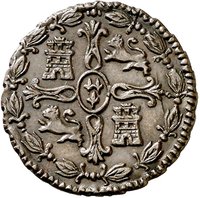
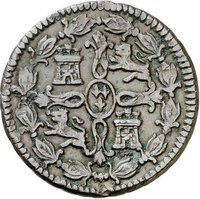
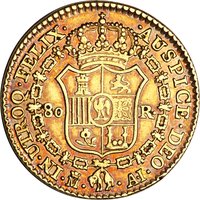
Royal arms of Spain.
Inscription:
HISPANIARIUM · REX ·
R 4
C SF
R 4
C SF
Translation:
King of the Spains
R 4
C SF
R 4
C SF
Script: Latin
Language: Latin
Engraver: Félix Sagau y Dalmau de Galcerán
Edge
Categories
| Symbols> Coat of Arms |
Mints
| Name | Mark |
|---|---|
| Traveling mint of Catalonia | C |
Historical background
In 1812, Spain's currency situation was one of profound crisis and fragmentation, a direct consequence of the ongoing Peninsular War (1808-1814). The legitimate Spanish government, the Cortes of Cádiz, operated from its besieged port-city stronghold while much of the country was under French occupation. With the traditional royal mint in Madrid under enemy control and the crown's revenue streams severed, the state faced bankruptcy. To finance the war effort, the Cortes resorted to desperate measures, most notably the massive issuance of paper money known as vales reales (royal bonds). These had already been in circulation since 1780 but were now printed in unprecedented quantities, leading to rampant inflation and a severe loss of public confidence. The currency became virtually worthless, with people hoarding precious metal coins and resorting to barter.
The monetary landscape was further complicated by a patchwork of competing issuances. In French-occupied territories, Napoleon's brother, King Joseph I, introduced his own coinage in an attempt to stabilize the economy under his rule, though these "josephinos" were largely rejected by a hostile populace. Simultaneously, various Spanish regional juntas and military authorities, operating with autonomy in the absence of central control, issued their own emergency coinage and paper notes to pay troops and local expenses. This resulted in a chaotic multiplicity of currencies of wildly differing values, crippling internal trade and creating a haven for counterfeiters.
Amidst this turmoil, the Cortes of Cádiz was drafting the pioneering liberal constitution of 1812, which included principles for economic reform. However, these lofty ideals stood in stark contrast to the dire monetary reality on the ground. The fundamental problem was a complete lack of specie (gold and silver) backing for the paper in circulation. The war had drained the treasury, and the loss of American colonies was beginning to cut off the vital flow of precious metals from the New World. Thus, in 1812, Spain's currency was not a unified system but a symbol of a nation fractured by war, surviving on depreciating paper and the hope of future victory and stability.
The monetary landscape was further complicated by a patchwork of competing issuances. In French-occupied territories, Napoleon's brother, King Joseph I, introduced his own coinage in an attempt to stabilize the economy under his rule, though these "josephinos" were largely rejected by a hostile populace. Simultaneously, various Spanish regional juntas and military authorities, operating with autonomy in the absence of central control, issued their own emergency coinage and paper notes to pay troops and local expenses. This resulted in a chaotic multiplicity of currencies of wildly differing values, crippling internal trade and creating a haven for counterfeiters.
Amidst this turmoil, the Cortes of Cádiz was drafting the pioneering liberal constitution of 1812, which included principles for economic reform. However, these lofty ideals stood in stark contrast to the dire monetary reality on the ground. The fundamental problem was a complete lack of specie (gold and silver) backing for the paper in circulation. The war had drained the treasury, and the loss of American colonies was beginning to cut off the vital flow of precious metals from the New World. Thus, in 1812, Spain's currency was not a unified system but a symbol of a nation fractured by war, surviving on depreciating paper and the hope of future victory and stability.
Series: 1812 Spain circulation coins
✨ Legendary