

1 groschen – Hungary
Add to wishlist
Hungary
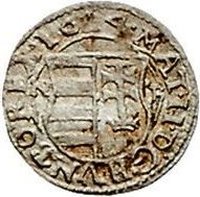
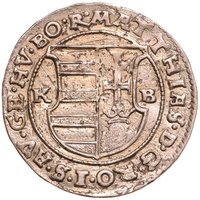
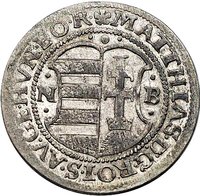
Obverse
Description:
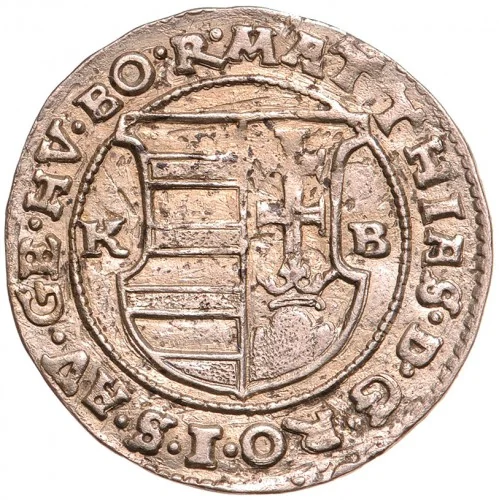
Non-crowned shield: Árpád stripes and double cross on triple hill; straight top, curved sides, divided by mintmark.
Inscription:
· MATTHIAS · II · D · G · RO · I · S ·AV · GE · HV · B · R ·
N B
N B
Script: Latin
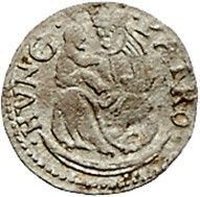
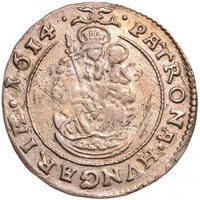
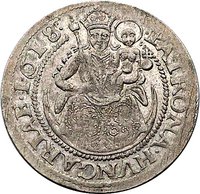
Reverse
Description:
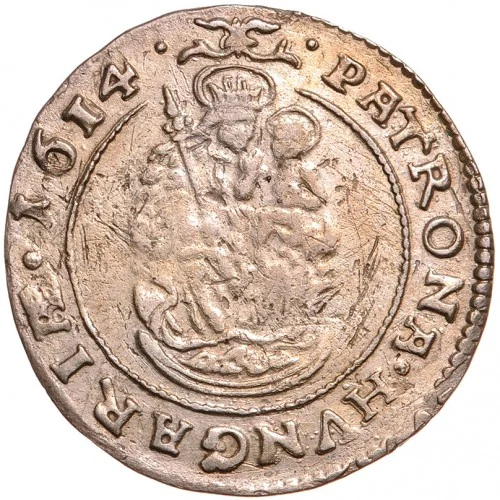
Madonna holding child, crowned, with scepter, standing on a crescent.
Inscription:
PATRONA · HVNGARIÆ · 1614 ·
Script: Latin
Edge
Plain
Mintings
| Year | Mint Mark | Mintage | Quality | Collection |
|---|---|---|---|---|
| 1614 | K-B | — | ||
| 1614 | N-B | — | ||
| 1615 | K-B | — |
Historical background
In 1614, the Kingdom of Hungary was grappling with a severe and protracted currency crisis rooted in the previous century. The primary issue was the widespread debasement of silver coinage, particularly the denarius (denar), which had been progressively reduced in precious metal content by the Habsburg rulers in Vienna to finance the ongoing Long Turkish War (1593-1606) and the immense costs of defending the frontier. By 1614, the coins in everyday circulation contained so little silver that they were essentially copper tokens, leading to a collapse in public trust and rampant inflation, especially for smaller transactions.
This monetary instability created a chaotic dual-system in the economy. While debased small coins crippled local markets and harmed peasants and wage-earners, larger, high-quality silver thalers (like the Reichsthaler) and gold ducats remained in use for major trade, taxes, and savings. This effectively split the economy into a "poor" currency for the masses and a "rich" currency for the elite and international commerce. The Habsburg government's attempts at reform, including the introduction of new copper coins like the poltura, failed to restore confidence and often exacerbated the confusion.
The situation was further complicated by Hungary's tripartite division: the Habsburg Royal Hungary in the north and west, the Ottoman-controlled central territories, and the semi-independent Principality of Transylvania in the east. Each region had varying degrees of monetary policy and circulation, with Ottoman and Transylvanian coins also entering the mix. Consequently, by 1614, the currency landscape was a fragmented and unstable mess, eroding economic stability, deepening social grievances, and undermining the authority of the Habsburg monarchy in the kingdom, setting the stage for future political and financial turmoil.
This monetary instability created a chaotic dual-system in the economy. While debased small coins crippled local markets and harmed peasants and wage-earners, larger, high-quality silver thalers (like the Reichsthaler) and gold ducats remained in use for major trade, taxes, and savings. This effectively split the economy into a "poor" currency for the masses and a "rich" currency for the elite and international commerce. The Habsburg government's attempts at reform, including the introduction of new copper coins like the poltura, failed to restore confidence and often exacerbated the confusion.
The situation was further complicated by Hungary's tripartite division: the Habsburg Royal Hungary in the north and west, the Ottoman-controlled central territories, and the semi-independent Principality of Transylvania in the east. Each region had varying degrees of monetary policy and circulation, with Ottoman and Transylvanian coins also entering the mix. Consequently, by 1614, the currency landscape was a fragmented and unstable mess, eroding economic stability, deepening social grievances, and undermining the authority of the Habsburg monarchy in the kingdom, setting the stage for future political and financial turmoil.
Series: 1614 Hungary circulation coins

✨ Legendary