

3 marka – Estonia
Add to wishlist
Estonia
Context
Material
Diameter: 20 mm
Weight: 3.4 g
Thickness: 1.35 mm
Shape: Round
Composition: Copper-nickel
Technique: Milled
Alignment: Medal alignment
flip
References
KM: #
Numista: #11971
Obverse
Description:
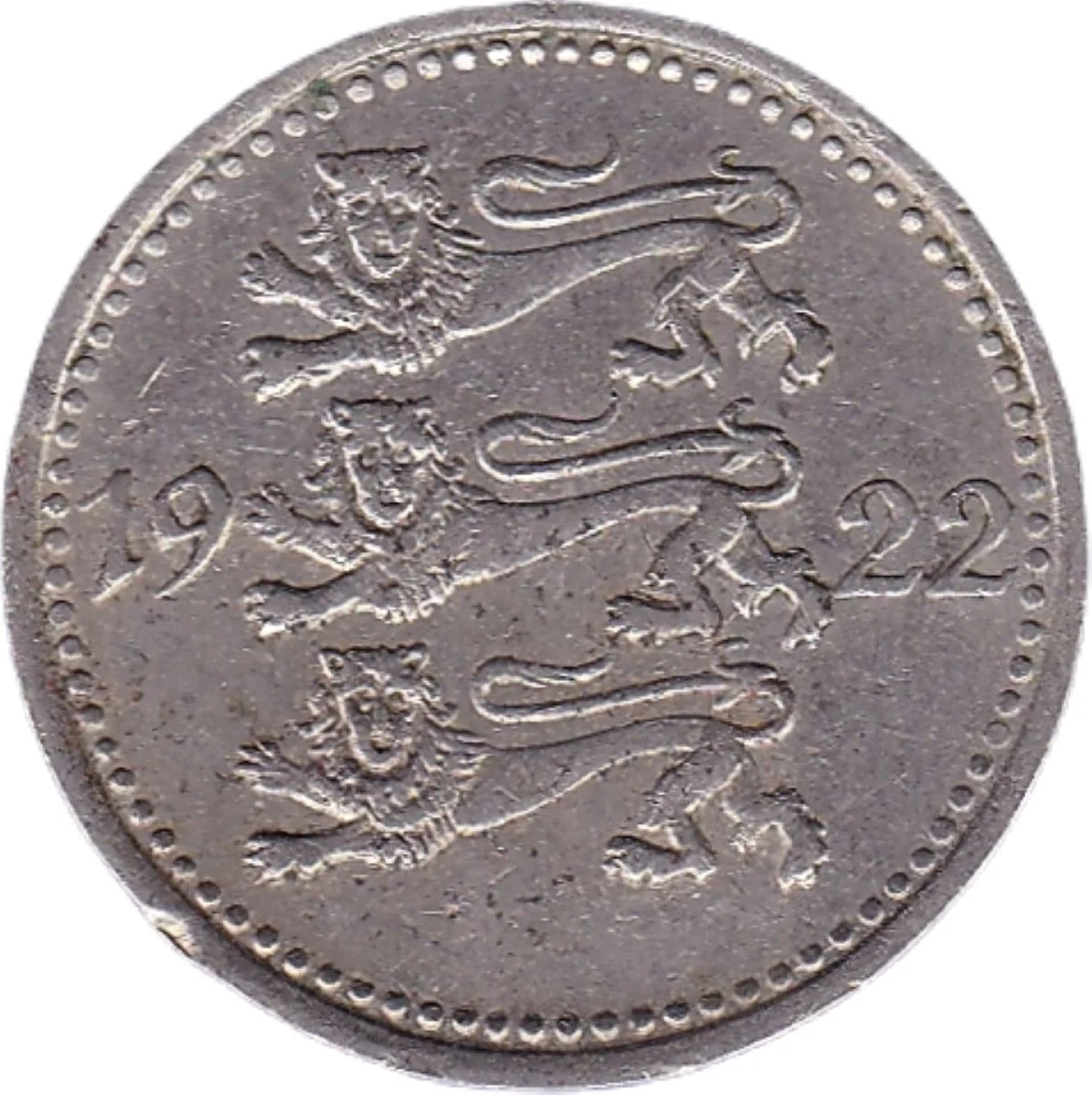
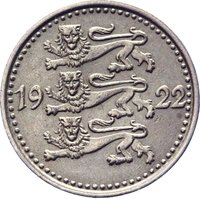
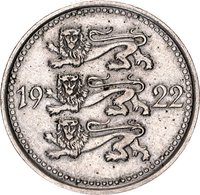
Three lions left divide the date.
Inscription:
19 22
Script: Latin
Engraver: Boris Krümmer
Reverse
Description:
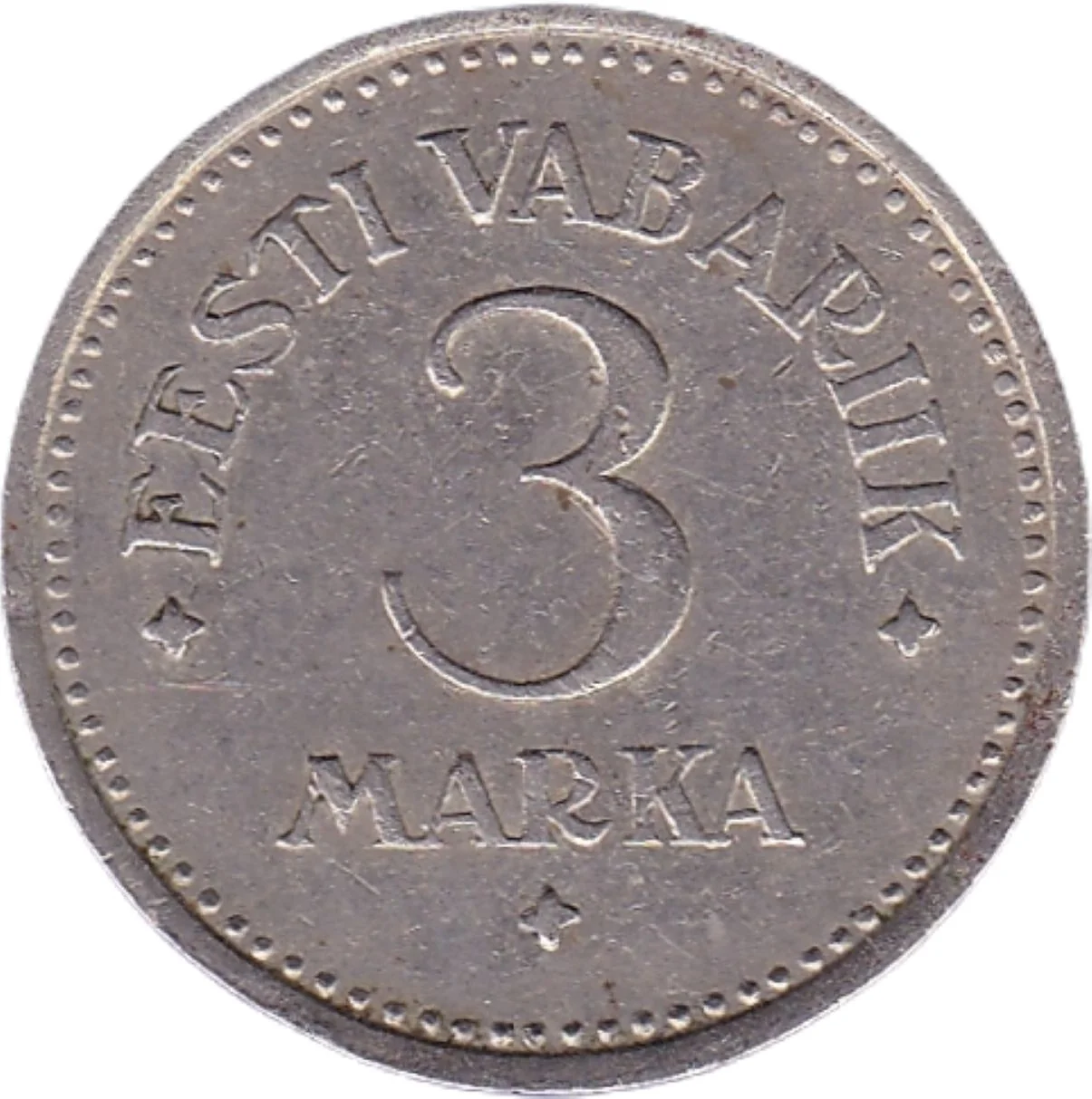
Denomination, country.
Inscription:
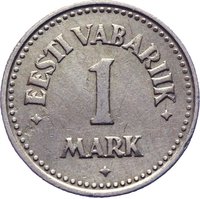
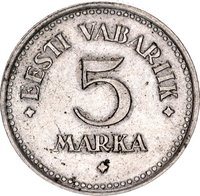
EESTI VABARIIK
3
MARKA
3
MARKA
Translation:
REPUBLIC OF ESTONIA
3
MARKA
3
MARKA
Script: Latin
Language: Estonian
Engraver: Boris Krümmer
Edge
Reeded.
Mints
| Name | Mark |
|---|---|
| Aron Hirsch HKM | — |
Mintings
| Year | Mint Mark | Mintage | Quality | Collection |
|---|---|---|---|---|
| 1922 | — | 2,089,050 |
Historical background
In 1922, Estonia was navigating the complex aftermath of the War of Independence (1918-1920) and establishing its economic sovereignty. The immediate post-war period saw severe hyperinflation, as the country was flooded with various unstable currencies, including the German Ostmark, the Russian Ruble, and the provisional Estonian mark (Eesti mark), which was introduced in 1919. This proliferation of money, coupled with a devastated economy and a large budget deficit financed by printing currency, led to a dramatic loss of public confidence and a collapse in the currency's value, crippling trade and savings.
Recognizing the crisis, the Estonian government, under Finance Minister Georg Vestel, took decisive action in 1922 to implement a radical monetary reform. The cornerstone was the introduction of a new, stable currency, the Kroon (EKR), which was formally adopted by the Currency Law of August 1922. The Kroon was firmly anchored to gold, with a fixed exchange rate of 1 Kroon = 100 Swedish öre or 0.403226 grams of pure gold, providing a credible and solid foundation. The reform established a strict exchange rate of 1 Kroon for 100 old marks, effectively re-denominating the currency.
The successful stabilization in 1922 was a pivotal achievement for the young republic. Backed by a substantial gold and foreign exchange reserve and managed by the newly founded Bank of Estonia (Eesti Pank), the Kroon quickly gained public trust. This monetary reform, alongside broader fiscal discipline, ended the hyperinflation and laid the essential groundwork for Estonia's economic recovery and growth during the relatively prosperous interwar period, known as the "Era of Silence." The stability of the Kroon became a symbol of national resilience and prudent financial management.
Recognizing the crisis, the Estonian government, under Finance Minister Georg Vestel, took decisive action in 1922 to implement a radical monetary reform. The cornerstone was the introduction of a new, stable currency, the Kroon (EKR), which was formally adopted by the Currency Law of August 1922. The Kroon was firmly anchored to gold, with a fixed exchange rate of 1 Kroon = 100 Swedish öre or 0.403226 grams of pure gold, providing a credible and solid foundation. The reform established a strict exchange rate of 1 Kroon for 100 old marks, effectively re-denominating the currency.
The successful stabilization in 1922 was a pivotal achievement for the young republic. Backed by a substantial gold and foreign exchange reserve and managed by the newly founded Bank of Estonia (Eesti Pank), the Kroon quickly gained public trust. This monetary reform, alongside broader fiscal discipline, ended the hyperinflation and laid the essential groundwork for Estonia's economic recovery and growth during the relatively prosperous interwar period, known as the "Era of Silence." The stability of the Kroon became a symbol of national resilience and prudent financial management.
🌱 Fairly Common