

1 Paisa – Bombay Presidency
India

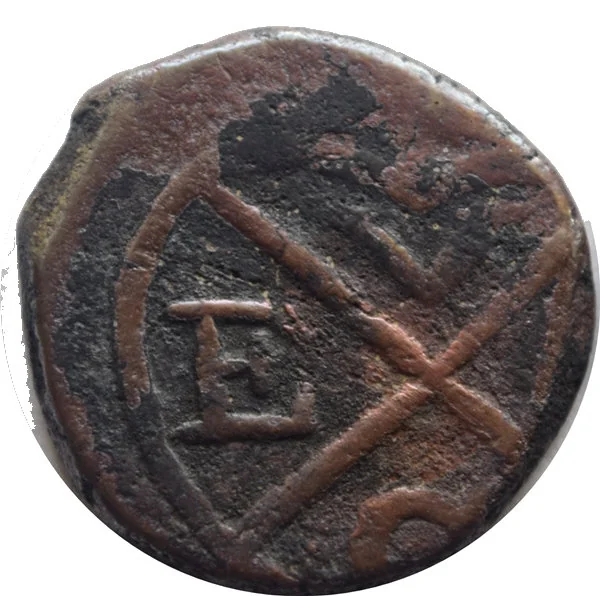
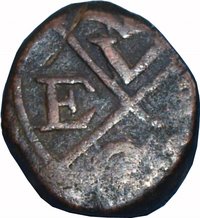
Obverse
Description:
VOC trademark
Inscription:
VEIC
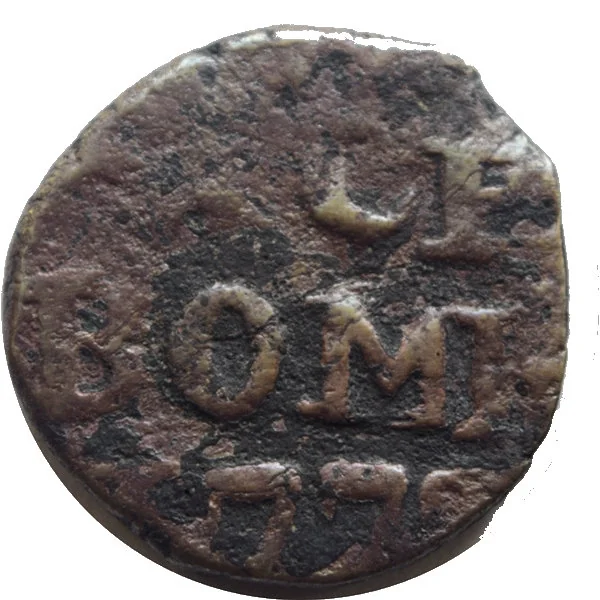
Reverse
Description:
English legend: PICE / BOMB / 1773 (4 lines)
Inscription:
(1)
PICE
BOMB
1773
PICE
BOMB
1773
Edge
Plain
Mintings
| Year | Mint Mark | Mintage | Quality | Collection |
|---|---|---|---|---|
| 1773 | — | — | ||
| — | — | — | ||
| 1775 | — | — | ||
| 1783 | — | — | ||
| 1784 | — | — | ||
| 1788 | — | — |
Historical background
In 1773, the Bombay Presidency faced a severe and multifaceted currency crisis that threatened its commercial viability and administrative stability. The core of the problem was a chronic shortage of specie (coin), particularly the reliable silver rupees that fueled trade. The Presidency's own mint, established in 1672, had been closed since 1742 due to the prohibitive cost of importing silver bullion. This forced Bombay to rely heavily on a chaotic influx of foreign coins, including Mughal rupees, Portuguese xeraphims, and Arab mahmudis, all circulating at fluctuating and arbitrary exchange rates set by private money-changers (shroffs). This monetary anarchy created uncertainty for both the East India Company and private merchants, stifling commerce and revenue collection.
The crisis was dramatically exacerbated by a financial catastrophe: the crash of the Bombay Bank in 1770. This private bank, operated by the brothers John and Francis Forbes, had issued a large volume of paper notes (bills of exchange) that were widely used as a currency substitute. When the bank failed due to mismanagement and the economic strain of a famine, its notes became worthless, wiping out the savings of many merchants and destroying public trust in paper instruments. This collapse removed a crucial lubricant for the economy, intensifying the scarcity of usable money and pushing the Presidency to the brink of insolvency.
Facing administrative paralysis, the Bombay Council took decisive action in 1773 itself. It established a new, official Bombay Bank, intended to restore confidence and provide a stable paper currency backed by the government. More importantly, it petitioned the Bengal Presidency for assistance. In response, Bengal dispatched a large shipment of silver rupees to Bombay, which were put into circulation as a standardized currency. These emergency measures, coinciding with the year the British Parliament passed the Regulating Act to reform Company rule, provided immediate relief and laid the groundwork for the eventual re-establishment of a formal mint in Bombay in 1778, marking the beginning of a more uniform monetary system.
The crisis was dramatically exacerbated by a financial catastrophe: the crash of the Bombay Bank in 1770. This private bank, operated by the brothers John and Francis Forbes, had issued a large volume of paper notes (bills of exchange) that were widely used as a currency substitute. When the bank failed due to mismanagement and the economic strain of a famine, its notes became worthless, wiping out the savings of many merchants and destroying public trust in paper instruments. This collapse removed a crucial lubricant for the economy, intensifying the scarcity of usable money and pushing the Presidency to the brink of insolvency.
Facing administrative paralysis, the Bombay Council took decisive action in 1773 itself. It established a new, official Bombay Bank, intended to restore confidence and provide a stable paper currency backed by the government. More importantly, it petitioned the Bengal Presidency for assistance. In response, Bengal dispatched a large shipment of silver rupees to Bombay, which were put into circulation as a standardized currency. These emergency measures, coinciding with the year the British Parliament passed the Regulating Act to reform Company rule, provided immediate relief and laid the groundwork for the eventual re-establishment of a formal mint in Bombay in 1778, marking the beginning of a more uniform monetary system.

✨ Legendary