

10 kreuzers – Austrian Empire
Add to wishlist
Austria
Context
Years: 1782–1788
Country: Austria
Issuer: Austrian Empire
Ruler: Joseph II
Currency:
(1754—1857)
Demonetized: Yes
Total mintage: 4,999,000
Material
References
KM: #
Numista: #71177
Value
Bullion value: $4.86
Obverse
Description:
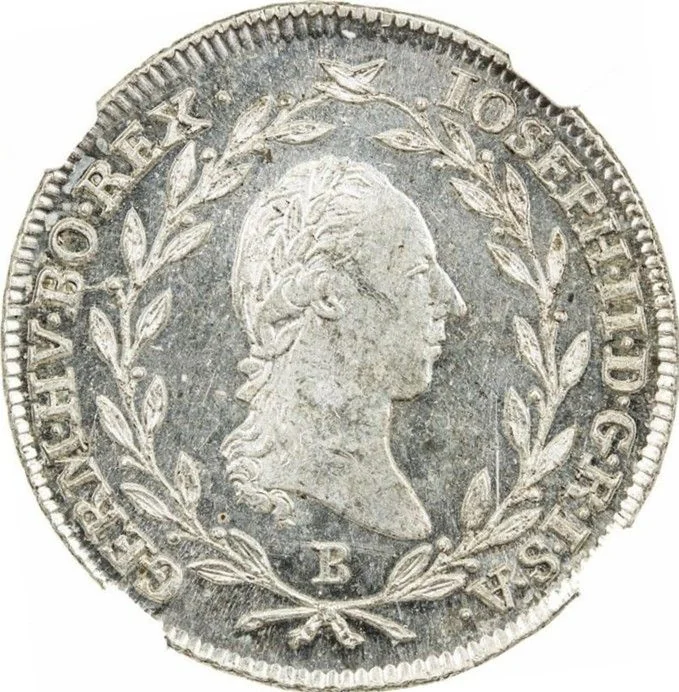
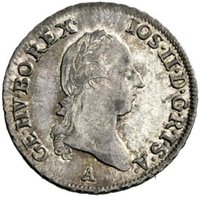
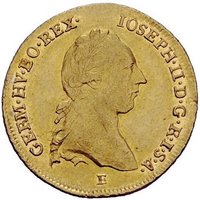
Joseph II portrait right in wreath, mint mark below. Legend surrounding.
Inscription:
IOSEPH II D G R I S A GERM HV BO REX
B
B
Script: Latin
Reverse
Description:
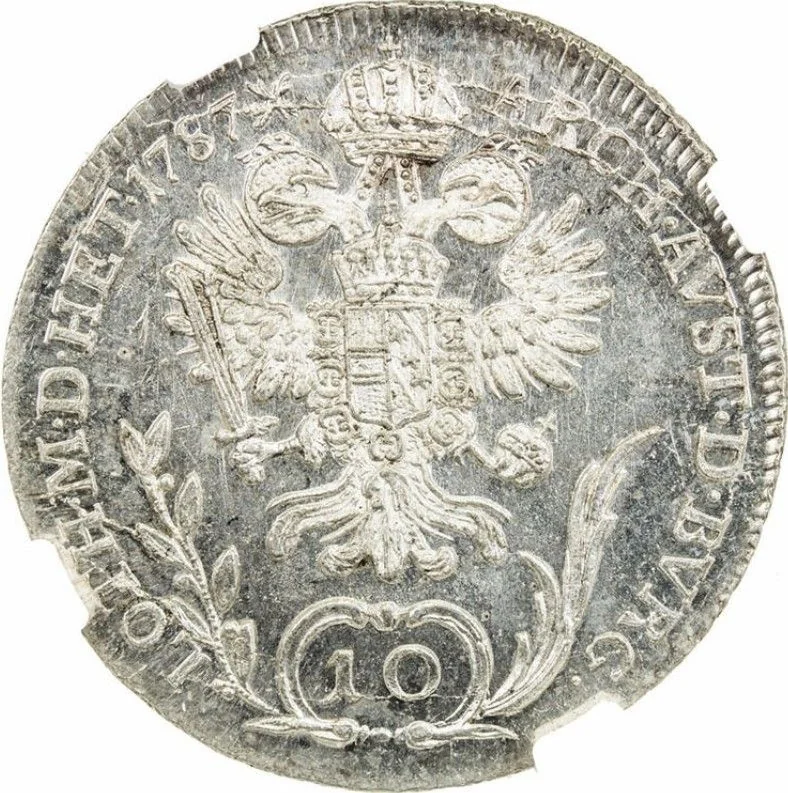
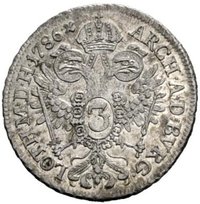
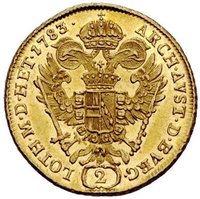
Imperial double-headed eagle with Austria-Lorraine shield. Framed value below, legend around.
Inscription:
ARCH AVST D BVRG LOTH M D HET 1787 X
Script: Latin
Edge
Plain
Categories
| Symbols> Coat of Arms |
| Symbol> Double-headed eagle |
| Symbol> Crown |
Mints
| Name | Mark |
|---|---|
| Münze Österreich | A |
| Kremnica | B |
| Alba Iulia | E |
Mintings
Historical background
In 1782, the Habsburg Monarchy, under the reign of Emperor Joseph II, was grappling with the complex and debilitating legacy of its currency system. The core of the problem was the coexistence of two distinct forms of money: the Konventionsmünze (Convention Coinage), a stable silver-based standard used for international trade and state accounting, and the vastly depreciated Bancozettel (bank notes) issued by the state-backed Wiener Stadtbanco. Originally introduced in 1762 to finance the Seven Years' War, these paper notes were not fully convertible to silver and had been printed in excess, leading to a severe loss of value and creating a chaotic dual-price system for goods and services.
The situation created profound economic distortions. Everyday transactions were plagued by confusion, as prices were often quoted in both currencies with a wide and fluctuating exchange rate. This "agio" (premium for silver) eroded public trust, hampered domestic commerce, and discouraged foreign investment. While the state accepted Bancozettel for tax payments, it also needed stable silver to fund its military and administrative ambitions, leading to a constant strain on the treasury. The system effectively placed a heavy, hidden tax on the populace, particularly those who held wealth in the depreciating paper currency.
Joseph II's government was acutely aware of the need for reform, viewing monetary stability as essential for his centralizing and modernizing agenda. In 1782, efforts were focused on managing rather than radically solving the crisis, including attempts to control the agio and improve the administration of the Wiener Stadtbanco. A full-scale monetary unification and stabilization would not be achieved until the following century, but the pressures of 1782 underscored a fundamental truth: the Empire's financial fragility was a critical obstacle to its geopolitical power and internal cohesion.
The situation created profound economic distortions. Everyday transactions were plagued by confusion, as prices were often quoted in both currencies with a wide and fluctuating exchange rate. This "agio" (premium for silver) eroded public trust, hampered domestic commerce, and discouraged foreign investment. While the state accepted Bancozettel for tax payments, it also needed stable silver to fund its military and administrative ambitions, leading to a constant strain on the treasury. The system effectively placed a heavy, hidden tax on the populace, particularly those who held wealth in the depreciating paper currency.
Joseph II's government was acutely aware of the need for reform, viewing monetary stability as essential for his centralizing and modernizing agenda. In 1782, efforts were focused on managing rather than radically solving the crisis, including attempts to control the agio and improve the administration of the Wiener Stadtbanco. A full-scale monetary unification and stabilization would not be achieved until the following century, but the pressures of 1782 underscored a fundamental truth: the Empire's financial fragility was a critical obstacle to its geopolitical power and internal cohesion.
💎 Very Rare