

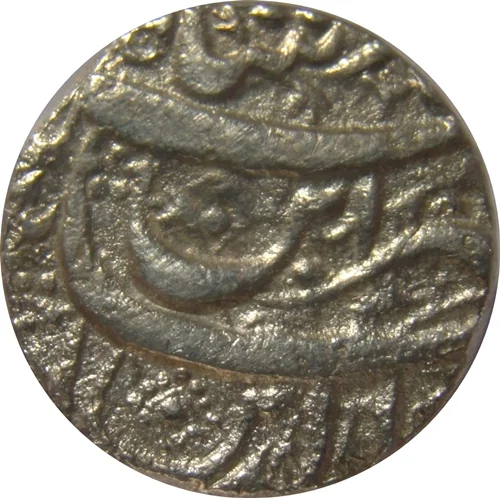
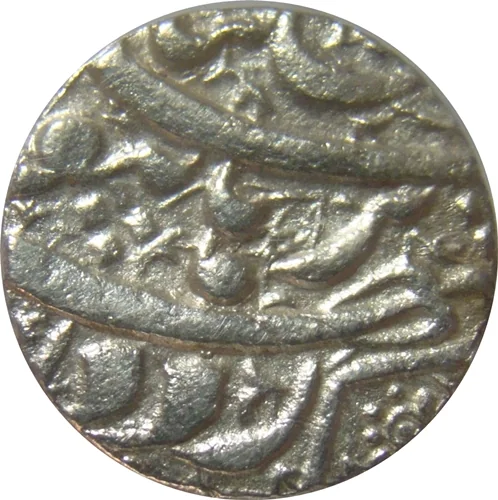
1 Rupee – Mughal Empire
India
Context
Years: 1017–1609
Country: India 
Issuer: Mughal Empire
Ruler: Jahangir I
Currency:
(1540—1842)
Demonetized: Yes
Material
References
KM: #Click to copy to clipboard149.10
Numista: #70913
Value
Bullion value: $32.02
Obverse
Description:
KM#149.10
Inscription:
shah nur-ud-din ibn akbar badshah
Reverse
Description:
"Din Panah" inscription.
Inscription:
sikka zad dar shahare burhanpur shah dinpanah
Edge
Mintings
| Year | Mint Mark | Mintage | Quality | Collection |
|---|---|---|---|---|
| — | — | — | ||
| 1606 | — | — | ||
| 1609 | — | — |
Historical background
The year 1017 AH (1608-1609 CE) in the Mughal Empire fell within the reign of Jahangir, a period of remarkable monetary stability and sophistication. The empire's currency system, inherited and refined from his father Akbar, was a bimetallic standard based on the silver rupee and the gold mohur. These coins were renowned for their high purity, consistent weight, and intricate artistic designs, which included calligraphic inscriptions and the zodiac signs introduced by Jahangir himself. This reliability made the Mughal rupee a dominant and trusted currency not only within the empire's vast territories but also in international trade across the Indian Ocean.
The system was centrally controlled, with coins minted in imperial mints (dar al-zarb) located in major provincial capitals such as Lahore, Ahmedabad, and Surat. The primary silver rupee, weighing around 11.5 grams, served as the backbone of the larger economy, used for revenue collection, military payments, and substantial commercial transactions. Copper dams formed the fractional currency for everyday local trade, with a fixed though often theoretical exchange rate of 40 dams to the rupee. The gold mohur, while struck, functioned more as a store of value and a ceremonial coin rather than a common medium of exchange.
However, the stability of 1017 AH was underpinned by a critical factor: a continuous influx of precious metals. New World silver, primarily from Spanish America, entered the empire through trade surpluses with European companies and the Red Sea and Persian Gulf networks, in exchange for Indian textiles, spices, and other goods. This bullion was essential for minting the vast quantities of coins needed to run the empire's economy. Any significant disruption to this flow, as would occur later in the century, held the potential to cause monetary contraction and fiscal strain, but in the early 17th century, the system was at its peak of efficiency and prestige.
The system was centrally controlled, with coins minted in imperial mints (dar al-zarb) located in major provincial capitals such as Lahore, Ahmedabad, and Surat. The primary silver rupee, weighing around 11.5 grams, served as the backbone of the larger economy, used for revenue collection, military payments, and substantial commercial transactions. Copper dams formed the fractional currency for everyday local trade, with a fixed though often theoretical exchange rate of 40 dams to the rupee. The gold mohur, while struck, functioned more as a store of value and a ceremonial coin rather than a common medium of exchange.
However, the stability of 1017 AH was underpinned by a critical factor: a continuous influx of precious metals. New World silver, primarily from Spanish America, entered the empire through trade surpluses with European companies and the Red Sea and Persian Gulf networks, in exchange for Indian textiles, spices, and other goods. This bullion was essential for minting the vast quantities of coins needed to run the empire's economy. Any significant disruption to this flow, as would occur later in the century, held the potential to cause monetary contraction and fiscal strain, but in the early 17th century, the system was at its peak of efficiency and prestige.
✨ Legendary