

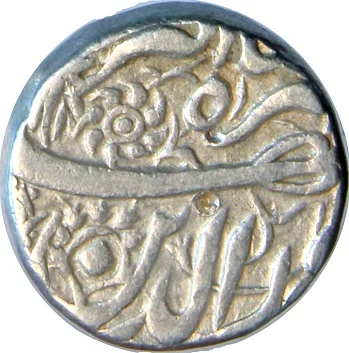
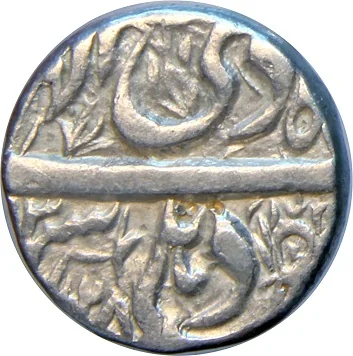
1 Rupee – Mughal Empire
India
Context
Years: 1612–1625
Country: India 
Issuer: Mughal Empire
Ruler: Jahangir I
Currency:
(1540—1842)
Demonetized: Yes
Material
References
KM: #Click to copy to clipboard145.6
Numista: #70159
Value
Bullion value: $33.01
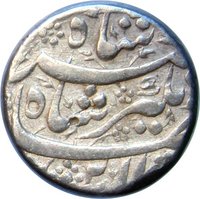
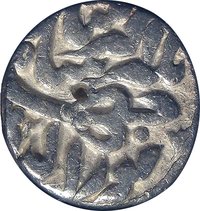
Obverse
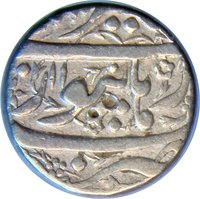
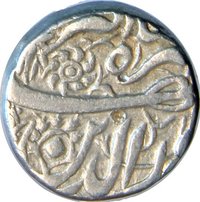
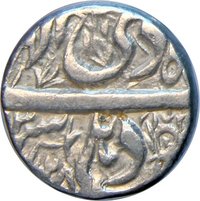
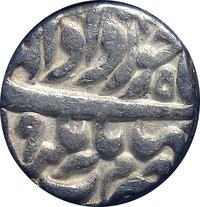
Reverse
Description:
Mint & Date
Edge
Plain
Mintings
| Year | Mint Mark | Mintage | Quality | Collection |
|---|---|---|---|---|
| — | — | — |
Historical background
In 1612, the Mughal Empire’s currency system was a sophisticated and highly centralized bimetallic standard, operating under the reign of Emperor Jahangir. The system was built upon the reforms of his father, Akbar, who had established a uniform coinage with strict imperial control over mints (dar al-zarb). The primary units were the silver rupee (weighing around 11.5 grams) and the gold mohur, with a vast array of smaller copper and billon coins facilitating everyday trade. The purity and weight of coins were remarkably consistent across the empire, a key factor in the rupee's dominance as a stable and trusted currency not only within Mughal territories but also in international trade across the Indian Ocean.
This monetary stability was a direct pillar of the empire's economic strength, funding its vast military and bureaucratic apparatus. Revenue assessments for the land tax (zabt), the empire's financial backbone, were calculated and collected in cash (rupees), which drove the widespread monetization of the agrarian economy. The year 1612 falls within a period of relative peace and consolidation following Jahangir’s secure accession, meaning the currency system was functioning at its intended efficiency. The imperial treasury in Delhi received revenues from across the subcontinent, and a well-organized network of mints ensured a steady supply of coinage to meet administrative and commercial needs.
However, the system’s centralization was also its potential vulnerability. Its health was intrinsically tied to the empire’s political stability and its ability to control lucrative trade routes and productive agrarian regions. Any significant disruption in the flow of precious metals—particularly the importation of silver from the New World via Europe and the Middle East, which was crucial for minting rupees—could strain the system. Furthermore, while the imperial coinage was supreme, older regional coinages still circulated in some areas, and the sheer size of the empire meant that the monetary economy was more deeply integrated in core provinces like Gujarat and Bengal than in remote frontiers. Thus, in 1612, the Mughal currency stood as a powerful instrument of imperial authority, yet its long-term stability depended on the continued political unity and economic prosperity that Jahangir’s reign still enjoyed.
This monetary stability was a direct pillar of the empire's economic strength, funding its vast military and bureaucratic apparatus. Revenue assessments for the land tax (zabt), the empire's financial backbone, were calculated and collected in cash (rupees), which drove the widespread monetization of the agrarian economy. The year 1612 falls within a period of relative peace and consolidation following Jahangir’s secure accession, meaning the currency system was functioning at its intended efficiency. The imperial treasury in Delhi received revenues from across the subcontinent, and a well-organized network of mints ensured a steady supply of coinage to meet administrative and commercial needs.
However, the system’s centralization was also its potential vulnerability. Its health was intrinsically tied to the empire’s political stability and its ability to control lucrative trade routes and productive agrarian regions. Any significant disruption in the flow of precious metals—particularly the importation of silver from the New World via Europe and the Middle East, which was crucial for minting rupees—could strain the system. Furthermore, while the imperial coinage was supreme, older regional coinages still circulated in some areas, and the sheer size of the empire meant that the monetary economy was more deeply integrated in core provinces like Gujarat and Bengal than in remote frontiers. Thus, in 1612, the Mughal currency stood as a powerful instrument of imperial authority, yet its long-term stability depended on the continued political unity and economic prosperity that Jahangir’s reign still enjoyed.
✨ Legendary