

¼ Rupee – Madras Presidency
India
Context
Years: 1759–1812
Country: India 
Issuer: Madras Presidency
Currency:
(1691—1835)
Demonetized: Yes
Total mintage: 784,021
Material
References
KM: #Click to copy to clipboard409
Numista: #69787
Value
Bullion value: $8.23
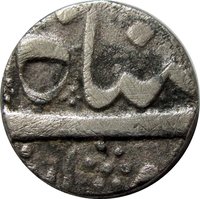
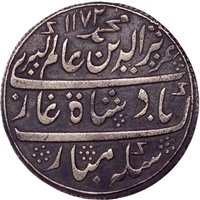
Obverse
Description:
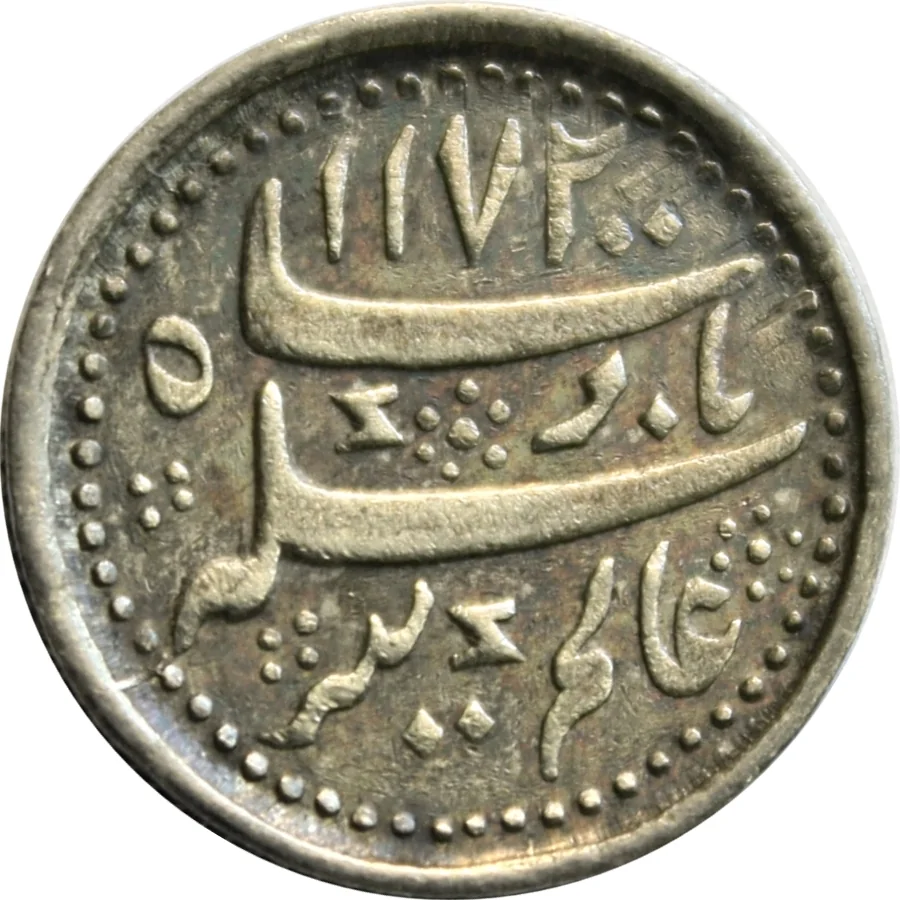
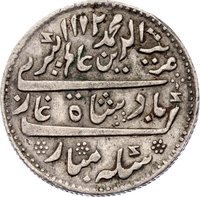
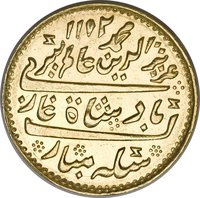
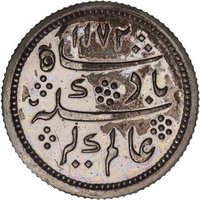
Badshah Alamgir coin, Persian legend, beaded circle.
Inscription:
١١٧٢
باد شاه
سكه
عالم كير
باد شاه
سكه
عالم كير
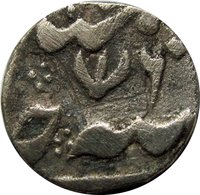
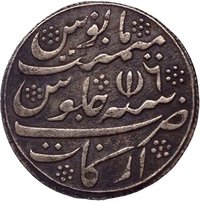
Reverse
Description:
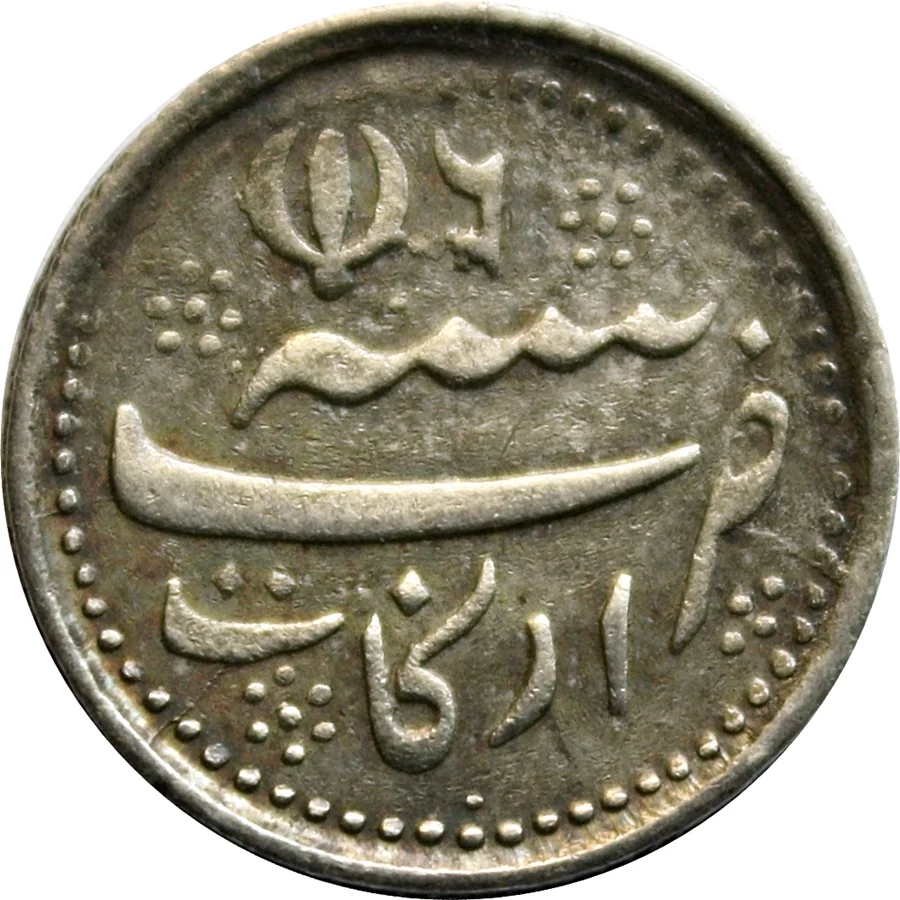
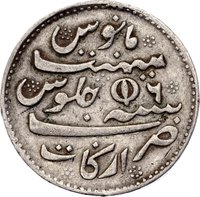
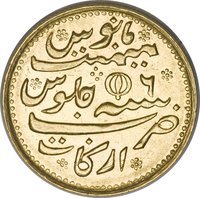
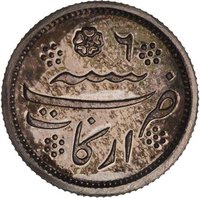
Persian legend in beaded circle.
Inscription:
٦
سنه
ضرب
ارڬات
سنه
ضرب
ارڬات
Edge
Mintings
| Year | Mint Mark | Mintage | Quality | Collection |
|---|---|---|---|---|
| 1759 | — | 784,021 | ||
| 1812 | — | — |
Historical background
In 1759, the currency situation in the Madras Presidency was complex and transitional, reflecting the broader political and economic contest between the English East India Company and local Indian powers. The Company's primary currency was the Madras Pagoda, a small gold coin, which served as the standard for high-value transactions. However, the wider monetary landscape was a fragmented mosaic of different silver and copper coins from various Indian states, Mughal successor regimes, and European trading rivals, particularly the French. This lack of uniformity created constant difficulties in trade, requiring complex exchange calculations and assays of varying purity.
The period was marked by acute scarcity and instability. The ongoing Carnatic Wars (1746-1763) against the French and their Indian allies placed enormous financial strain on the Company, leading to frequent shortages of specie (coinage). To meet military expenses, the Madras Council often resorted to issuing paper currency, a relatively novel and sometimes distrusted instrument. These "bank notes" or "cash notes," promised payment in silver upon demand, but their value fluctuated with the Company's fortunes and public confidence, especially during sieges like that of Madras (1758-59).
Furthermore, the Company's monetary authority was not yet sovereign. While it minted its own gold pagodas at the Madras mint, it operated within the existing Indian monetary systems and was dependent on the inflow of Arcot rupees and other regional coins for everyday commerce. The pivotal victory at the Battle of Wandiwash in 1760 was still a year away, meaning that in 1759, the Company's financial system remained precarious, caught between the pressures of war finance and the need to establish a stable and authoritative currency to underpin its expanding territorial and commercial ambitions.
The period was marked by acute scarcity and instability. The ongoing Carnatic Wars (1746-1763) against the French and their Indian allies placed enormous financial strain on the Company, leading to frequent shortages of specie (coinage). To meet military expenses, the Madras Council often resorted to issuing paper currency, a relatively novel and sometimes distrusted instrument. These "bank notes" or "cash notes," promised payment in silver upon demand, but their value fluctuated with the Company's fortunes and public confidence, especially during sieges like that of Madras (1758-59).
Furthermore, the Company's monetary authority was not yet sovereign. While it minted its own gold pagodas at the Madras mint, it operated within the existing Indian monetary systems and was dependent on the inflow of Arcot rupees and other regional coins for everyday commerce. The pivotal victory at the Battle of Wandiwash in 1760 was still a year away, meaning that in 1759, the Company's financial system remained precarious, caught between the pressures of war finance and the need to establish a stable and authoritative currency to underpin its expanding territorial and commercial ambitions.
✨ Legendary