

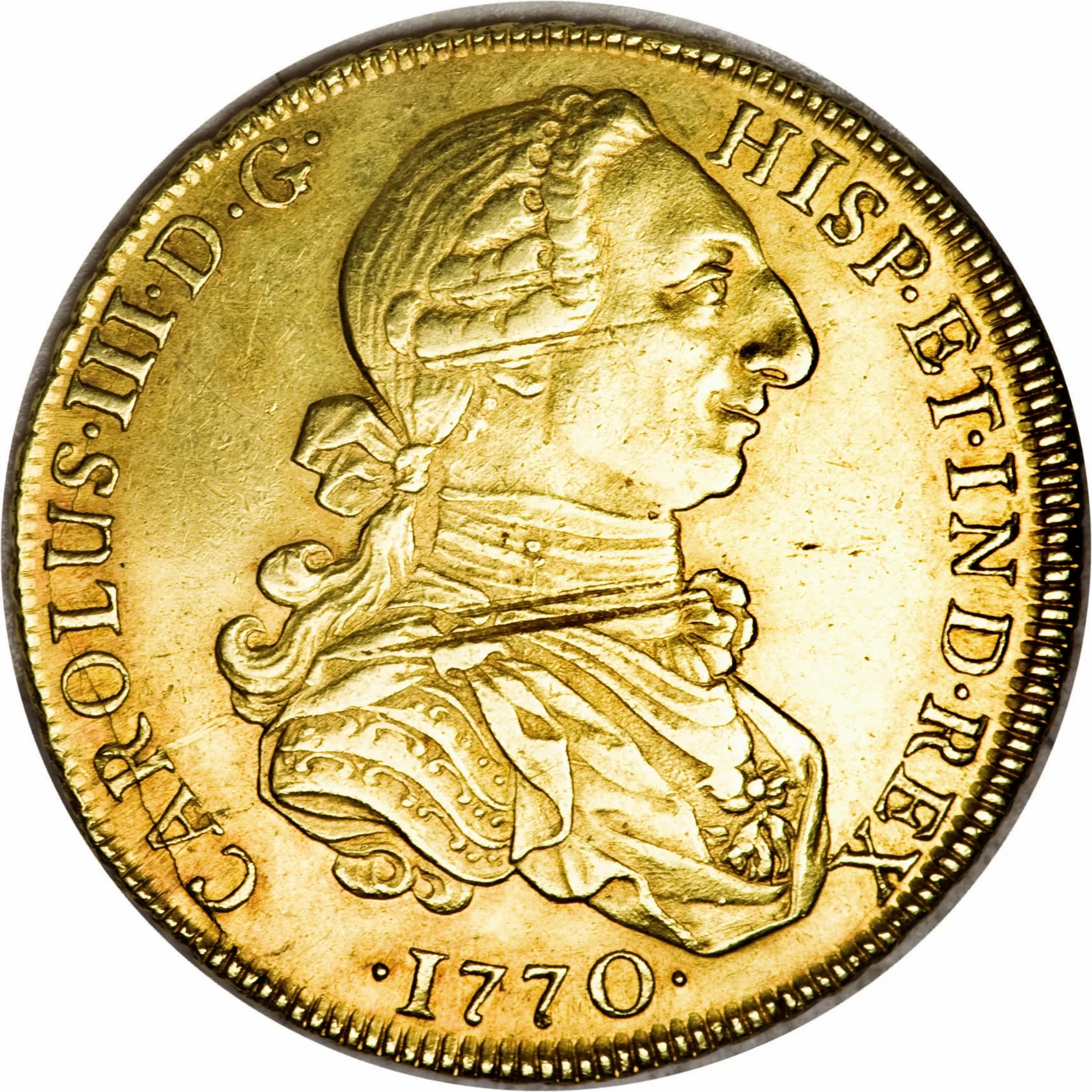
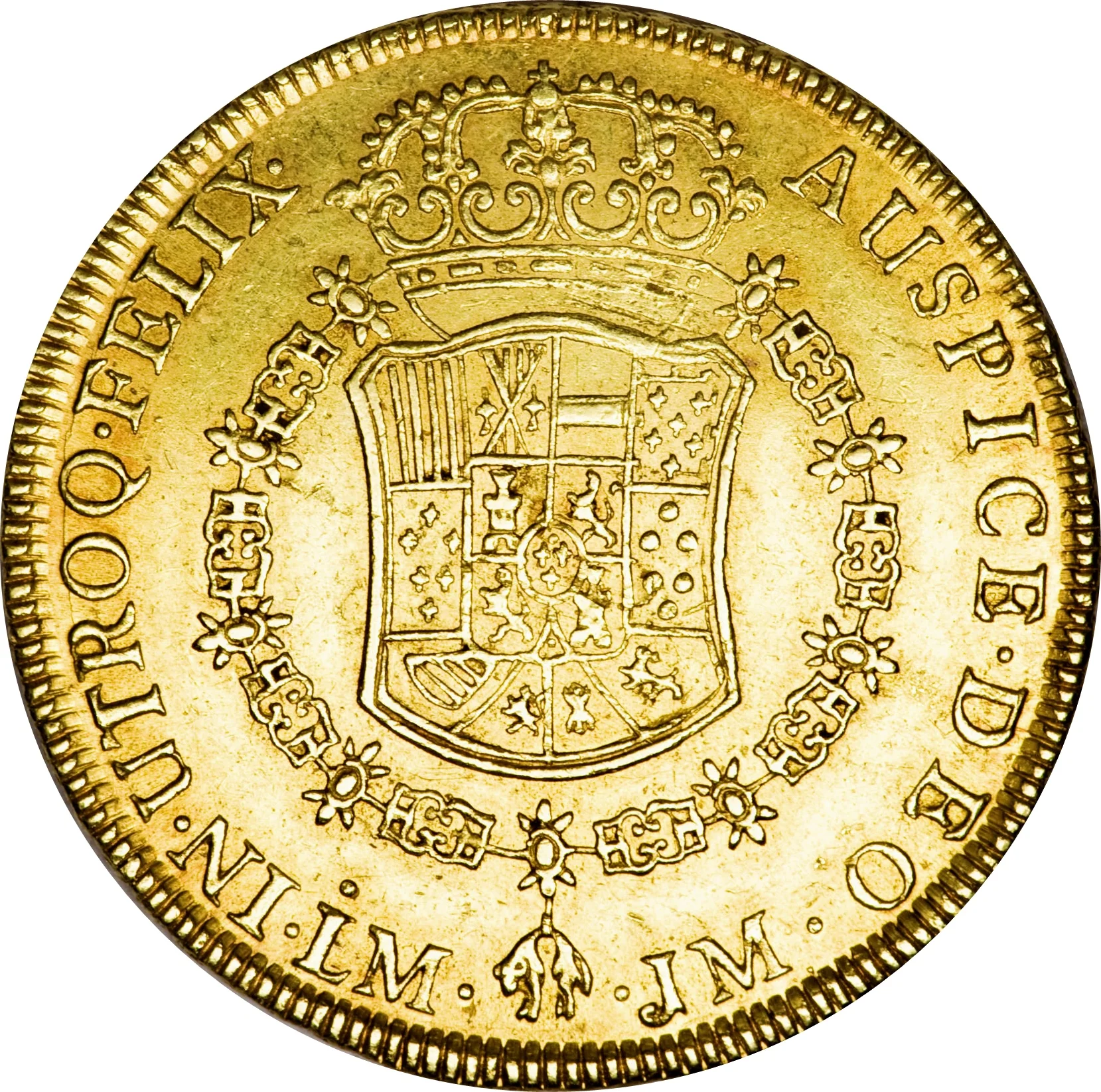
Peru
Context

Material
References
KM: #Click to copy to clipboard73
Numista: #69692
Value
Bullion value: $4145.80
Mints
| Name | Mark |
|---|---|
| Lima | — |
Mintings
| Year | Mint Mark | Mintage | Quality | Collection |
|---|---|---|---|---|
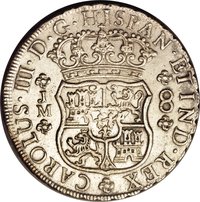
| 1768 | LM | — | ||
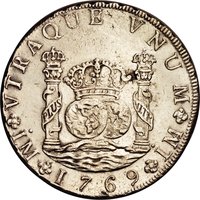
| 1769 | LM | — | ||
| 1770 | LM | — | ||
| 1771 | LM | — | ||
| 1772 | LM | — |
Historical background
In 1768, the currency situation in the Viceroyalty of Peru was characterized by severe scarcity and administrative confusion, a legacy of colonial monetary policy and regional upheaval. The Spanish Crown maintained a bimetallic system based on silver reales and gold escudos, with the famous "pieces of eight" (8-reales coins) minted at the primary colonial mint, the Casa de Moneda in Lima. However, the production of these coins had been dramatically disrupted. Following the catastrophic 1746 earthquake and tsunami that devastated Lima and Callao, the mint's operations were severely hampered for years. Furthermore, the Bourbon reforms, aimed at centralizing control and increasing royal revenue, had led to stricter regulations and the suppression of provincial mints, exacerbating the shortage of circulating currency.
This scarcity of official coinage crippled daily commerce and led to the widespread use of informal and substitute currencies. In markets across the viceroyalty, people relied heavily on moneda feble (weak money), which were often crudely cut fragments of silver coins, as well as tlacos in Mexico (a practice less common but indicative of the need for small change) and barter. The most pervasive substitute was pastas de plata (uncoined silver ingots or rough pieces), whose value had to be assayed with each transaction. This environment fostered fraud, uncertainty in pricing, and significant inefficiency, hindering both local trade and the broader imperial economy that depended on the flow of Peruvian silver.
The year 1768 itself fell within a period of attempted reform under Viceroy Manuel de Amat y Junyent (1761-1776). Recognizing the crisis, the colonial administration was actively working to restore the integrity of the currency. Efforts included cracking down on counterfeiters and smugglers, and most importantly, striving to increase output from the Lima mint. These actions were part of a broader Bourbon push to reassert control and maximize the extraction of Peru's vast silver wealth, which remained the financial lifeblood of the Spanish Empire. Thus, the currency situation of 1768 was one of transition—caught between the lingering chaos of past disasters and the tightening, yet still struggling, grip of imperial modernization.
This scarcity of official coinage crippled daily commerce and led to the widespread use of informal and substitute currencies. In markets across the viceroyalty, people relied heavily on moneda feble (weak money), which were often crudely cut fragments of silver coins, as well as tlacos in Mexico (a practice less common but indicative of the need for small change) and barter. The most pervasive substitute was pastas de plata (uncoined silver ingots or rough pieces), whose value had to be assayed with each transaction. This environment fostered fraud, uncertainty in pricing, and significant inefficiency, hindering both local trade and the broader imperial economy that depended on the flow of Peruvian silver.
The year 1768 itself fell within a period of attempted reform under Viceroy Manuel de Amat y Junyent (1761-1776). Recognizing the crisis, the colonial administration was actively working to restore the integrity of the currency. Efforts included cracking down on counterfeiters and smugglers, and most importantly, striving to increase output from the Lima mint. These actions were part of a broader Bourbon push to reassert control and maximize the extraction of Peru's vast silver wealth, which remained the financial lifeblood of the Spanish Empire. Thus, the currency situation of 1768 was one of transition—caught between the lingering chaos of past disasters and the tightening, yet still struggling, grip of imperial modernization.
✨ Legendary