

Peru
Context

Material
References
KM: #Click to copy to clipboard64
Numista: #46610
Value
Bullion value: $70.49
Obverse
Description:
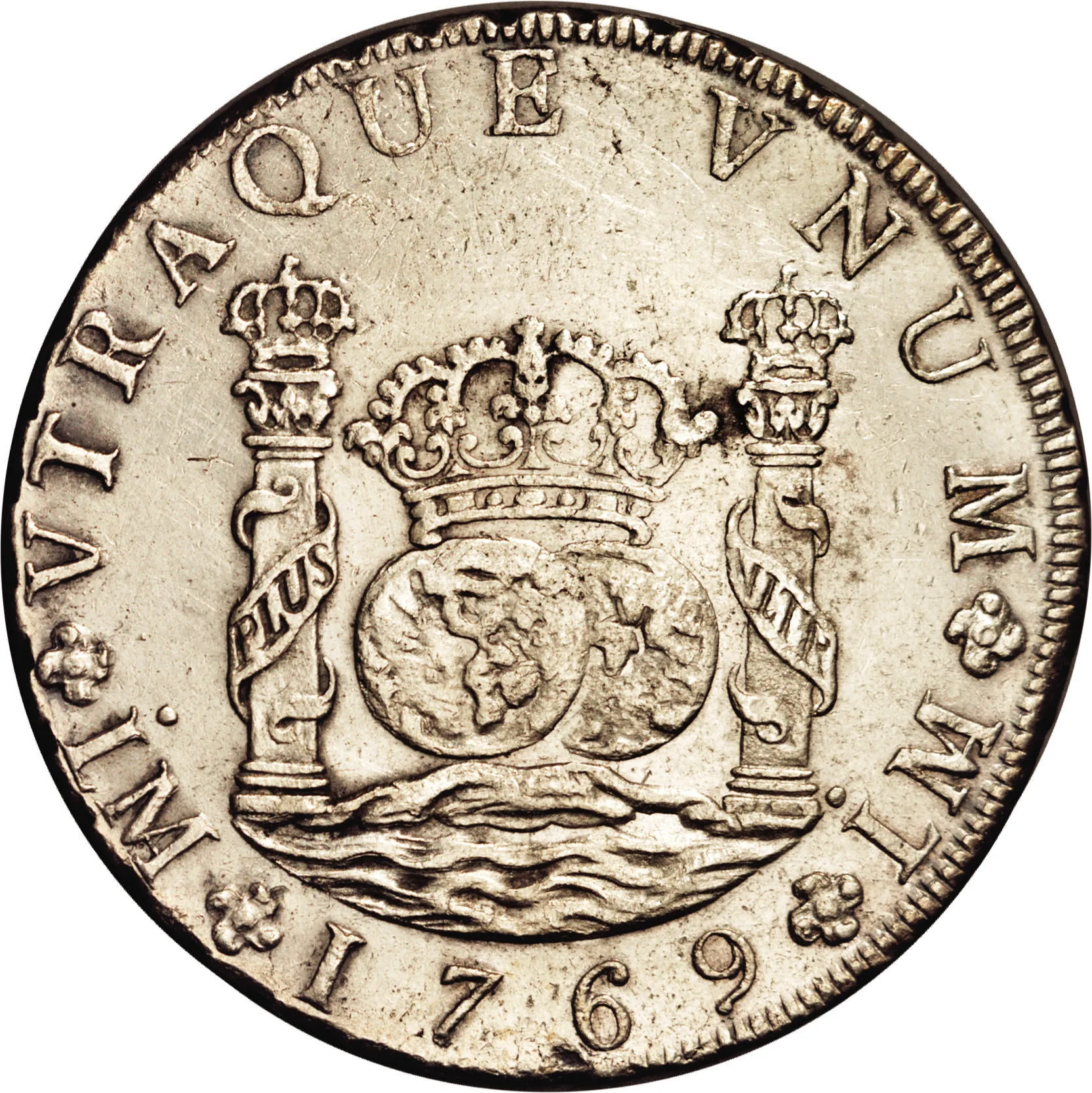
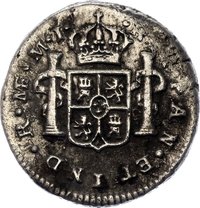
Globes crowned, flanked by Heracles' pillars. Motto above, date below, mintmarks at sides.
Inscription:
VTRAQUE VNUM
LMA ✤ 1769 ✤ LMA
LMA ✤ 1769 ✤ LMA
Script: Latin
Reverse
Description:
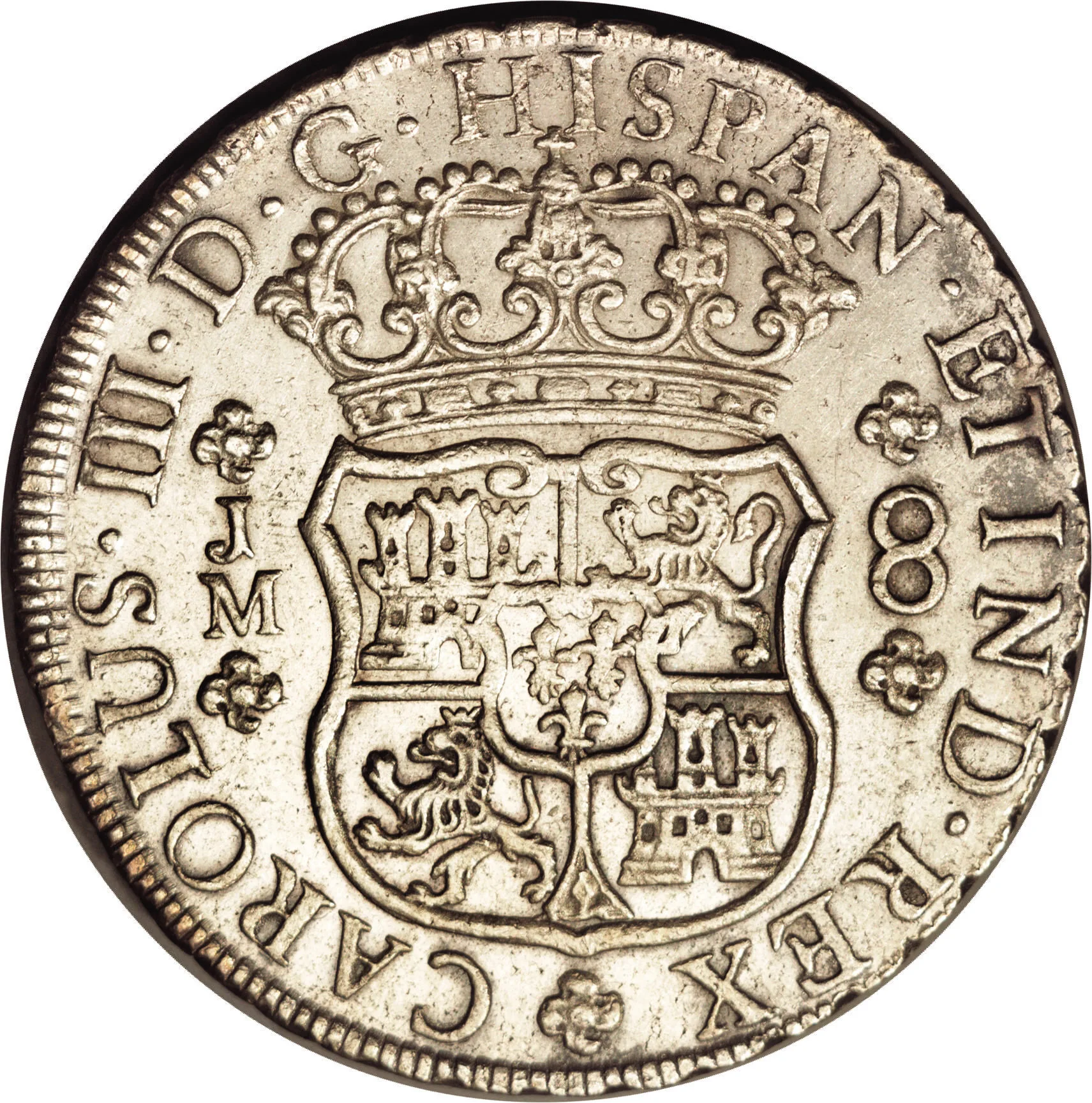
Spanish coat of arms, flanked by king's name and assayer initials on left, face value on right.
Inscription:
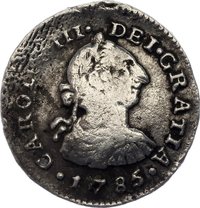
✤ CAROLUS • III • D • G • HISPAN • ETIND • REX
JM 8
JM 8
Script: Latin
Edge
Mints
| Name | Mark |
|---|---|
| Lima | LMA |
Mintings
| Year | Mint Mark | Mintage | Quality | Collection |
|---|---|---|---|---|
| 1769 | LMJM | — | ||
| 1770 | LMJM | — | ||
| 1771 | LMJM | — | ||
| 1772 | LMJM | — |
Historical background
In 1769, the Viceroyalty of Peru operated under a complex and strained monetary system inherited from Spanish colonial rule. The official currency was based on silver, primarily minted at the famed Casa de la Moneda in Potosí (in present-day Bolivia), which produced silver reales and the larger 8-real piece known as the "Spanish dollar" or peso. This coin was a cornerstone of global trade. However, the system suffered from chronic shortages of circulating specie, especially outside major commercial centers like Lima. This scarcity was exacerbated by the Crown's relentless extraction of silver to Spain, mercantilist trade restrictions that limited economic dynamism, and the vast, difficult geography of the viceroyalty that hampered internal distribution.
The shortage of official coinage led to the widespread and problematic use of substitute currencies. In daily transactions, particularly among the indigenous population and in regional markets, goods like coca leaves, textiles, and even labor often served as de facto barter. More formally, the Church and merchants frequently used libranzas (credit notes or bills of exchange) to facilitate larger transactions. This unstable environment also fostered rampant clipping and counterfeiting of coins, further degrading trust in the monetary supply. The situation created a two-tiered economy: one of formal, silver-based commerce tied to the Spanish Atlantic system, and another of informal and localized exchange.
This monetary context existed on the brink of significant change. The Bourbon Reforms, aimed at modernizing and increasing royal control over the empire, were underway. In 1769, Viceroy Manuel de Amat y Junient was implementing administrative changes, but comprehensive monetary reform was still in the future. The inherent weaknesses of the system—scarcity, inconsistency, and fraud—contributed to economic inefficiency and social tension. These conditions would later prompt Crown efforts to establish new mints within Peru itself and to reorganize fiscal policy, seeking to stabilize the currency and better harness the colony's vast mineral wealth for the benefit of Madrid.
The shortage of official coinage led to the widespread and problematic use of substitute currencies. In daily transactions, particularly among the indigenous population and in regional markets, goods like coca leaves, textiles, and even labor often served as de facto barter. More formally, the Church and merchants frequently used libranzas (credit notes or bills of exchange) to facilitate larger transactions. This unstable environment also fostered rampant clipping and counterfeiting of coins, further degrading trust in the monetary supply. The situation created a two-tiered economy: one of formal, silver-based commerce tied to the Spanish Atlantic system, and another of informal and localized exchange.
This monetary context existed on the brink of significant change. The Bourbon Reforms, aimed at modernizing and increasing royal control over the empire, were underway. In 1769, Viceroy Manuel de Amat y Junient was implementing administrative changes, but comprehensive monetary reform was still in the future. The inherent weaknesses of the system—scarcity, inconsistency, and fraud—contributed to economic inefficiency and social tension. These conditions would later prompt Crown efforts to establish new mints within Peru itself and to reorganize fiscal policy, seeking to stabilize the currency and better harness the colony's vast mineral wealth for the benefit of Madrid.
💎 Extremely Rare