

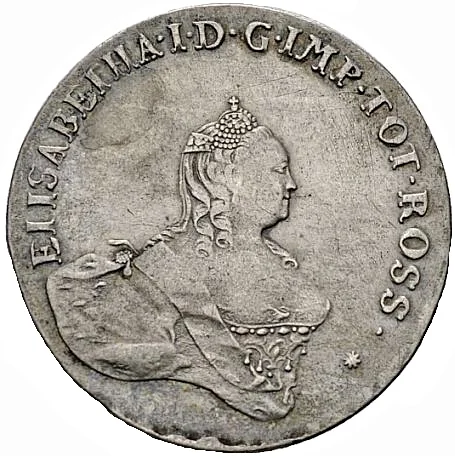
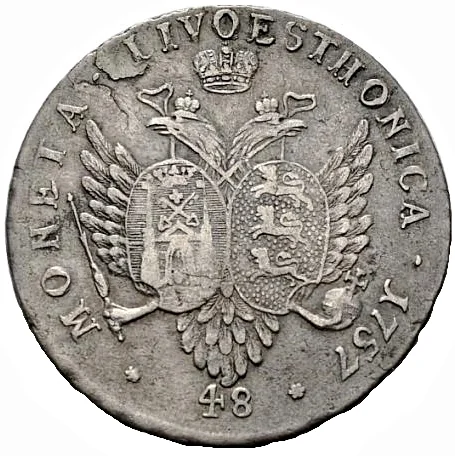
48 kopecks – Livonia and Estonia
Add to wishlist
Russia
Context
Year: 1757
Country: Russia
Issuer: Livonia and Estonia
Ruler: Elizabeth
Currency:
(1756—1917)
Subdivision: 48 kopecks = ½ Livonese
Demonetized: Yes
Total mintage: 42,450
Material
References
KM: #
Numista: #69652
Value
Bullion value: $24.83
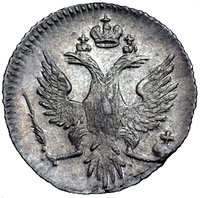
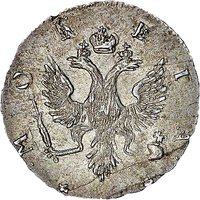
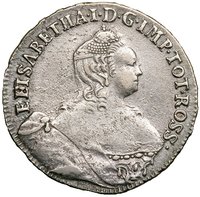
Obverse
Description:
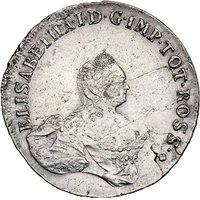
Right-facing bust with surrounding legend.
Inscription:
ELISABETHA · I · D · G · IMP · TOT · ROSS ·
Script: Latin
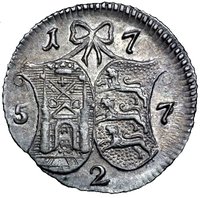
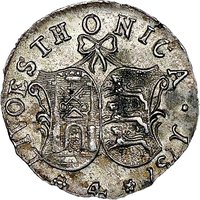
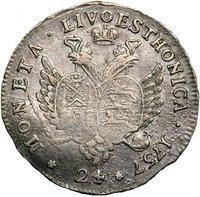
Reverse
Description:
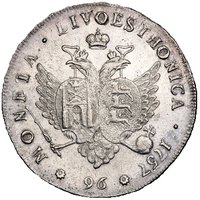
Double-headed Russian eagles bearing Livonian and Estonian shields, encircled by a legend.
Inscription:
MONETA · LIVOESTHONICA · 1757
48
48
Script: Latin
Edge
Cinquefoil and globe.
Mints
| Name | Mark |
|---|---|
| Krasny Mint (Red Mint) | — |
Mintings
| Year | Mint Mark | Mintage | Quality | Collection |
|---|---|---|---|---|
| 1757 | — | 42,450 |
Historical background
In 1757, Livonia and Estonia were not independent nations but Baltic provinces of the Russian Empire, having been formally annexed by Tsar Peter the Great following the Great Northern War (1721). The currency situation was therefore a direct extension of the Russian monetary system, which was itself in a state of significant transition and disorder. The primary circulating coins were Russian silver kopecks and their subdivisions, but the system was plagued by a severe shortage of small change, leading to widespread use of cut coin fragments (polushka, denga) for everyday transactions. Furthermore, the longstanding practice of using high-quality Western European silver thalers (known as yefimki in Russia) as a raw material for recoinage or as a trade currency persisted in these commercially active Baltic ports.
However, the local economic reality was distinct due to the region's history and dominant German Baltic nobility. While imperial Russian coin was law, the legacy of the earlier Swedish rule and strong Hanseatic trade connections meant that older Swedish coins and various European currencies, particularly thalers from the German states and the Dutch Republic, remained familiar in commerce, especially for larger mercantile transactions in cities like Riga and Reval (Tallinn). The landed gentry and merchant class, who operated within a manorial economy and international trade networks, often kept their accounts in thalers or marks, creating a dual monetary mindset where local accounting units coexisted with the physical Russian coinage.
This period fell within the reign of Empress Elizabeth, whose government was acutely aware of the empire's monetary crisis. The ongoing Seven Years' War (1756-1763), in which Russia was a combatant, placed enormous fiscal strain on the state, exacerbating currency shortages and inflationary pressures that were felt in the Baltic provinces. While major monetary reform was on the horizon—culminating in the 1760s under Catherine the Great—the situation in 1757 was one of fragmented circulation, reliance on physically degraded coinage, and an underlying tension between the imposed imperial monetary system and the Baltic region's integrated position within broader Northern European commercial and financial circuits.
However, the local economic reality was distinct due to the region's history and dominant German Baltic nobility. While imperial Russian coin was law, the legacy of the earlier Swedish rule and strong Hanseatic trade connections meant that older Swedish coins and various European currencies, particularly thalers from the German states and the Dutch Republic, remained familiar in commerce, especially for larger mercantile transactions in cities like Riga and Reval (Tallinn). The landed gentry and merchant class, who operated within a manorial economy and international trade networks, often kept their accounts in thalers or marks, creating a dual monetary mindset where local accounting units coexisted with the physical Russian coinage.
This period fell within the reign of Empress Elizabeth, whose government was acutely aware of the empire's monetary crisis. The ongoing Seven Years' War (1756-1763), in which Russia was a combatant, placed enormous fiscal strain on the state, exacerbating currency shortages and inflationary pressures that were felt in the Baltic provinces. While major monetary reform was on the horizon—culminating in the 1760s under Catherine the Great—the situation in 1757 was one of fragmented circulation, reliance on physically degraded coinage, and an underlying tension between the imposed imperial monetary system and the Baltic region's integrated position within broader Northern European commercial and financial circuits.
✨ Legendary