

1 rupee – Jodhpur-Kuchaman Feudatory
Add to wishlist
India
Context
Year: 1789
Islamic (Hijri) Year:: 1203
Country: India
Issuer: Jodhpur-Kuchaman Feudatory
Currency:
Demonetized: Yes
Material
References
KM: #
Numista: #68196
Value
Bullion value: $27.76
Obverse
Description:
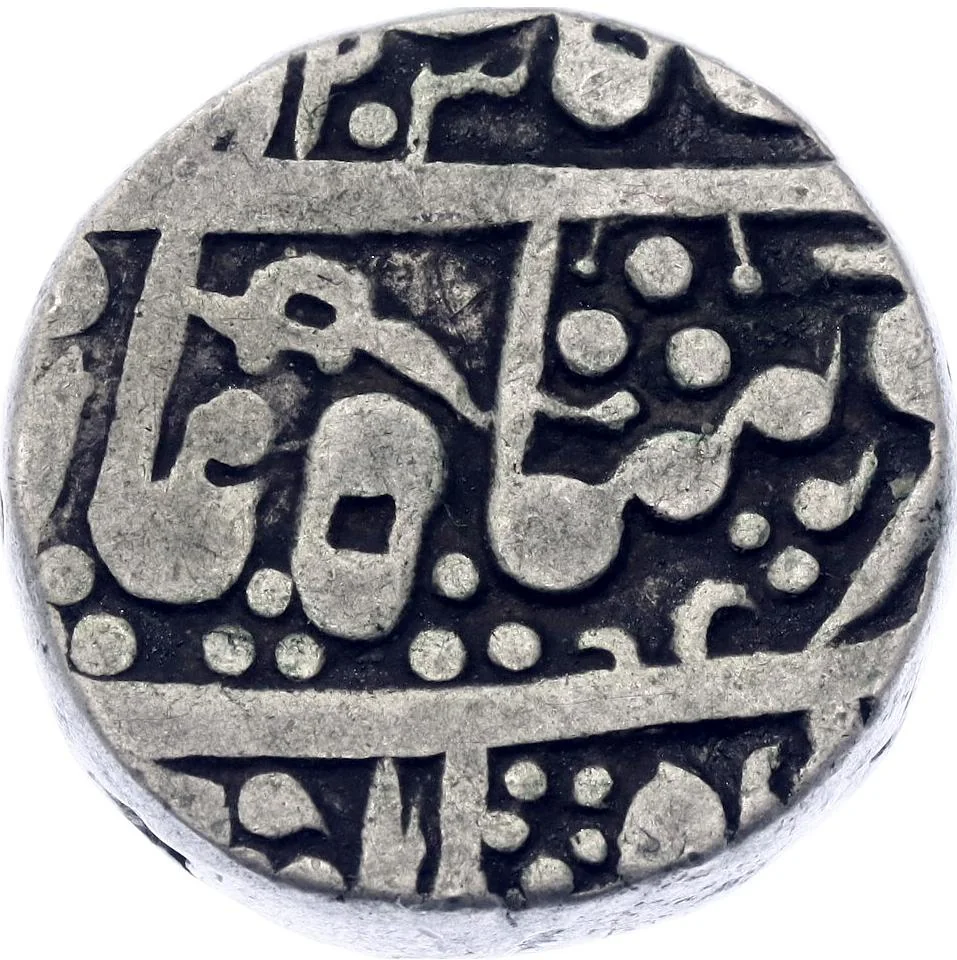
Shah Alam II sword mint, frozen date AH 1203.
Inscription:
١٢٠٣
Reverse
Description:
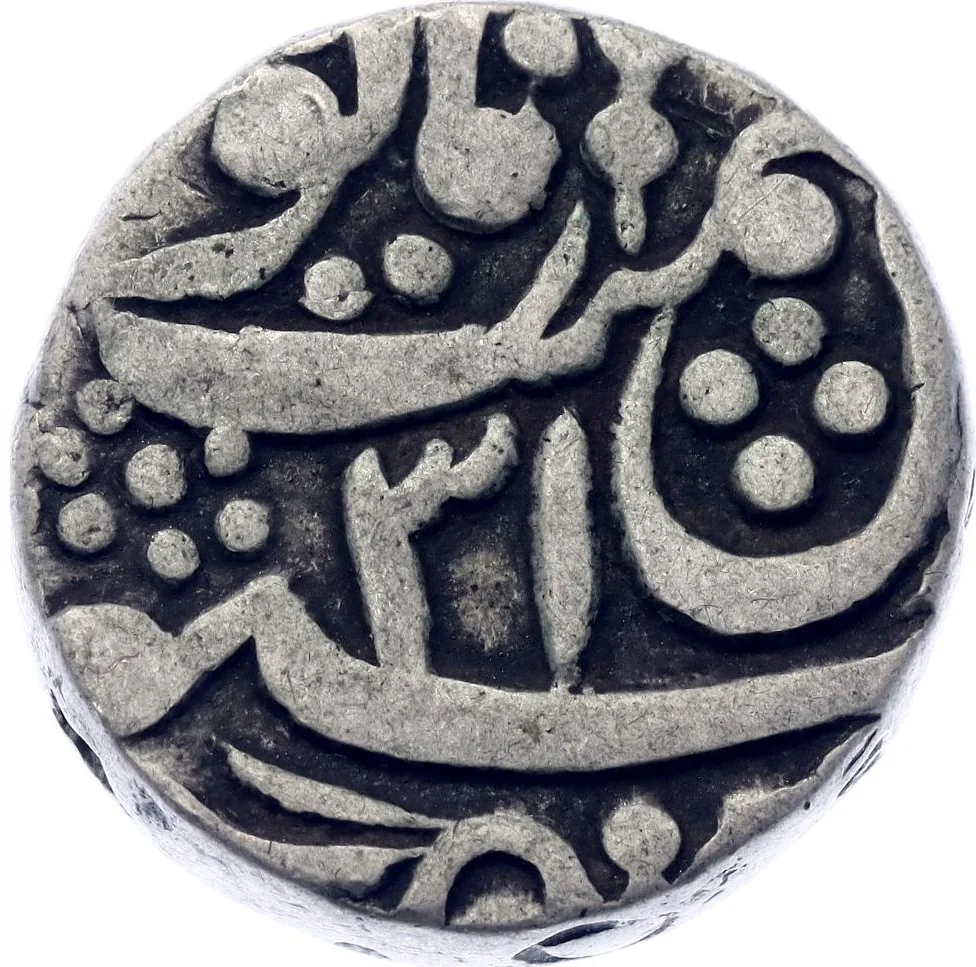
Legend in Urdu (Frozen) RY 31
Inscription:
٣١
Edge
Plain
Mintings
| Year | Mint Mark | Mintage | Quality | Collection |
|---|---|---|---|---|
| 1789 | — | — |
Historical background
In 1789, the currency situation in the Jodhpur-Kuchaman feudatory, a domain under the Rathore Rajputs owing allegiance to the Jodhpur (Marwar) state, was characterized by monetary fragmentation and the enduring legacy of Mughal systems amidst regional instability. The primary circulating currency remained the Mughal silver rupee, notably the Rajasthani rupee and its local variants, which bore the name and titles of the Mughal Emperor Shah Alam II. However, the actual authority to mint coins was exercised by the Maharaja of Jodhpur, Vijai Singh, with the Rawat of Kuchaman holding subordinate rights. This created a layered sovereignty in coinage, where imperial symbols coexisted with local feudal authority, reflecting the political reality of a weakening Mughal center and powerful regional kingdoms.
The period was marked by severe scarcity of specie (coin), driven by decades of Maratha incursions and tribute (chauth), which drained the region's silver reserves. This scarcity led to the proliferation of lower-value, often debased, copper and billon (mixed metal) coins for everyday transactions. A significant feature was the circulation of "Siyah" or black money—heavily debased silver or copper coins that were often minted locally by sahukars (merchant-bankers) or smaller feudatories to address the acute shortage of reliable currency. Consequently, exchange rates between these various coins fluctuated, causing confusion and hardship in local markets.
Furthermore, the monetary system operated within a complex web of hundis (bills of exchange) managed by Marwari merchants, which facilitated trade and state finance but highlighted the weakness of the physical currency supply. The 1789 situation, therefore, was one of transition and strain: an official Mughal-derived coinage system was being undermined by external financial predation, internal minting rights, and a growing reliance on informal and debased currencies, setting the stage for the more formalized princely coinage of the 19th century under British hegemony.
The period was marked by severe scarcity of specie (coin), driven by decades of Maratha incursions and tribute (chauth), which drained the region's silver reserves. This scarcity led to the proliferation of lower-value, often debased, copper and billon (mixed metal) coins for everyday transactions. A significant feature was the circulation of "Siyah" or black money—heavily debased silver or copper coins that were often minted locally by sahukars (merchant-bankers) or smaller feudatories to address the acute shortage of reliable currency. Consequently, exchange rates between these various coins fluctuated, causing confusion and hardship in local markets.
Furthermore, the monetary system operated within a complex web of hundis (bills of exchange) managed by Marwari merchants, which facilitated trade and state finance but highlighted the weakness of the physical currency supply. The 1789 situation, therefore, was one of transition and strain: an official Mughal-derived coinage system was being undermined by external financial predation, internal minting rights, and a growing reliance on informal and debased currencies, setting the stage for the more formalized princely coinage of the 19th century under British hegemony.
⭐ Rare