

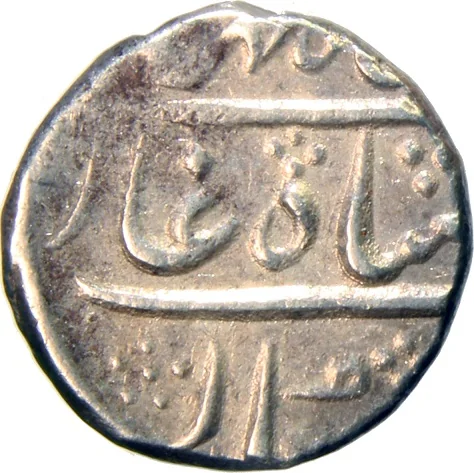
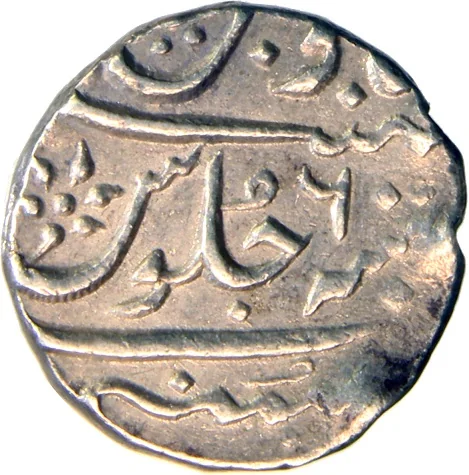
1 Rupee – Bombay Presidency
India
Context

Material
References
KM: #Click to copy to clipboard168
Numista: #67699
Value
Bullion value: $33.30
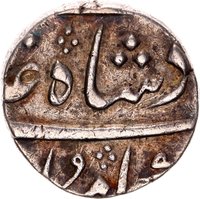
Obverse
Description:
Ahmad Shah Bahadur, AH 1167.
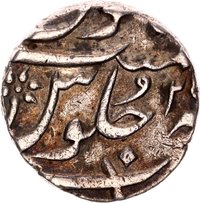
Reverse
Description:
Zarb Mumbai, RY 6, Maimanat.
Inscription:
٦
Edge
Plain
Mintings
| Year | Mint Mark | Mintage | Quality | Collection |
|---|---|---|---|---|
| 1750 | — | — | ||
| 1751 | — | — | ||
| 1752 | — | — | ||
| 1753 | — | — | ||
| 1754 | — | — |
Historical background
In 1750, the Bombay Presidency’s currency situation was a complex tapestry of indigenous and foreign systems, reflecting its position as a minor but growing node in regional and global trade. The dominant economic power was the Maratha Confederacy, which controlled the hinterland and its lucrative revenue streams, while the East India Company’s authority was largely confined to Bombay Island, Salsette, and a few other coastal enclaves. Consequently, the monetary landscape was not unified but fragmented, with the Company struggling to assert its own standards amidst a flood of widely circulating currencies.
The most prevalent coins were the silver rupees of various Maratha mints and those of the Mughal Empire, which remained a trusted benchmark. Alongside these, Portuguese xerafins and tangas (largely from Goa) and gold pagodas from India’s south were common in commerce. This multiplicity led to chronic problems of valuation, fluctuating exchange rates, and widespread forgery or clipping of coins. The Bombay Mint, established in 1672, produced Company rupees imitating Mughal designs to gain local acceptance, but its output was insufficient to standardize the currency. Trade relied heavily on the expertise of shroffs (money-changers and assayers), who were essential for verifying the weight and purity of this heterogeneous coinage.
Ultimately, the currency chaos of 1750 underscored the Company’s commercial and administrative limitations on the eve of its territorial expansion. The lack of a uniform, authoritative currency system imposed transaction costs and hindered Bombay's growth as a financial centre. This unstable monetary environment would only begin to resolve as the East India Company’s political and military power increased after the 1750s, allowing it to gradually impose greater monetary control and eventually standardize the rupee in its territories.
The most prevalent coins were the silver rupees of various Maratha mints and those of the Mughal Empire, which remained a trusted benchmark. Alongside these, Portuguese xerafins and tangas (largely from Goa) and gold pagodas from India’s south were common in commerce. This multiplicity led to chronic problems of valuation, fluctuating exchange rates, and widespread forgery or clipping of coins. The Bombay Mint, established in 1672, produced Company rupees imitating Mughal designs to gain local acceptance, but its output was insufficient to standardize the currency. Trade relied heavily on the expertise of shroffs (money-changers and assayers), who were essential for verifying the weight and purity of this heterogeneous coinage.
Ultimately, the currency chaos of 1750 underscored the Company’s commercial and administrative limitations on the eve of its territorial expansion. The lack of a uniform, authoritative currency system imposed transaction costs and hindered Bombay's growth as a financial centre. This unstable monetary environment would only begin to resolve as the East India Company’s political and military power increased after the 1750s, allowing it to gradually impose greater monetary control and eventually standardize the rupee in its territories.
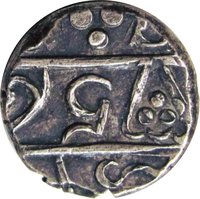
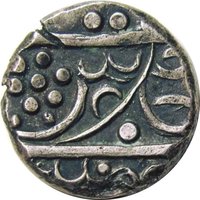
💎 Extremely Rare