

1 mark – Sweden
Add to wishlist
Sweden
Context
Years: 1697–1707
Issuer: Sweden
Ruler: Charles XII
Currency:
(1665—1715)
Demonetized: Yes
Total mintage: 889,119
Material
References
KM: #
Numista: #67660
Value
Bullion value: $10.04
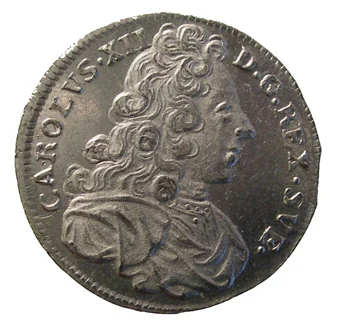
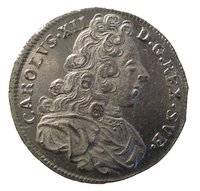
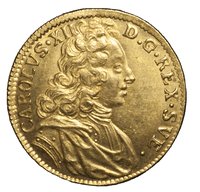
Obverse
Description:
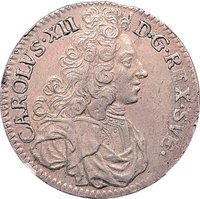
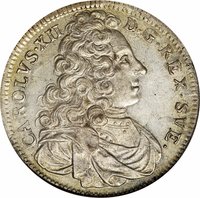
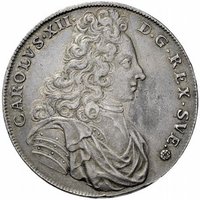
Bust of King Karl XII facing right, with flowing hair and an elaborate robe.
Inscription:
CAROLVS•XII• D•G•REX•SVE•
Script: Latin
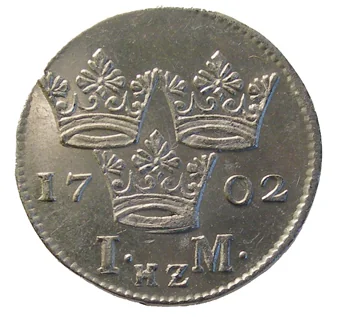
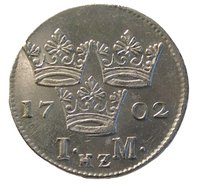
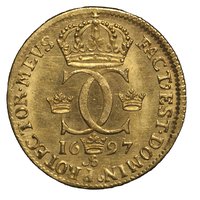
Reverse
Description:
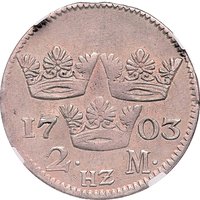
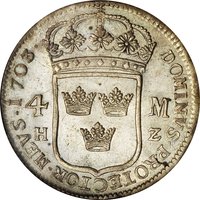
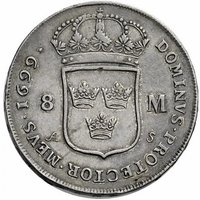
Three crowns separate date and value, mintmark below.
Inscription:
17 02
I. M.
LC
I. M.
LC
Script: Latin
Edge
Mints
| Name | Mark |
|---|---|
| Stockholm | — |
Mintings
| Year | Mint Mark | Mintage | Quality | Collection |
|---|---|---|---|---|
| 1697 | — | — | BU | |
| 1698 | — | 23,851 | ||
| 1699 | — | 59,092 | ||
| 1700 | HZ | 46,101 | ||
| 1701 | — | 230,127 | ||
| 1702 | — | 128,768 | ||
| 1703 | — | 126,319 | ||
| 1704 | — | 43,562 | ||
| 1705 | — | 88,553 | ||
| 1706 | HZ | 110,009 | ||
| 1706 | LC | — | ||
| 1707 | LC | 32,737 |
Historical background
In 1697, Sweden was grappling with a severe monetary crisis rooted in decades of aggressive warfare and fiscal mismanagement. The kingdom, though a diminished great power after the Scanian War (1675–1679), maintained a large and costly military. To finance its ambitions, the state had repeatedly debased the currency, notably through the issuance of low-quality copper mynt and clipped silver coins. This created a system where the intrinsic metal value of coins was often less than their face value, leading to widespread distrust, hoarding of older, purer coins, and rampant inflation that crippled everyday commerce.
The situation was exacerbated by a complex and cumbersome monetary standard. Sweden officially operated on a bimetallic system (copper and silver), but the sheer bulk of copper plåtmynt (plate money) made large transactions physically difficult. Furthermore, a chronic shortage of small change paralyzed retail trade, forcing communities and businesses to issue their own makeshift tokens. The monetary chaos reflected a deeper fiscal reality: the crown's expenses far outstripped its tax revenues, and its credit was exhausted, leaving currency manipulation as a desperate, short-term solution.
This unstable financial backdrop formed the immediate context for the accession of fifteen-year-old King Charles XII in April 1697. The Riksdag (parliament) and the government recognized the urgent need for reform, but decisive action was postponed due to the king's youth and the ensuing regency. Within a few years, the outbreak of the Great Northern War (1700) would plunge Sweden into an even greater conflict, forcing the crown to resort to more extreme monetary experiments, including the first official European paper money issued by the Stockholm Banco in the 1660s, whose notes were already deeply depreciated by 1697. Thus, the currency situation on the eve of the 18th century was one of profound weakness, setting the stage for further economic turmoil during the coming war.
The situation was exacerbated by a complex and cumbersome monetary standard. Sweden officially operated on a bimetallic system (copper and silver), but the sheer bulk of copper plåtmynt (plate money) made large transactions physically difficult. Furthermore, a chronic shortage of small change paralyzed retail trade, forcing communities and businesses to issue their own makeshift tokens. The monetary chaos reflected a deeper fiscal reality: the crown's expenses far outstripped its tax revenues, and its credit was exhausted, leaving currency manipulation as a desperate, short-term solution.
This unstable financial backdrop formed the immediate context for the accession of fifteen-year-old King Charles XII in April 1697. The Riksdag (parliament) and the government recognized the urgent need for reform, but decisive action was postponed due to the king's youth and the ensuing regency. Within a few years, the outbreak of the Great Northern War (1700) would plunge Sweden into an even greater conflict, forcing the crown to resort to more extreme monetary experiments, including the first official European paper money issued by the Stockholm Banco in the 1660s, whose notes were already deeply depreciated by 1697. Thus, the currency situation on the eve of the 18th century was one of profound weakness, setting the stage for further economic turmoil during the coming war.
Series: 1697 Sweden circulation coins
✨ Legendary