

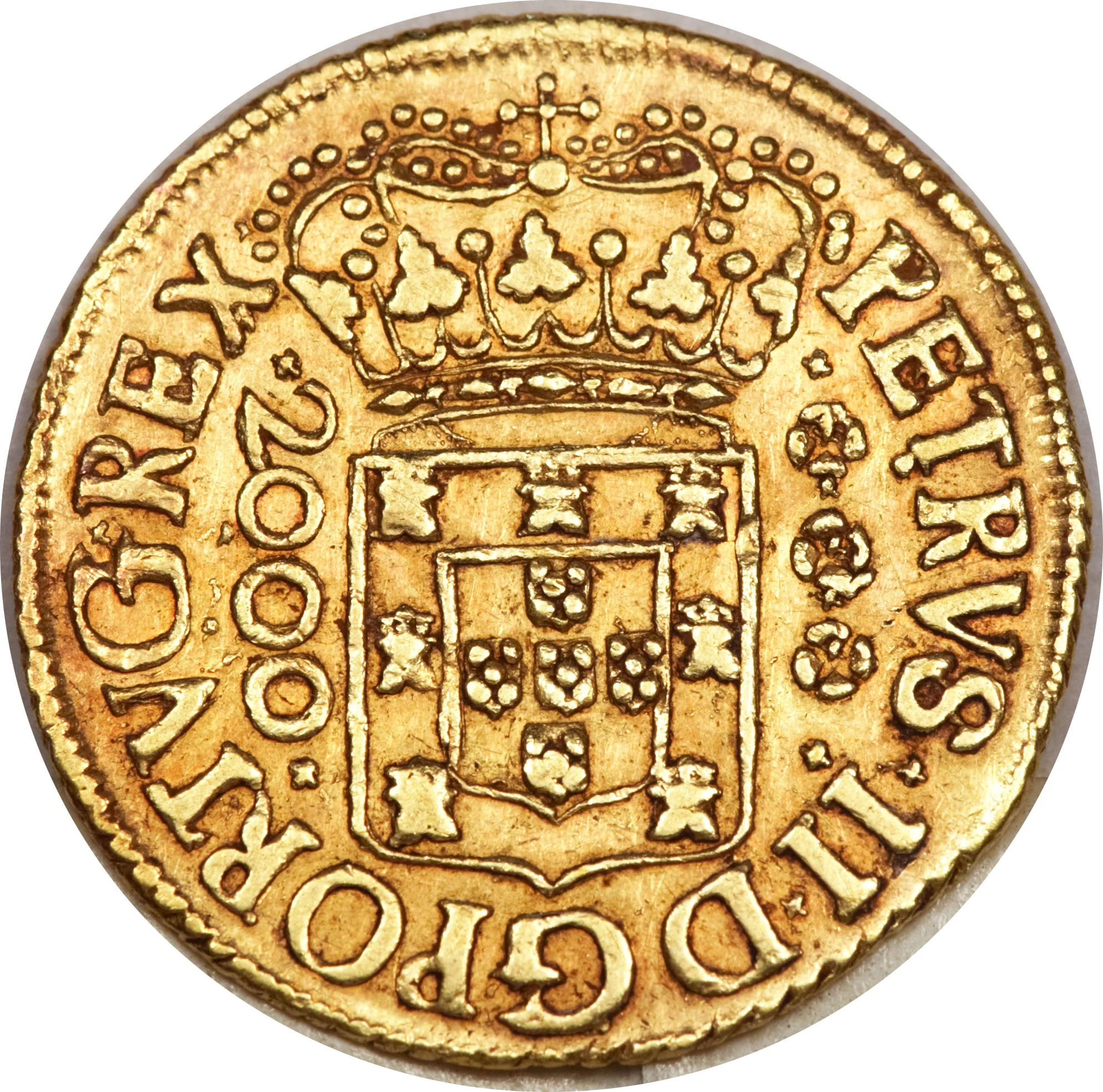
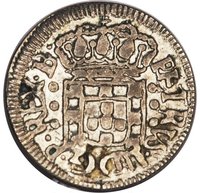
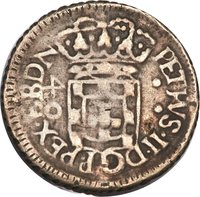
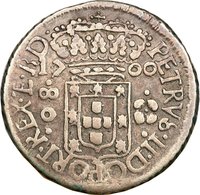
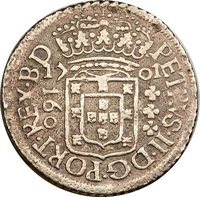
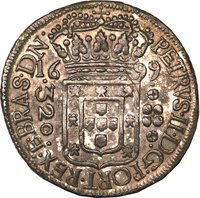
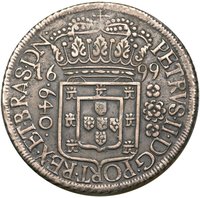
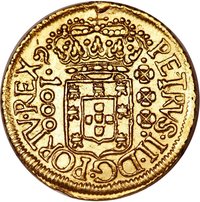
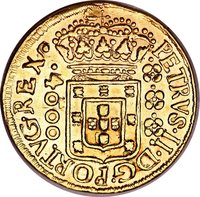
Obverse
Description:
Crowned shield, 2000 value, 3 flowers.
Inscription:
PETRVS.II.DG.PORTVG.REX
2000
2000
Script: Latin
Engraver: Amaro de Barros
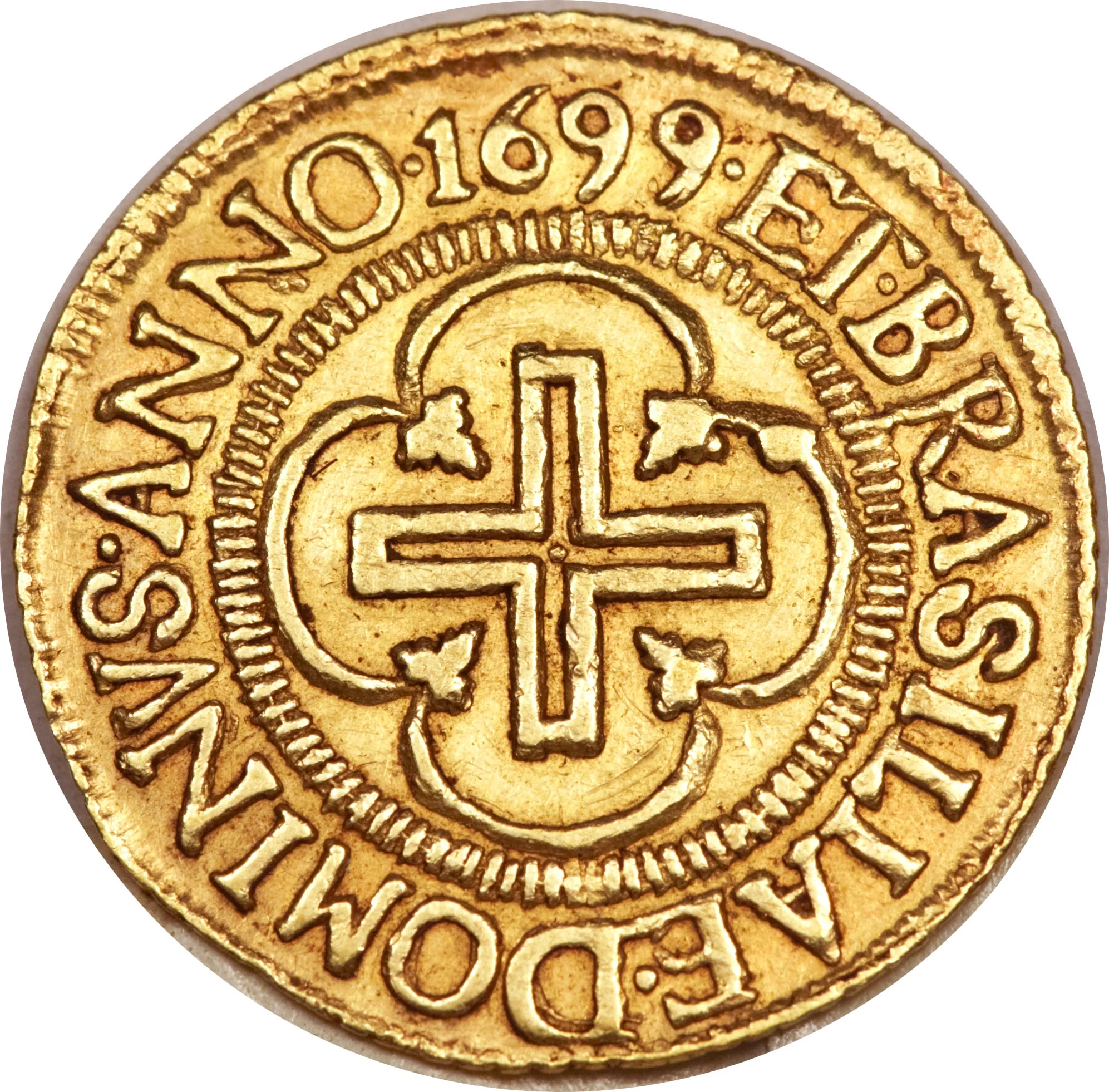
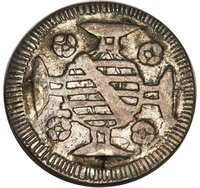
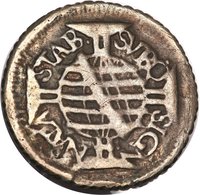
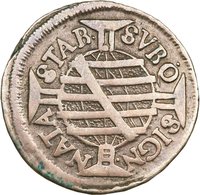
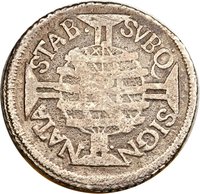
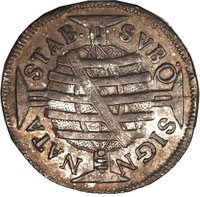
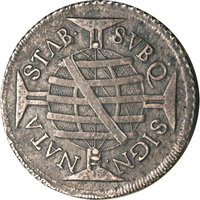
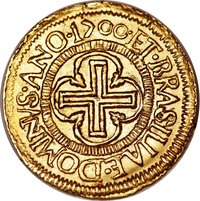
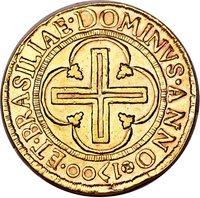
Reverse
Description:
Saint George's cross with ornaments and date.
Inscription:
ET.BRASILIAE.DOMINVS.ANNO.1699/1700.
Script: Latin
Engraver: Amaro de Barros
Edge
Reeded.
Mints
| Name | Mark |
|---|---|
| Casa da Moeda do Brasil | — |
Mintings
| Year | Mint Mark | Mintage | Quality | Collection |
|---|---|---|---|---|
| 1699 | — | — | ||
| 1700 | — | — |
Historical background
In 1699, Brazil's currency situation was defined by scarcity, inconsistency, and the enduring legacy of a sugar-based economy. As a Portuguese colony, Brazil lacked a formal mint, and the official Portuguese currency—the real (plural réis)—was in chronically short supply. The economy instead operated on a complex system of commodity money, barter, and various foreign coins that entered through trade. The most common unit of account was the mil-réis (1,000 réis), but physical coins, especially for smaller transactions, were rare. This scarcity severely hampered internal trade and colonial administration, as taxes and official payments were legally required in metallic currency.
The vacuum was filled by a diverse array of substitutes. In the sugar-producing northeast, the primary engine of the colony's wealth, sugar itself often served as a de facto currency for large transactions. Elsewhere, commodities like tobacco, cacao, and even cattle were used. Furthermore, due to Portugal's extensive trade networks and Brazil's proximity to Spanish America, a multitude of foreign coins circulated, including Spanish pesos (often called "pieces of eight"), Dutch guilders, and Portuguese coins from other territories. These were accepted by weight and fineness, leading to constant confusion and fraud.
This chaotic monetary environment was on the cusp of significant change. The discovery of gold in the interior region of Minas Gerais in the late 1690s was beginning to trigger a seismic shift. While the full flood of gold would arrive in the early 18th century, by 1699 the first substantial quantities were starting to circulate, offering a potential solution to the chronic shortage of coinage. This nascent gold boom prompted the Portuguese Crown to soon establish the first official mint in Brazil (in Bahia in 1694, later moved to Rio de Janeiro in 1699/1700), beginning the long process of replacing commodity money with a standardized, gold-backed colonial currency.
The vacuum was filled by a diverse array of substitutes. In the sugar-producing northeast, the primary engine of the colony's wealth, sugar itself often served as a de facto currency for large transactions. Elsewhere, commodities like tobacco, cacao, and even cattle were used. Furthermore, due to Portugal's extensive trade networks and Brazil's proximity to Spanish America, a multitude of foreign coins circulated, including Spanish pesos (often called "pieces of eight"), Dutch guilders, and Portuguese coins from other territories. These were accepted by weight and fineness, leading to constant confusion and fraud.
This chaotic monetary environment was on the cusp of significant change. The discovery of gold in the interior region of Minas Gerais in the late 1690s was beginning to trigger a seismic shift. While the full flood of gold would arrive in the early 18th century, by 1699 the first substantial quantities were starting to circulate, offering a potential solution to the chronic shortage of coinage. This nascent gold boom prompted the Portuguese Crown to soon establish the first official mint in Brazil (in Bahia in 1694, later moved to Rio de Janeiro in 1699/1700), beginning the long process of replacing commodity money with a standardized, gold-backed colonial currency.
Series: 1699 Brazil circulation coins
✨ Legendary