

1 cash – Madras Presidency
Add to wishlist
India
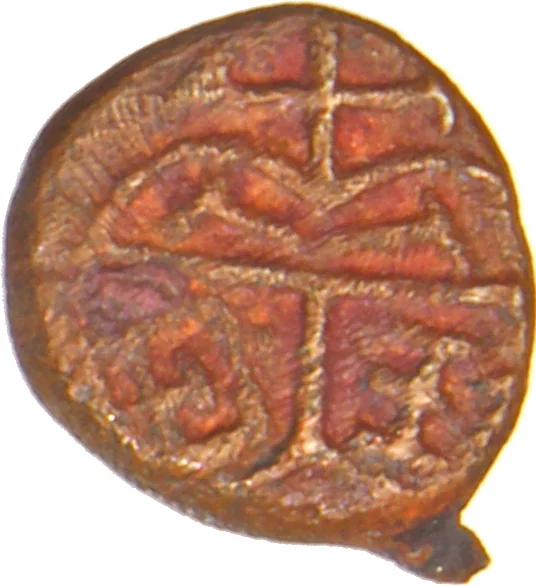
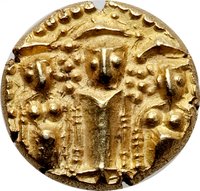
Obverse
Description:
VOC monogram in dotted circle.
Inscription:
4
V E I C
V E I C
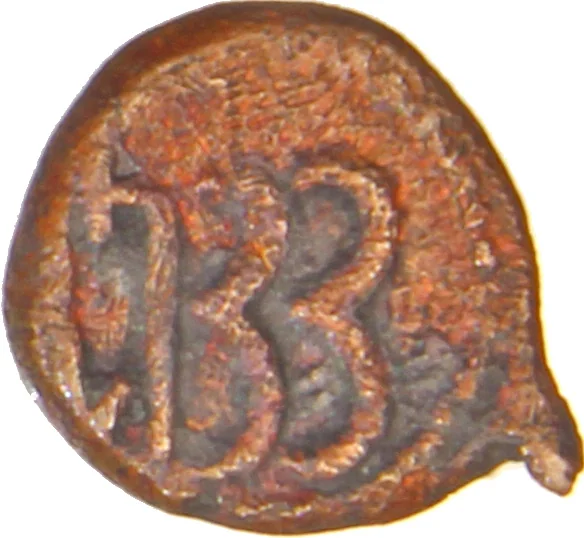
Reverse
Description:
Date in dotted circle
Inscription:
1733
Edge
Plain
Mintings
| Year | Mint Mark | Mintage | Quality | Collection |
|---|---|---|---|---|
| 1730 | — | — | ||
| 1731 | — | — | ||
| 1733 | — | — | ||
| 1734 | — | — | ||
| 1736 | — | — | ||
| 1737 | — | — | ||
| 1739 | — | — | ||
| 1748 | — | — | ||
| 1752 | — | — |
Historical background
In 1730, the currency situation within the Madras Presidency was complex and transitional, reflecting the broader political and economic contest between Indian powers and European trading companies. The region operated on a bimetallic system, primarily using gold pagodas and silver rupees, but the value, weight, and purity of these coins were not standardized. A multitude of currencies circulated, including Mughal rupees from the north, Arcot rupees minted by the Nawab of Carnatic, various European coinages, and older indigenous issues, leading to constant exchange rate fluctuations and commercial confusion.
The English East India Company, based at Fort St. George, was increasingly asserting its political and economic influence but did not yet possess sovereign minting rights. Consequently, the Company's trade and administration relied heavily on locally circulating coins, particularly the Arcot rupee, which became a de facto accounting standard. The Company faced persistent challenges from currency debasement by local rulers and the influx of inferior foreign coins, which eroded profits and caused instability in the local bazaar.
This fragmented monetary environment significantly hampered trade and governance. Merchants and the Company itself required the services of skilled shroffs (money-changers and assayers) to verify coins and negotiate exchanges. The situation created an urgent need for a uniform and reliable currency, a need the Company would increasingly seek to address in the coming decades by securing minting privileges and eventually standardizing the rupee system, laying the monetary foundation for its future territorial rule.
The English East India Company, based at Fort St. George, was increasingly asserting its political and economic influence but did not yet possess sovereign minting rights. Consequently, the Company's trade and administration relied heavily on locally circulating coins, particularly the Arcot rupee, which became a de facto accounting standard. The Company faced persistent challenges from currency debasement by local rulers and the influx of inferior foreign coins, which eroded profits and caused instability in the local bazaar.
This fragmented monetary environment significantly hampered trade and governance. Merchants and the Company itself required the services of skilled shroffs (money-changers and assayers) to verify coins and negotiate exchanges. The situation created an urgent need for a uniform and reliable currency, a need the Company would increasingly seek to address in the coming decades by securing minting privileges and eventually standardizing the rupee system, laying the monetary foundation for its future territorial rule.

💎 Very Rare