

⅙ Ore SM – Sweden
Sweden
Context
Years: 1707–1708
Issuer: Sweden 
Ruler: Charles XII
Currency:
(1665—1715)
Demonetized: Yes
Total mintage: 1,592,256
References
KM: #Click to copy to clipboard334
Numista: #64722
Obverse
Description:
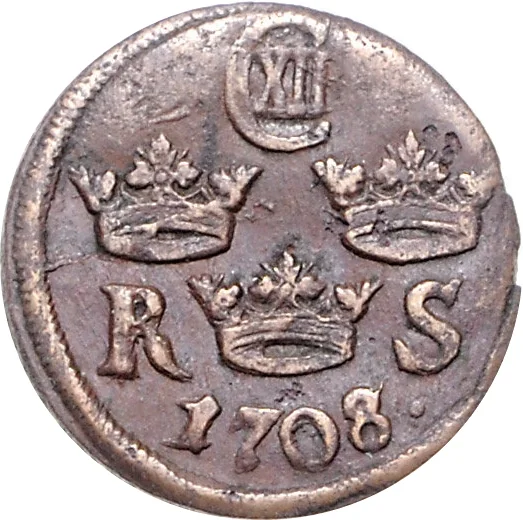
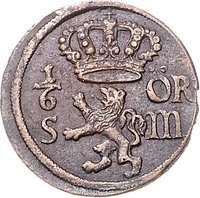
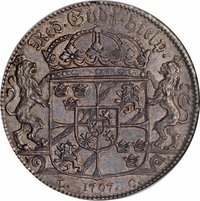
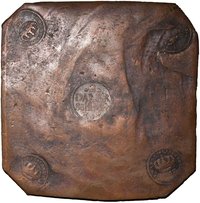
Three crowns flank the king's monogram, with the date and "RS" signature below.
Inscription:
C XII
RS
1708
RS
1708
Script: Latin
Reverse
Edge
Mintings
| Year | Mint Mark | Mintage | Quality | Collection |
|---|---|---|---|---|
| 1707 | — | 1,023,936 | ||
| 1708 | — | 568,320 |
Historical background
In 1707, Sweden found itself in a precarious monetary situation, a direct consequence of its prolonged and costly involvement in the Great Northern War (1700–1721). The war against a coalition including Russia, Denmark-Norway, and Saxony-Poland had drained the royal treasury. To finance military campaigns, the government, under King Charles XII, had resorted to repeated debasements of the copper and silver coinage since the 1690s. This meant reducing the precious metal content in coins while ordering them to be accepted at their old, higher face value, effectively creating inflation to pay for soldiers, ships, and supplies.
The specific crisis in 1707 was characterized by a severe shortage of small-denomination coins needed for everyday transactions, alongside a collapsing public confidence in the currency's value. Earlier debasements had led to Gresham's Law in action: "bad" money (debased coins) drove "good" money (older, full-value coins) out of circulation, as people hoarded the latter. The resulting monetary chaos disrupted trade and caused prices to soar, imposing a heavy burden on the population, particularly the peasantry and those on fixed incomes. The state's credit was exhausted, and traditional revenues were insufficient.
Despite the dire circumstances, 1707 was a year of relative calm before a final, more drastic monetary intervention. King Charles XII was campaigning far away in Saxony, and the domestic administration, led by the government in Stockholm, was struggling to manage the economy through stopgap measures. The situation would deteriorate further, leading to the infamous 1715 decree where the state issued crude, emergency mynttecken (credit notes), often made of stamped copper plate, marking one of Europe's early experiments with paper money—a desperate but necessary step to keep the war effort alive as Sweden's imperial power waned.
The specific crisis in 1707 was characterized by a severe shortage of small-denomination coins needed for everyday transactions, alongside a collapsing public confidence in the currency's value. Earlier debasements had led to Gresham's Law in action: "bad" money (debased coins) drove "good" money (older, full-value coins) out of circulation, as people hoarded the latter. The resulting monetary chaos disrupted trade and caused prices to soar, imposing a heavy burden on the population, particularly the peasantry and those on fixed incomes. The state's credit was exhausted, and traditional revenues were insufficient.
Despite the dire circumstances, 1707 was a year of relative calm before a final, more drastic monetary intervention. King Charles XII was campaigning far away in Saxony, and the domestic administration, led by the government in Stockholm, was struggling to manage the economy through stopgap measures. The situation would deteriorate further, leading to the infamous 1715 decree where the state issued crude, emergency mynttecken (credit notes), often made of stamped copper plate, marking one of Europe's early experiments with paper money—a desperate but necessary step to keep the war effort alive as Sweden's imperial power waned.
⭐ Somewhat Rare