

10 Kreuzers – Austrian Empire
Austria
Context
Years: 1768–1780
Country: Austria 
Issuer: Austrian Empire
Ruler: Maria Theresa
Currency:
(1754—1857)
Demonetized: Yes
Material
References
KM: #Click to copy to clipboard1855
Numista: #64410
Value
Bullion value: $5.63
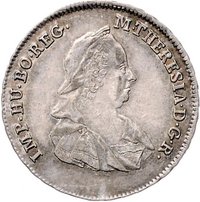
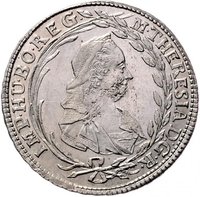
Obverse
Description:
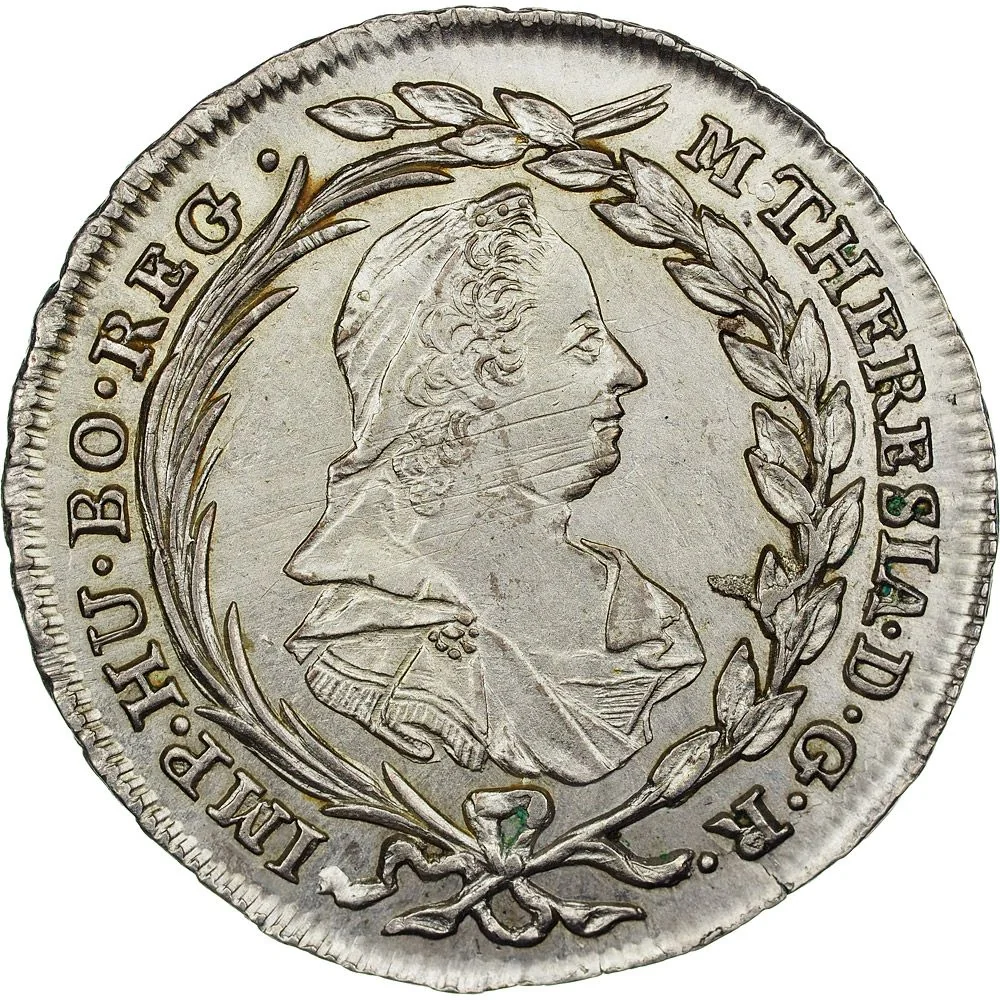
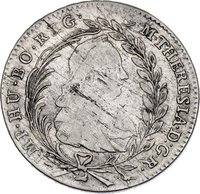
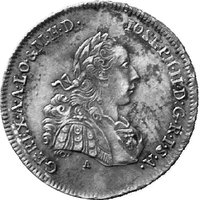
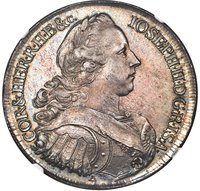
Bust right within palm and laurel wreath.
Inscription:
M THERESIA D G R // IMP HU BO REG
Script: Latin
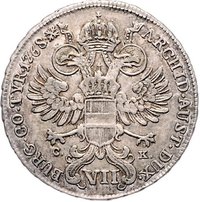
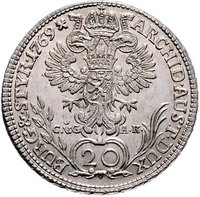
Reverse
Description:
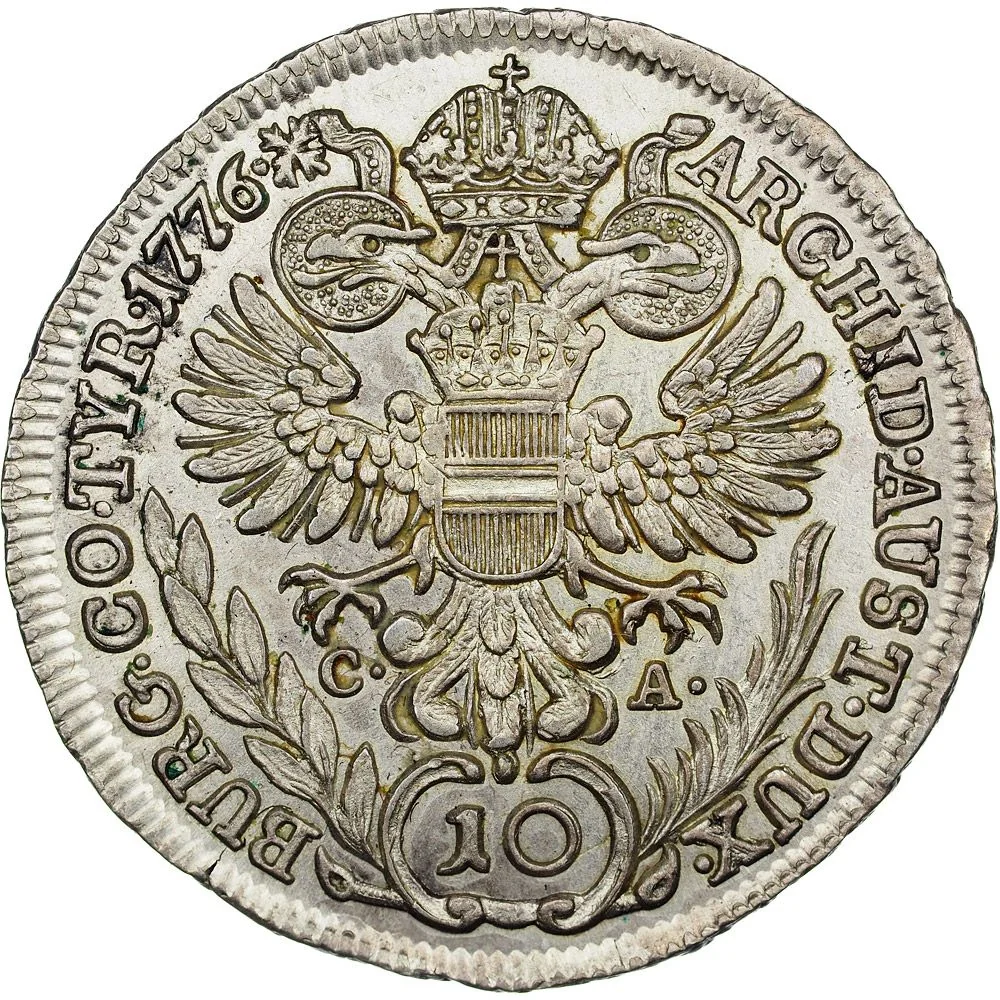
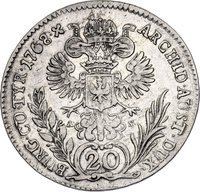
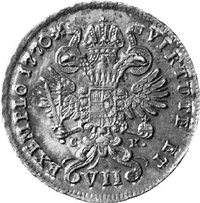
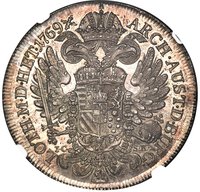
Imperial double eagle, crowned and bearing a shield, stands upon a pedestal.
Inscription:
ARCHID AUST DUX (10) BURG CO TYR 1778 X
Script: Latin
Edge
Plain
Mintings
| Year | Mint Mark | Mintage | Quality | Collection |
|---|---|---|---|---|
| 1768 | C-K | — | ||
| 1769 | C-K | — | ||
| 1769 | IC-SK | — | ||
| 1770 | C-K | — | ||
| 1771 | C-K | — | ||
| 1772 | /1 | — | ||
| 1772 | C-K | — | ||
| 1773 | C-K | — | ||
| 1773 | IC-SK | — | ||
| 1774 | C-A | — | ||
| 1775 | C-A | — | ||
| 1776 | C-A | — | ||
| 1777 | C-A | — | ||
| 1778 | C-A | — | ||
| 1779 | C-A | — | ||
| 1780 | C-A | — |
Historical background
In 1768, the currency system of the Habsburg Monarchy, often referred to as the Austrian Empire, was a complex and fragmented patchwork that hindered both internal trade and state finances. The core issues stemmed from the historic division between the silver-based Konventionsmünze (Convention Coinage) system, established in 1753, and the widespread circulation of depreciated paper money. The state's immense debts from the Seven Years' War (1756-1763) had been financed largely through the issuance of Bancozettel (bank notes) from the state-owned Wiener Stadtbanco. These notes were not fully convertible to silver and had begun to trade at a significant discount, creating a de facto dual-currency system where goods had one price in silver and a higher price in paper.
Empress Maria Theresa and her advisors, particularly State Chancellor Wenzel Anton von Kaunitz, recognized this monetary disorder as a critical threat to economic stability and state power. The year 1768 itself was not one of major reform but a point of mounting pressure and planning. The government was acutely aware that the fluctuating discount on the Bancozettel (often around 30%) created uncertainty for merchants, complicated tax collection, and strained the treasury. Furthermore, the various crown lands within the empire often used their own subsidiary coinage and accounting systems, adding another layer of complication to commerce and administration.
Consequently, the period around 1768 was a prelude to significant, though ultimately incomplete, monetary reforms. The government's focus was on consolidating its financial position and preparing for a more uniform currency. This groundwork would lead to the major monetary patent of 1771, which aimed to stabilize the relationship between silver and paper by officially devaluing the Bancozettel and attempting to fund their gradual withdrawal. Thus, the situation in 1768 was characterized by a tense and unstable equilibrium, with the pressures of war debt, a depreciating paper currency, and administrative fragmentation pushing the monarchy toward a necessary, yet politically and economically difficult, overhaul of its entire monetary system.
Empress Maria Theresa and her advisors, particularly State Chancellor Wenzel Anton von Kaunitz, recognized this monetary disorder as a critical threat to economic stability and state power. The year 1768 itself was not one of major reform but a point of mounting pressure and planning. The government was acutely aware that the fluctuating discount on the Bancozettel (often around 30%) created uncertainty for merchants, complicated tax collection, and strained the treasury. Furthermore, the various crown lands within the empire often used their own subsidiary coinage and accounting systems, adding another layer of complication to commerce and administration.
Consequently, the period around 1768 was a prelude to significant, though ultimately incomplete, monetary reforms. The government's focus was on consolidating its financial position and preparing for a more uniform currency. This groundwork would lead to the major monetary patent of 1771, which aimed to stabilize the relationship between silver and paper by officially devaluing the Bancozettel and attempting to fund their gradual withdrawal. Thus, the situation in 1768 was characterized by a tense and unstable equilibrium, with the pressures of war debt, a depreciating paper currency, and administrative fragmentation pushing the monarchy toward a necessary, yet politically and economically difficult, overhaul of its entire monetary system.
💎 Extremely Rare