

8 Mark – Sweden
Sweden
Context
Year: 1665
Issuer: Sweden 
Ruler: Charles XI
Currency:
(1665—1715)
Demonetized: Yes
Total mintage: 1,801
Material
Weight: 31.35 g
Silver weight: 28.90 g
Shape: Round
Composition: 92.2% Silver
Standard: Silver ounce
Magnetic: No
References
KM: #Click to copy to clipboard252
Numista: #64173
Value
Bullion value: $82.68
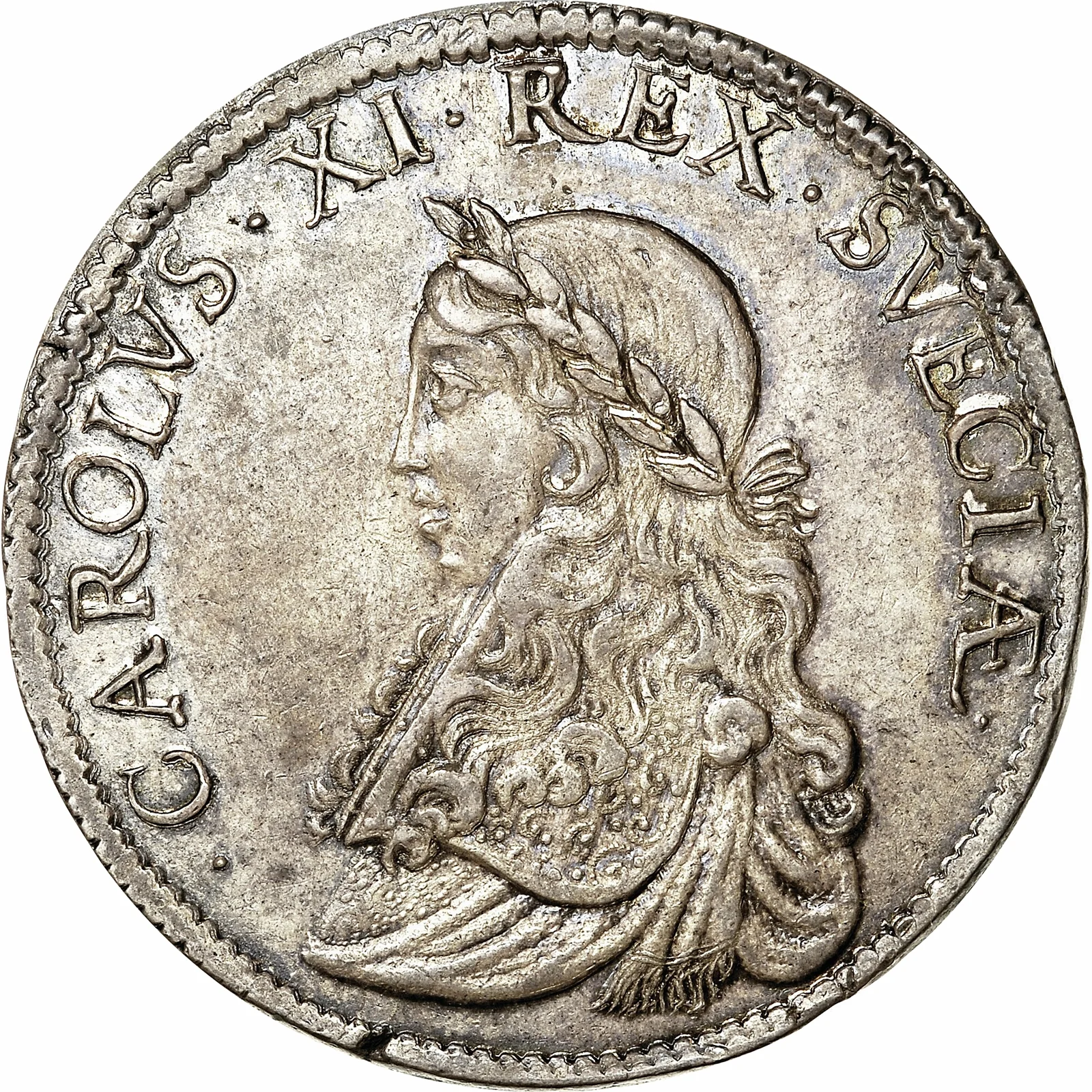
Obverse
Description:
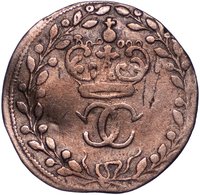
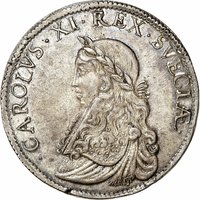
Bust of King Karl XI with a long wig.
Inscription:
CAROLVS·XI·REX·SVECIÆ·
Script: Latin
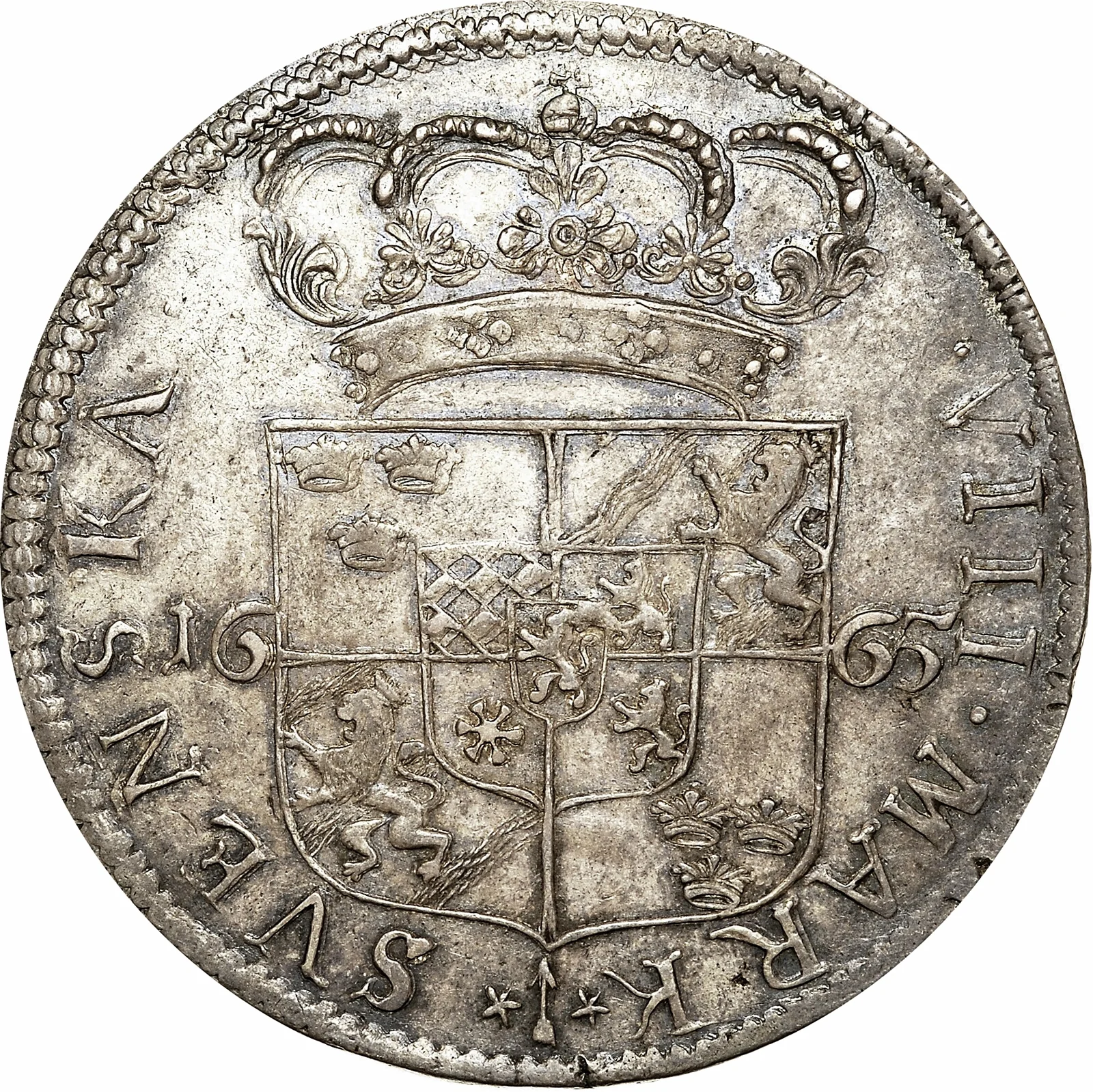
Reverse
Edge
Mints
| Name | Mark |
|---|---|
| Stockholm | — |
Mintings
| Year | Mint Mark | Mintage | Quality | Collection |
|---|---|---|---|---|
| 1665 | — | 1,801 |
Historical background
In 1665, Sweden was navigating a complex and challenging monetary situation, largely a legacy of the Thirty Years' War (1618-1648). While the war had established Sweden as a major European power, it was financed through heavy borrowing, the exploitation of foreign minting rights, and the deliberate debasement of its own currency. The government, under the regency for the young King Charles XI, had flooded the economy with low-quality copper coinage and a confusing array of foreign coins, leading to severe inflation and a profound lack of public trust in the monetary system.
The core of the problem was Sweden's dual standard of copper and silver. Large, cumbersome copper daler plates were officially valued against silver coins, but the intrinsic market value of the metals fluctuated wildly. By 1665, the state's chronic budget deficits and the high cost of maintaining its military ambitions led to further manipulations. The government repeatedly lowered the silver content of coins while insisting they be accepted at their old face value, a practice that distorted trade, encouraged hoarding of good silver, and created a wide gap between official and market exchange rates.
This unstable environment hindered both domestic commerce and international trade. Recognizing the crisis, the Swedish Riksdag (parliament) had begun to address reform, leading to the establishment of the Riksens Ständers Bank (the Bank of the Estates of the Realm) in 1668, the direct predecessor of the modern Swedish Riksbank. Therefore, 1665 represents a pivotal point of acute monetary distress immediately preceding a major institutional response aimed at restoring stability and confidence through the creation of Europe's first central bank.
The core of the problem was Sweden's dual standard of copper and silver. Large, cumbersome copper daler plates were officially valued against silver coins, but the intrinsic market value of the metals fluctuated wildly. By 1665, the state's chronic budget deficits and the high cost of maintaining its military ambitions led to further manipulations. The government repeatedly lowered the silver content of coins while insisting they be accepted at their old face value, a practice that distorted trade, encouraged hoarding of good silver, and created a wide gap between official and market exchange rates.
This unstable environment hindered both domestic commerce and international trade. Recognizing the crisis, the Swedish Riksdag (parliament) had begun to address reform, leading to the establishment of the Riksens Ständers Bank (the Bank of the Estates of the Realm) in 1668, the direct predecessor of the modern Swedish Riksbank. Therefore, 1665 represents a pivotal point of acute monetary distress immediately preceding a major institutional response aimed at restoring stability and confidence through the creation of Europe's first central bank.
Series: 1665 Sweden circulation coins

✨ Legendary