

4 mark – Sweden
Add to wishlist
Sweden
Context
Years: 1708–1716
Issuer: Sweden
Ruler: Charles XII
Currency:
(1665—1715)
Demonetized: Yes
Total mintage: 167,171
Material
References
KM: #
Numista: #64163
Value
Bullion value: $36.17
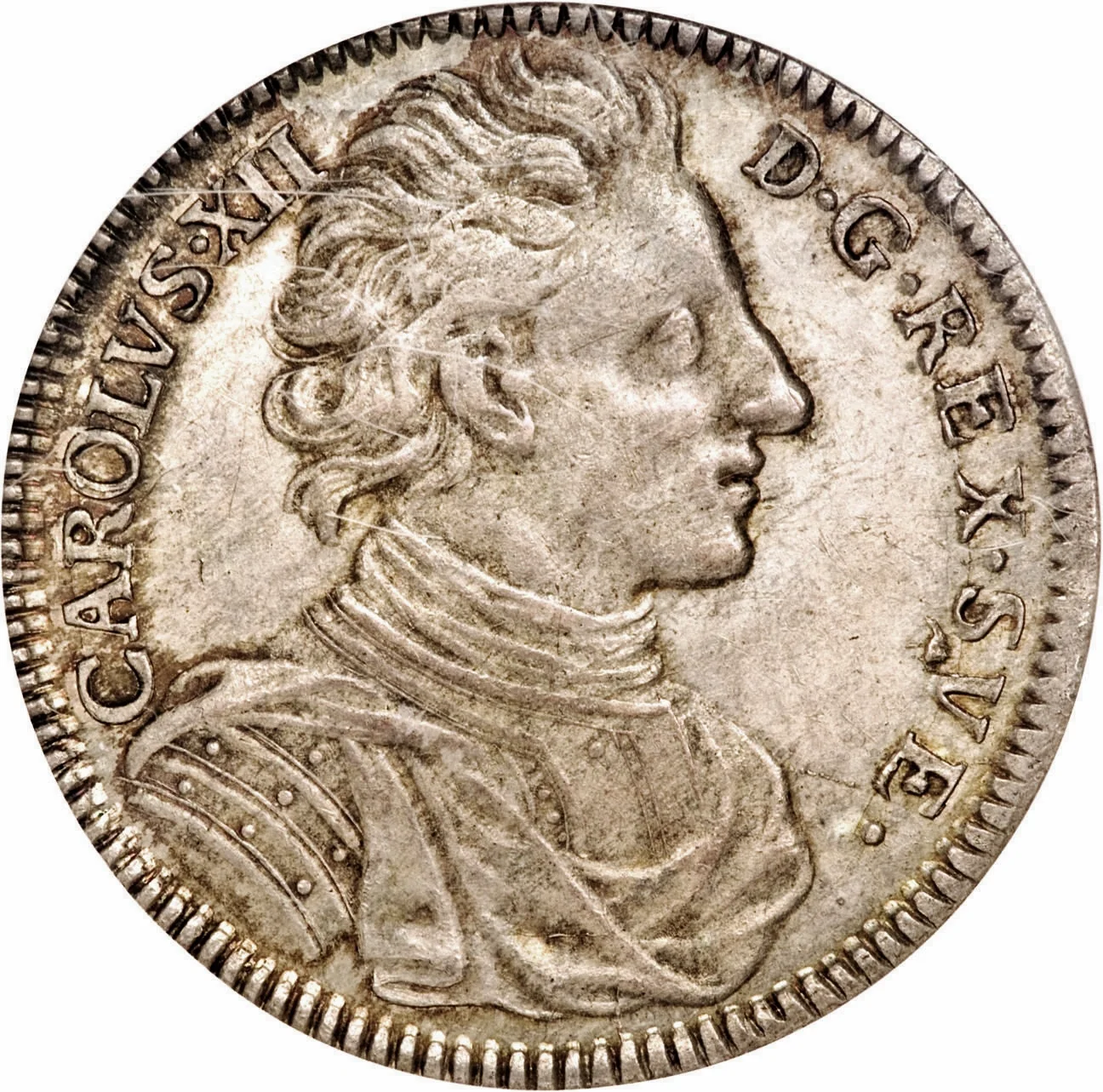
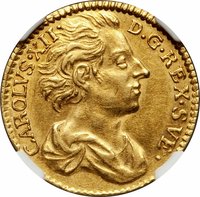
Obverse
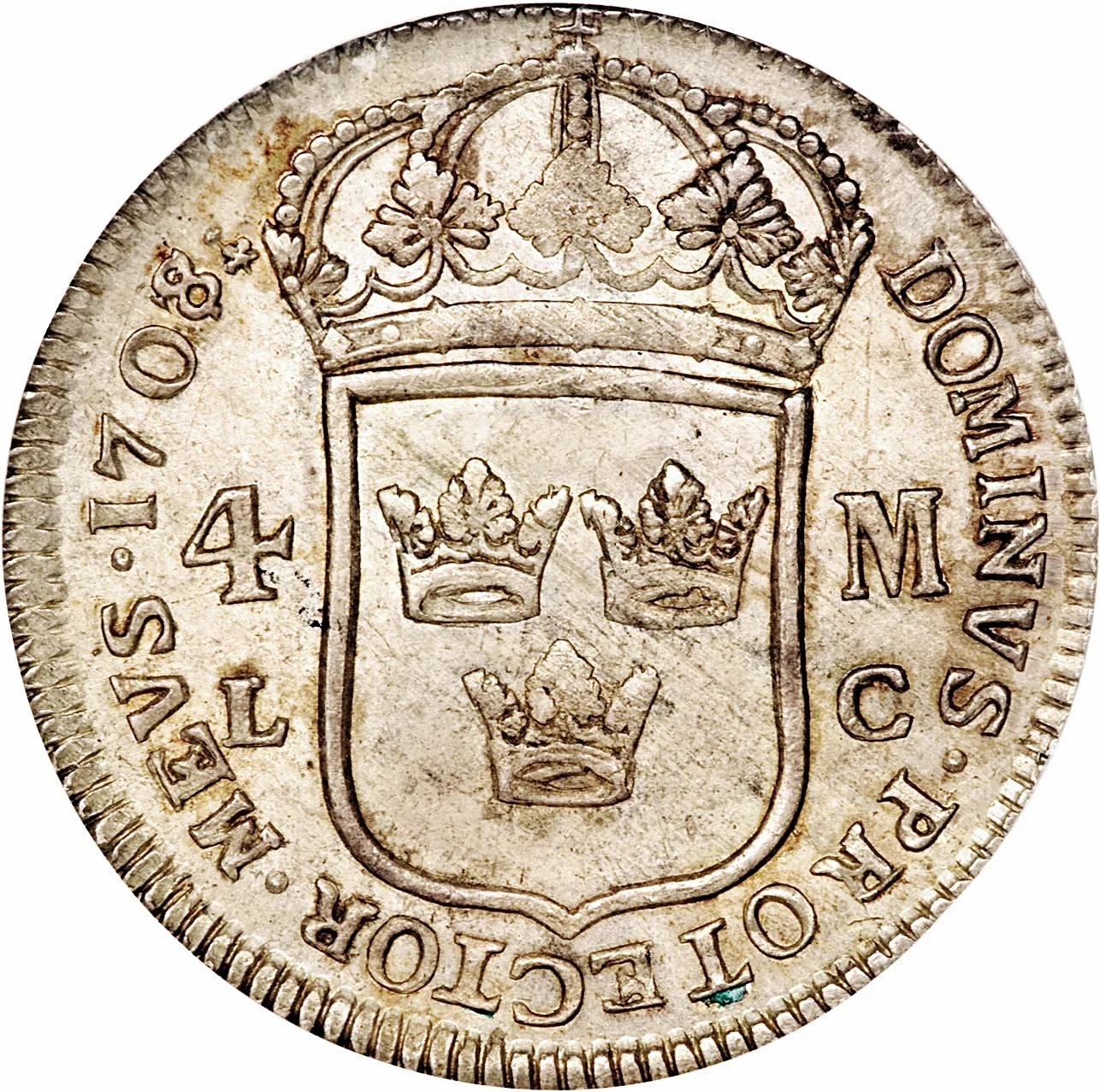
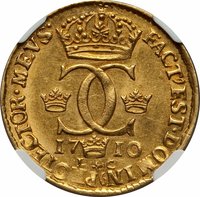
Reverse
Description:
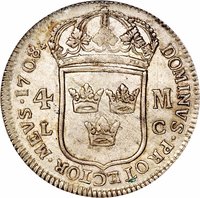
Shield with Sweden's three crowns divides value and mintmark.
Inscription:
4 M
L C
DOMINVS•PROTECTOR•MEVS•1708*
L C
DOMINVS•PROTECTOR•MEVS•1708*
Script: Latin
Edge
Mintings
| Year | Mint Mark | Mintage | Quality | Collection |
|---|---|---|---|---|
| 1708 | LC | 16,667 | ||
| 1709 | LC | 9,845 | ||
| 1710 | LC | 23,486 | ||
| 1711 | LC | 10,019 | ||
| 1712 | LC | 7,849 | ||
| 1714 | LC | 6,374 | ||
| 1715 | LC | 11,816 | ||
| 1716 | LC | 81,115 |
Historical background
In 1708, Sweden was embroiled in the Great Northern War (1700–1721), a conflict that placed immense financial strain on the state. King Charles XII’s ambitious campaigns, particularly the disastrous invasion of Russia, drained the royal treasury. To fund the ongoing war effort, the government, under the administration of the Riksdag of the Estates during the king's absence, resorted to a classic but destructive fiscal tool: the deliberate debasement of the currency.
This took the form of issuing vast quantities of low-quality copper mynt and heavily clipped silver coins. The state mint produced coins with a face value far exceeding their intrinsic metal content, a practice that led to rapid inflation. As the public lost confidence, the value of the currency plummeted, causing severe economic dislocation. Prices for essential goods soared, creditors were repaid with near-worthless coin, and foreign trade was hampered as merchants refused the debased Swedish money.
The situation created a dual crisis of finance and public trust. While the immediate goal of funding the army was partially achieved, the long-term consequences were devastating. The monetary chaos of 1708 eroded the stability of the Swedish economy, sowed social unrest, and contributed to the weakening of the Swedish Empire, marking a pivotal moment in its decline from great power status.
This took the form of issuing vast quantities of low-quality copper mynt and heavily clipped silver coins. The state mint produced coins with a face value far exceeding their intrinsic metal content, a practice that led to rapid inflation. As the public lost confidence, the value of the currency plummeted, causing severe economic dislocation. Prices for essential goods soared, creditors were repaid with near-worthless coin, and foreign trade was hampered as merchants refused the debased Swedish money.
The situation created a dual crisis of finance and public trust. While the immediate goal of funding the army was partially achieved, the long-term consequences were devastating. The monetary chaos of 1708 eroded the stability of the Swedish economy, sowed social unrest, and contributed to the weakening of the Swedish Empire, marking a pivotal moment in its decline from great power status.
Series: 1708 Sweden circulation coins
✨ Legendary