

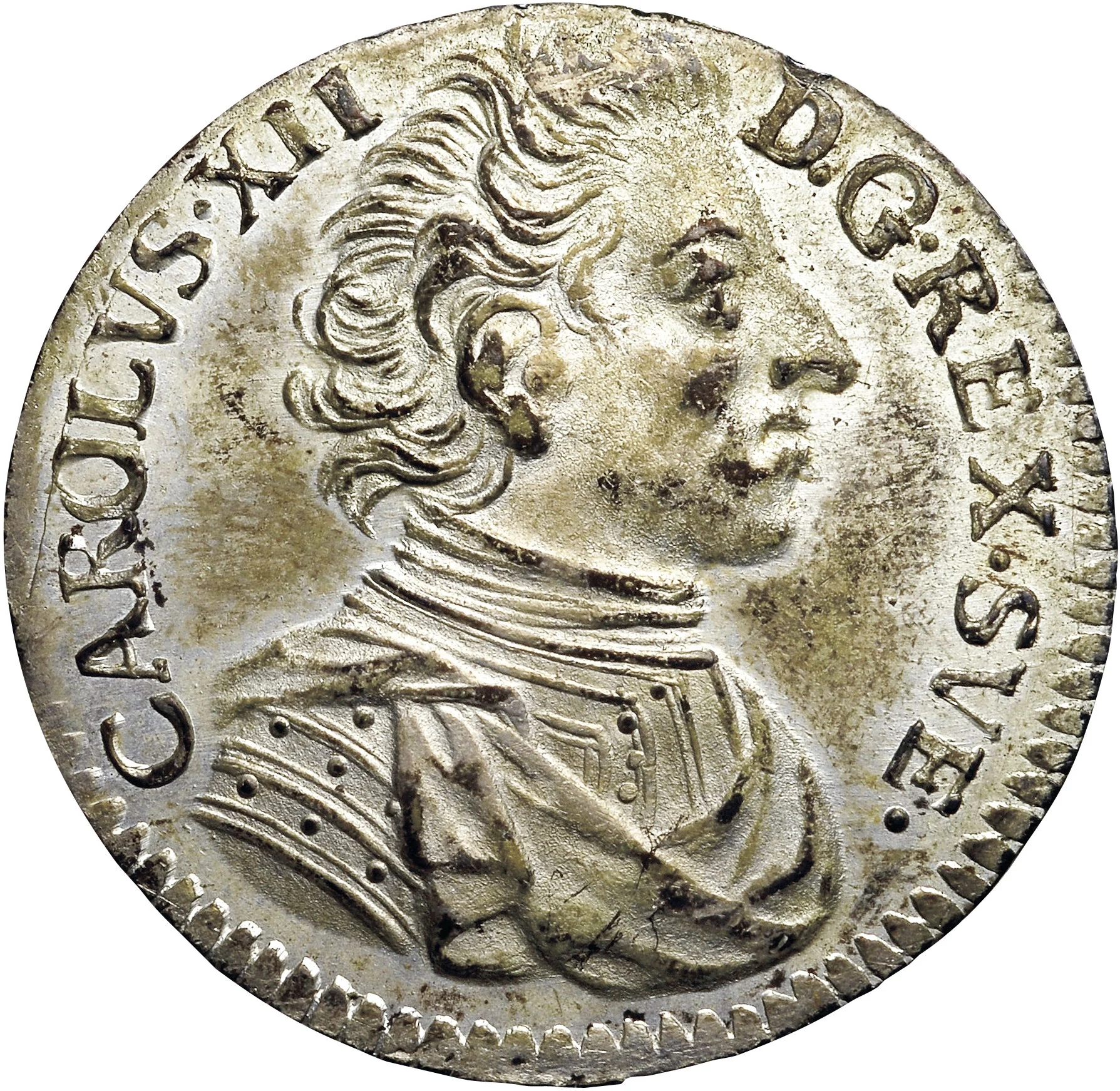
2 mark – Sweden
Add to wishlist
Sweden
Context
Years: 1709–1717
Issuer: Sweden
Ruler: Charles XII
Currency:
(1665—1715)
Demonetized: Yes
Total mintage: 1,049,572
Material
References
KM: #
Numista: #64161
Value
Bullion value: $18.47
Obverse
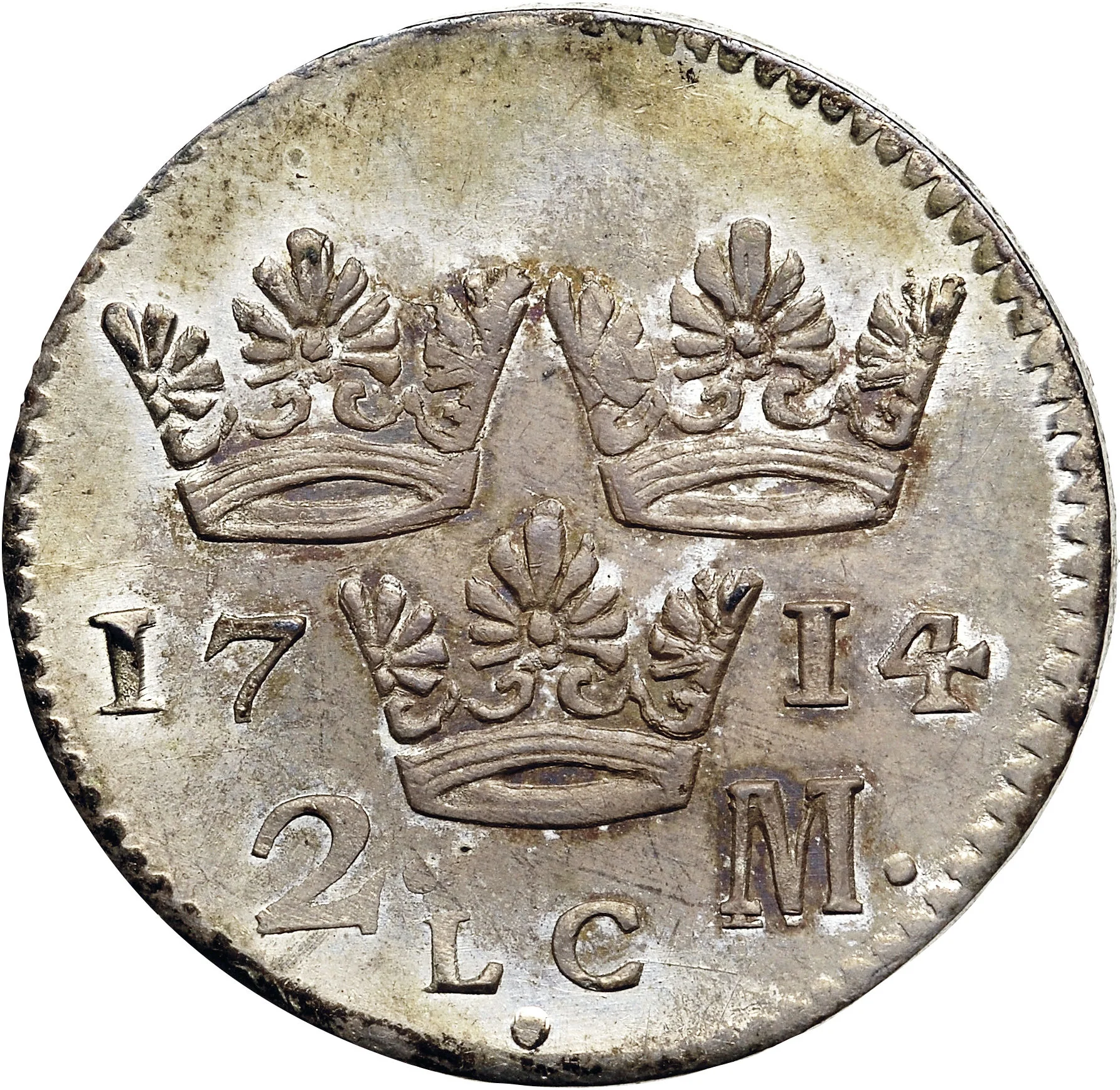
Reverse
Description:
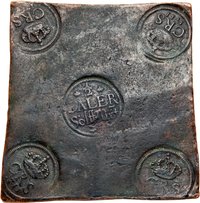
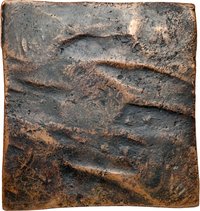
Three crowns separate date and value, mintmark below.
Inscription:
17 14
2 M.
LC
2 M.
LC
Script: Latin
Edge
Mintings
| Year | Mint Mark | Mintage | Quality | Collection |
|---|---|---|---|---|
| 1709 | LC | 119,998 | ||
| 1710 | LC | 209,958 | ||
| 1711 | LC | 93,071 | ||
| 1712 | LC | 70,216 | ||
| 1713 | LC | 77,628 | ||
| 1714 | LC | 142,249 | ||
| 1715 | LC | 57,492 | ||
| 1716 | LC | 202,868 | ||
| 1717 | LC | 76,092 |
Historical background
In 1709, Sweden found itself in a dire monetary crisis, a direct consequence of its protracted involvement in the Great Northern War (1700–1721). The campaign of King Charles XII, particularly the catastrophic defeat at the Battle of Poltava in June of that year, shattered the Swedish army and drained the state's finances. To fund the ongoing war effort, the government had resorted to drastic measures, including the heavy debasement of the copper and silver coinage. This resulted in severe inflation and a loss of public confidence in the currency, as the intrinsic metal value of the coins fell far below their face value.
The Swedish monetary system was uniquely complex, based on a bimetallic standard of both silver and copper. By 1709, the state treasury, known as the Riksgäldskontoret, was essentially bankrupt and struggling to meet obligations. The response was the accelerated minting of low-quality "emergency coins" (nödmynt), often made from poor alloys or stamped on inferior copper plate. This rapid expansion of the money supply, without economic productivity to support it, led to skyrocketing prices for essential goods, causing widespread hardship among the population and soldiers whose pay was in depreciated currency.
This chaotic situation set the stage for a significant monetary reform later under the leadership of Arvid Horn. In 1715, the government would formally declare the currency devalued, creating a new accounting system to stabilize prices and restore some fiscal order. Thus, the currency situation of 1709 represents the nadir of Swedish war finance—a period of acute crisis where monetary policy was wholly subordinated to military survival, with devastating economic consequences for the nation.
The Swedish monetary system was uniquely complex, based on a bimetallic standard of both silver and copper. By 1709, the state treasury, known as the Riksgäldskontoret, was essentially bankrupt and struggling to meet obligations. The response was the accelerated minting of low-quality "emergency coins" (nödmynt), often made from poor alloys or stamped on inferior copper plate. This rapid expansion of the money supply, without economic productivity to support it, led to skyrocketing prices for essential goods, causing widespread hardship among the population and soldiers whose pay was in depreciated currency.
This chaotic situation set the stage for a significant monetary reform later under the leadership of Arvid Horn. In 1715, the government would formally declare the currency devalued, creating a new accounting system to stabilize prices and restore some fiscal order. Thus, the currency situation of 1709 represents the nadir of Swedish war finance—a period of acute crisis where monetary policy was wholly subordinated to military survival, with devastating economic consequences for the nation.
✨ Legendary