

1 Ducat – Sweden
Sweden
Context
Material
References
KM: #Click to copy to clipboard458
Numista: #64149
Value
Bullion value: $569.55
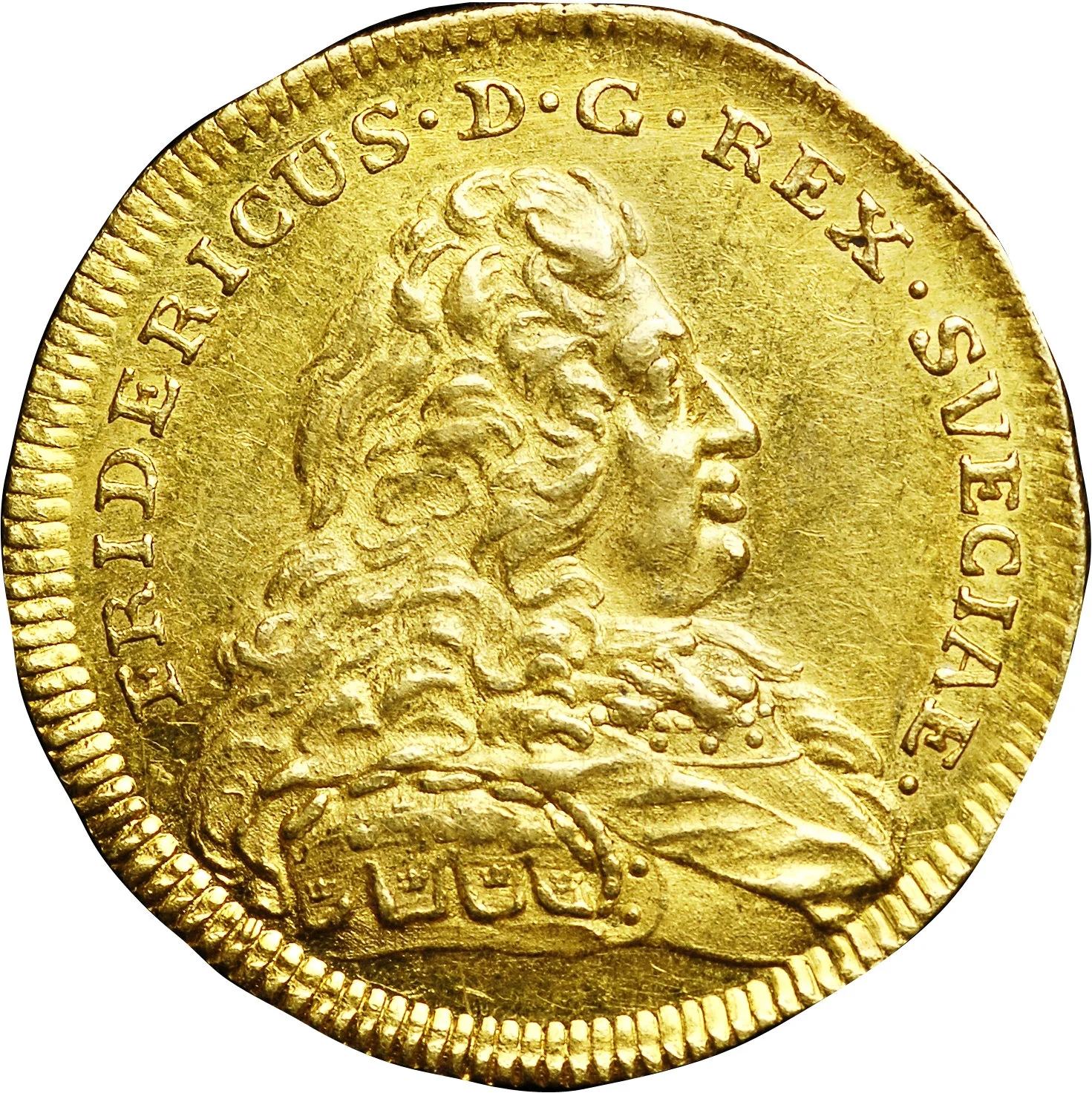
Obverse
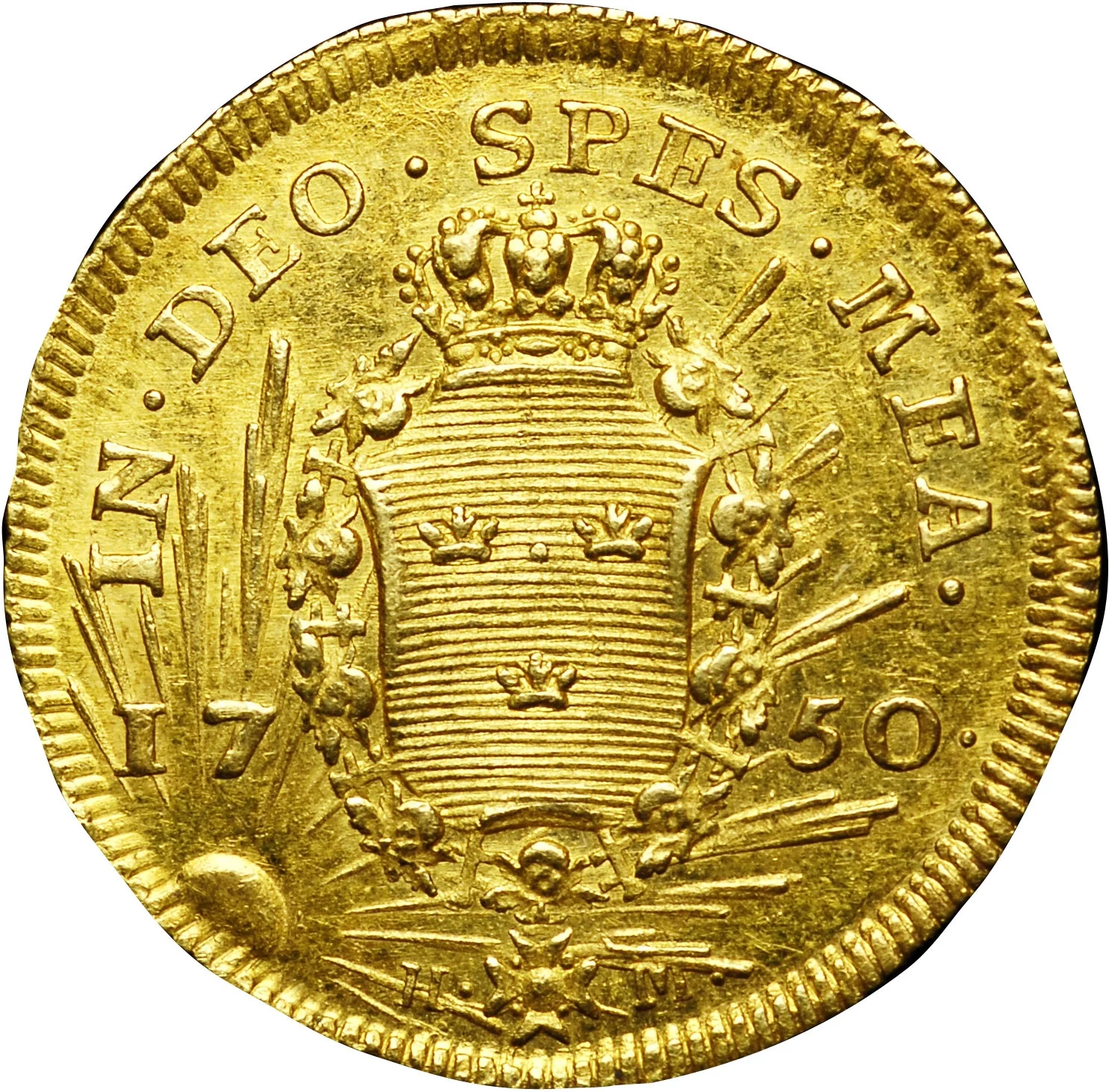
Reverse
Description:
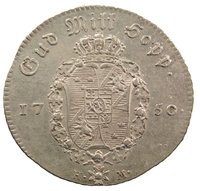
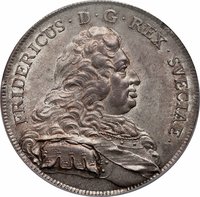
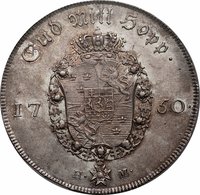
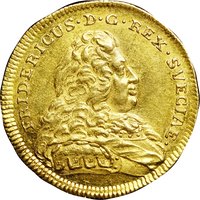
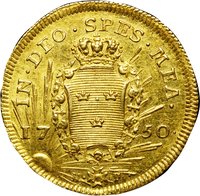
Shield with Sweden’s three crowns and Order Chain divides date. Radiant sun at left; mintmark below. Sun denotes East Indies gold.
Inscription:
IN•DEO•SPES•MEA•
17 50.
H.M.
17 50.
H.M.
Script: Latin
Edge
Categories
| Symbols> Coat of Arms |
Mints
| Name | Mark |
|---|---|
| Stockholm | — |
Mintings
| Year | Mint Mark | Mintage | Quality | Collection |
|---|---|---|---|---|
| 1750 | — | — |
Historical background
In 1750, Sweden was navigating a complex and challenging monetary landscape, a direct legacy of its period as a European great power in the 17th century. The kingdom operated on a dual currency system, with both copper and silver serving as legal tender. This system was inherently cumbersome; the famous large copper plåtmynt (plate money), necessary due to copper's low value, could weigh up to 20 kilograms for high denominations, making large transactions physically difficult. The system was governed by a mandated exchange rate between copper and silver daler, but this official rate often conflicted with the metals' fluctuating market values, creating persistent economic friction.
The underlying issue was a severe shortage of silver coinage in circulation, exacerbated by the financial exhaustion following the Great Northern War (1700-1721). To fund its wartime expenditures, the state had repeatedly debased the coinage, reducing the silver content and undermining public confidence. By 1745, to finance another war (the Russo-Swedish War of 1741–1743), the Riksdag had made the fateful decision to adopt a fiat currency, issuing paper money called transportsedlar. These were not backed by silver or copper reserves but by a promise of future payment. By 1750, this experiment was already showing strain, as the overissuance of notes began to drive their value below their face value, leading to early inflation and a loss of trust.
Consequently, the mid-18th century was a period of monetary confusion and transition. In daily life, Swedes dealt with a mix of heavy copper plates, scarce silver coins, and increasingly distrusted paper notes. The coexistence of these three forms of money—each with its own unstable value—hindered trade and economic stability. This precarious situation would eventually culminate in a major financial crisis in the 1760s, forcing a parliamentary intervention to stabilize the currency, setting the stage for the later reforms of the Riksbank, the world's oldest central bank.
The underlying issue was a severe shortage of silver coinage in circulation, exacerbated by the financial exhaustion following the Great Northern War (1700-1721). To fund its wartime expenditures, the state had repeatedly debased the coinage, reducing the silver content and undermining public confidence. By 1745, to finance another war (the Russo-Swedish War of 1741–1743), the Riksdag had made the fateful decision to adopt a fiat currency, issuing paper money called transportsedlar. These were not backed by silver or copper reserves but by a promise of future payment. By 1750, this experiment was already showing strain, as the overissuance of notes began to drive their value below their face value, leading to early inflation and a loss of trust.
Consequently, the mid-18th century was a period of monetary confusion and transition. In daily life, Swedes dealt with a mix of heavy copper plates, scarce silver coins, and increasingly distrusted paper notes. The coexistence of these three forms of money—each with its own unstable value—hindered trade and economic stability. This precarious situation would eventually culminate in a major financial crisis in the 1760s, forcing a parliamentary intervention to stabilize the currency, setting the stage for the later reforms of the Riksbank, the world's oldest central bank.
✨ Legendary