

2 Silver Dalers – Sweden
Sweden
Context
Year: 1770
Issuer: Sweden 
Ruler: Adolphus Frederick
Currency:
(1719—1798)
Demonetized: Yes
Total mintage: 16,441
Material
References
KM: #Click to copy to clipboard503
Numista: #64098
Value
Bullion value: $49.00
Obverse
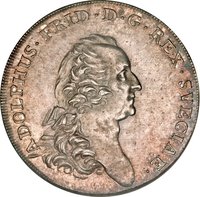
Description:
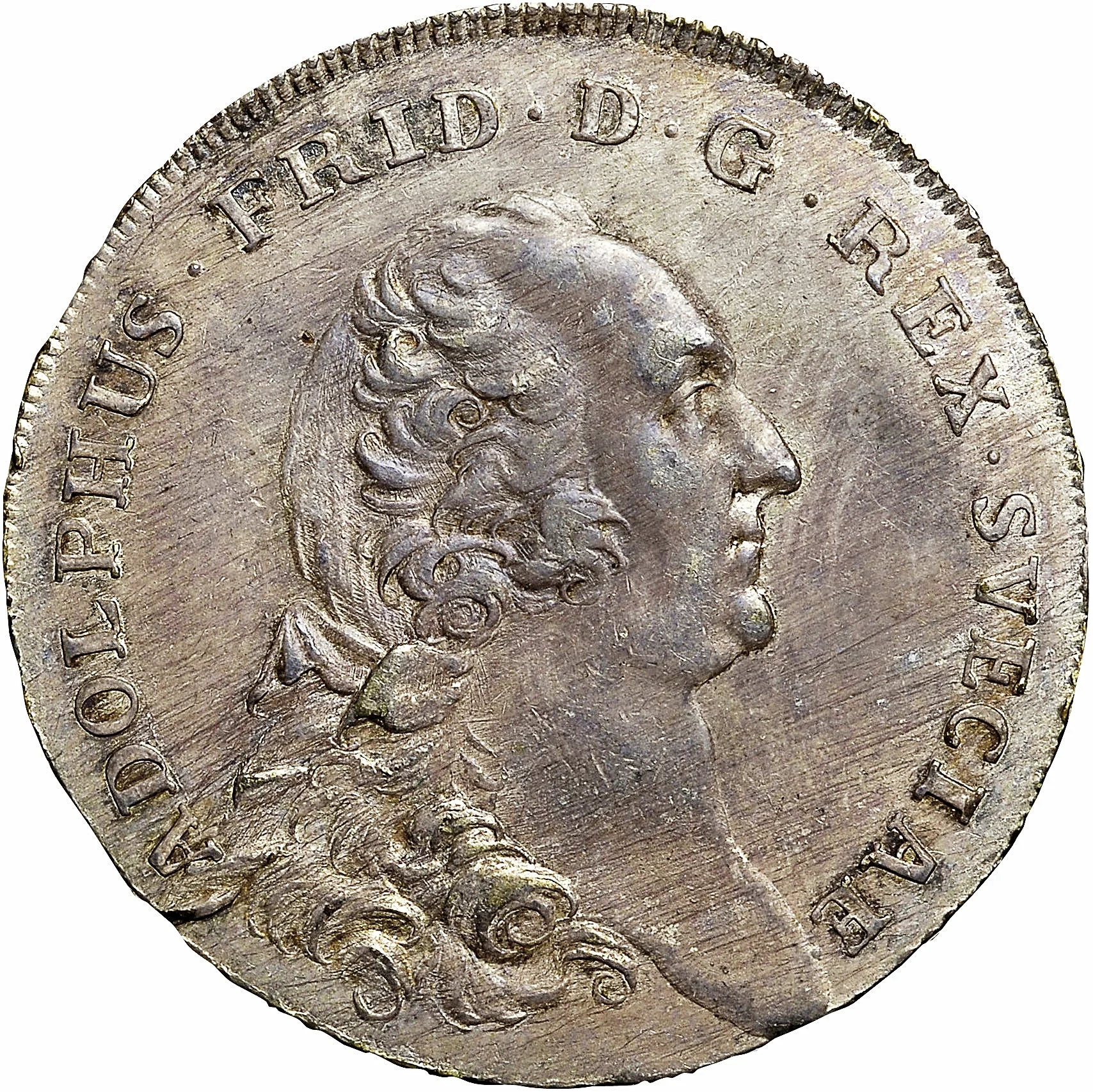
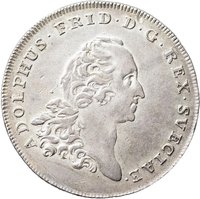
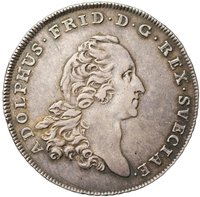
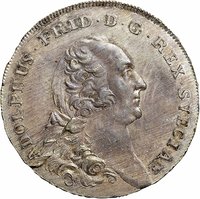
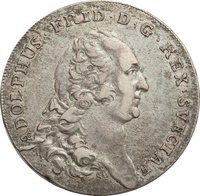
King Adolf Fredrick facing right, long hair, legend around rim.
Inscription:
ADOLPHUS • FRID • D • G • REX • SVECIAE •
Script: Latin
Reverse
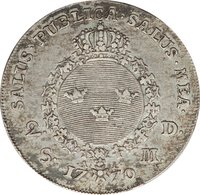
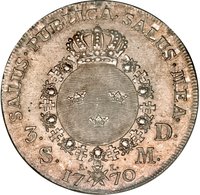
Description:
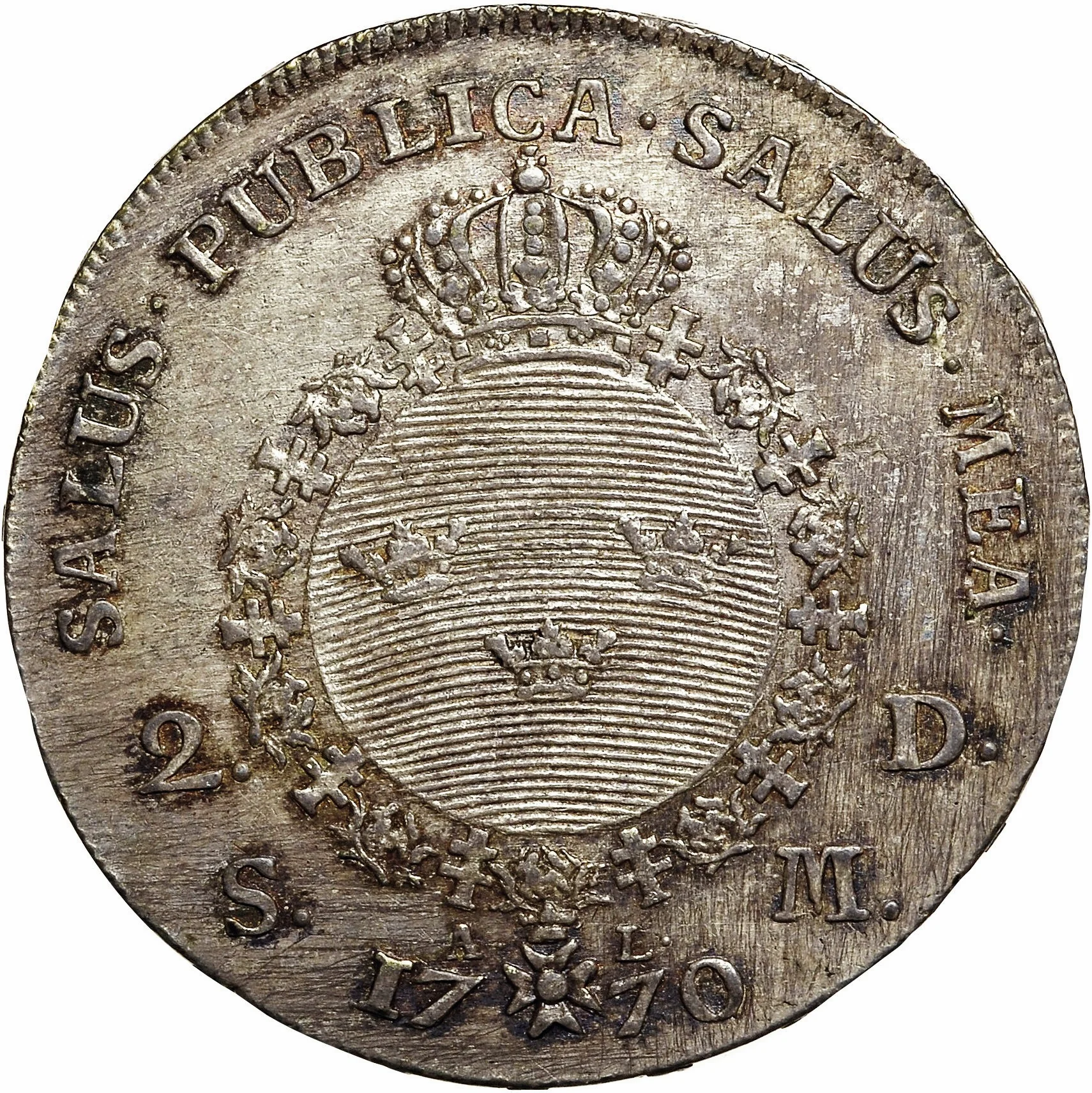
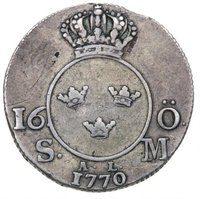
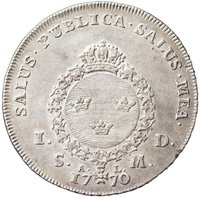
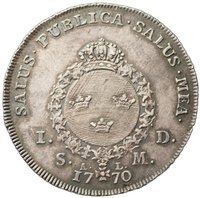
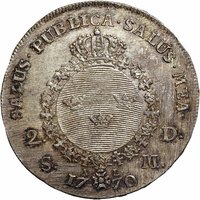
Swedish Three Crowns orb within the Seraphim chain. The pendant divides the date and mintmark; value flanks the orb. The King's motto is above the crown.
Inscription:
SALUS • PUBLICA • SALUS • MEA •
2. D.
S. M.
AL
17 70
2. D.
S. M.
AL
17 70
Script: Latin
Edge
Lettering:MANIBUS NE LAEDAR AVARIS
Legend:
MANIBUS NE LAEDAR AVARIS
Categories
| Symbols> Coat of Arms |
Mintings
| Year | Mint Mark | Mintage | Quality | Collection |
|---|---|---|---|---|
| 1770 | AL | 16,441 |
Historical background
In 1770, Sweden operated under a complex and strained monetary system, a legacy of decades of war and political turmoil. The nation was on a de facto silver standard, but the currency in circulation was a mixture of Swedish daler silvermynt (silver coins), foreign coins, and a vast quantity of depreciated paper money known as riksdaler riksgälds. This paper currency, originally issued by the Riksens Ständers Bank (precursor to the Riksbank) to finance wars during the "Age of Liberty," was not fully convertible to silver and traded at a significant discount. The result was a dual-price system where goods often had one price in silver coin and a higher price in paper notes, creating confusion and economic friction.
The situation was exacerbated by a severe shortage of physical coinage, particularly small change necessary for everyday transactions. This "coin famine" crippled local trade and wages, leading to widespread use of makeshift solutions like private tokens and promissory notes. Furthermore, the value of the paper riksdaler was unstable and influenced heavily by political events and the public's perception of the state's creditworthiness, which was low following the disastrous Pomeranian War and the heavy national debt.
Consequently, the year 1770 fell within a period of intense monetary debate and pressure for reform. The Riksdag (parliament) was deeply divided over how to stabilize the currency, with factions arguing between devaluing the paper money to match its market rate or attempting a painful return to full silver convertibility. This financial instability formed a critical backdrop to the broader political crisis that would culminate in King Gustav III's coup d'état in 1772, as economic distress fueled public discontent and the monarch's argument for stronger central authority to restore order.
The situation was exacerbated by a severe shortage of physical coinage, particularly small change necessary for everyday transactions. This "coin famine" crippled local trade and wages, leading to widespread use of makeshift solutions like private tokens and promissory notes. Furthermore, the value of the paper riksdaler was unstable and influenced heavily by political events and the public's perception of the state's creditworthiness, which was low following the disastrous Pomeranian War and the heavy national debt.
Consequently, the year 1770 fell within a period of intense monetary debate and pressure for reform. The Riksdag (parliament) was deeply divided over how to stabilize the currency, with factions arguing between devaluing the paper money to match its market rate or attempting a painful return to full silver convertibility. This financial instability formed a critical backdrop to the broader political crisis that would culminate in King Gustav III's coup d'état in 1772, as economic distress fueled public discontent and the monarch's argument for stronger central authority to restore order.
Series: 1770 Sweden circulation coins
✨ Legendary