

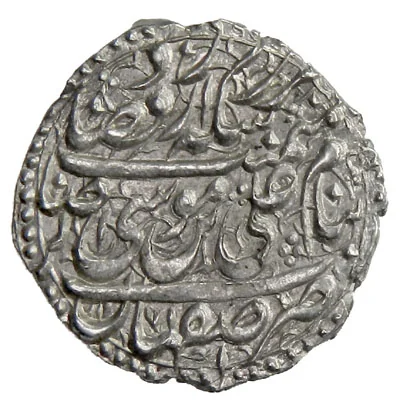
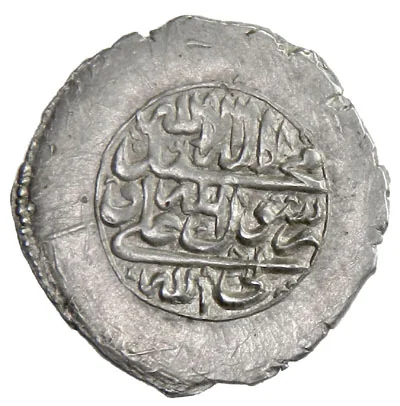
100 Dinars – Northern Provinces
Iran
Context
Year: 1758
Islamic (Hijri) Year: 1171
Country: Iran 
Issuer: Northern Provinces
Ruler: Mohammad Hasan Khan
Currency:
(1501—1798)
Demonetization: 1759
Material
Weight: 2.25 g
Silver weight: 2.25 g
Shape: Irregular round
Composition: Silver
Magnetic: No
Technique: Hammered
Alignment: Coin alignment
flip
References
KM: #Click to copy to clipboard502.1
Numista: #64004
Value
Bullion value: $6.49
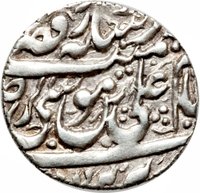
Obverse
Description:
Mint-date couplet.
Inscription:
بزر سکه از میمنت زد قضا
بنام علی بن موسی الرضا
ضرب اصفهان
۱۱۷۱
بنام علی بن موسی الرضا
ضرب اصفهان
۱۱۷۱
Script: Persian
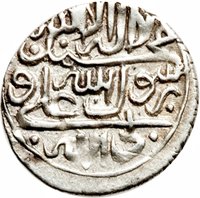
Reverse
Description:
Shi’ite declaration of faith.
Inscription:
لا اله الا الله
محمد رسول الله
علی ولی الله
محمد رسول الله
علی ولی الله
Script: Persian
Edge
Plain
Mints
| Name | Mark |
|---|---|
| Isfahan | اصفهان |
Mintings
| Year | Mint Mark | Mintage | Quality | Collection |
|---|---|---|---|---|
| 1758 | — | — |
Historical background
In 1758, the Northern Provinces of British America, particularly New England and the Mid-Atlantic colonies, operated within a complex and chronically deficient monetary system. The core problem was a severe shortage of official British sterling coinage, as mercantilist policies drained specie to England to pay for manufactured imports. This created a persistent liquidity crisis that stifled local trade and economic growth, forcing colonists to rely on a patchwork of alternatives for daily transactions.
The primary substitutes were foreign coins, most notably the Spanish American silver dollar or "piece of eight," and various forms of paper money. Colonial governments issued their own paper bills of credit, initially to finance military expeditions like those during the ongoing French and Indian War (1754-1763). These bills circulated as currency but were often subject to depreciation, as their value was based on the promise of future tax revenue rather than hard assets. Additionally, merchants used personal IOUs, tobacco warehouse receipts in the Chesapeake, and even commodity money like wampum in limited local exchanges.
This situation existed in a state of tension with British authorities. The Board of Trade in London viewed colonial paper money with deep suspicion, believing it facilitated debt payment in devalued currency to the detriment of British creditors. While the Currency Act of 1751 had prohibited New England colonies from issuing new paper money as legal tender for private debts, the exigencies of the war had led to temporary relaxations. Thus, in 1758, the currency landscape remained a fragile and contentious blend of scarce foreign coin, depreciating local paper, and increasing war debt—a friction point that foreshadowed future imperial conflicts.
The primary substitutes were foreign coins, most notably the Spanish American silver dollar or "piece of eight," and various forms of paper money. Colonial governments issued their own paper bills of credit, initially to finance military expeditions like those during the ongoing French and Indian War (1754-1763). These bills circulated as currency but were often subject to depreciation, as their value was based on the promise of future tax revenue rather than hard assets. Additionally, merchants used personal IOUs, tobacco warehouse receipts in the Chesapeake, and even commodity money like wampum in limited local exchanges.
This situation existed in a state of tension with British authorities. The Board of Trade in London viewed colonial paper money with deep suspicion, believing it facilitated debt payment in devalued currency to the detriment of British creditors. While the Currency Act of 1751 had prohibited New England colonies from issuing new paper money as legal tender for private debts, the exigencies of the war had led to temporary relaxations. Thus, in 1758, the currency landscape remained a fragile and contentious blend of scarce foreign coin, depreciating local paper, and increasing war debt—a friction point that foreshadowed future imperial conflicts.
✨ Legendary