

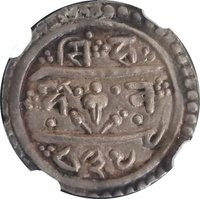
1 Mohar – Kathmandu Kingdom
Nepal
Context
Year: 1701
Nepal Sambat Year: 821
Country: Nepal 
Issuer: Kathmandu Kingdom
Ruler: Bhaskara Malla
Currency:
(1546—1932)
Demonetized: Yes
References
KM: #Click to copy to clipboard217
Numista: #63055
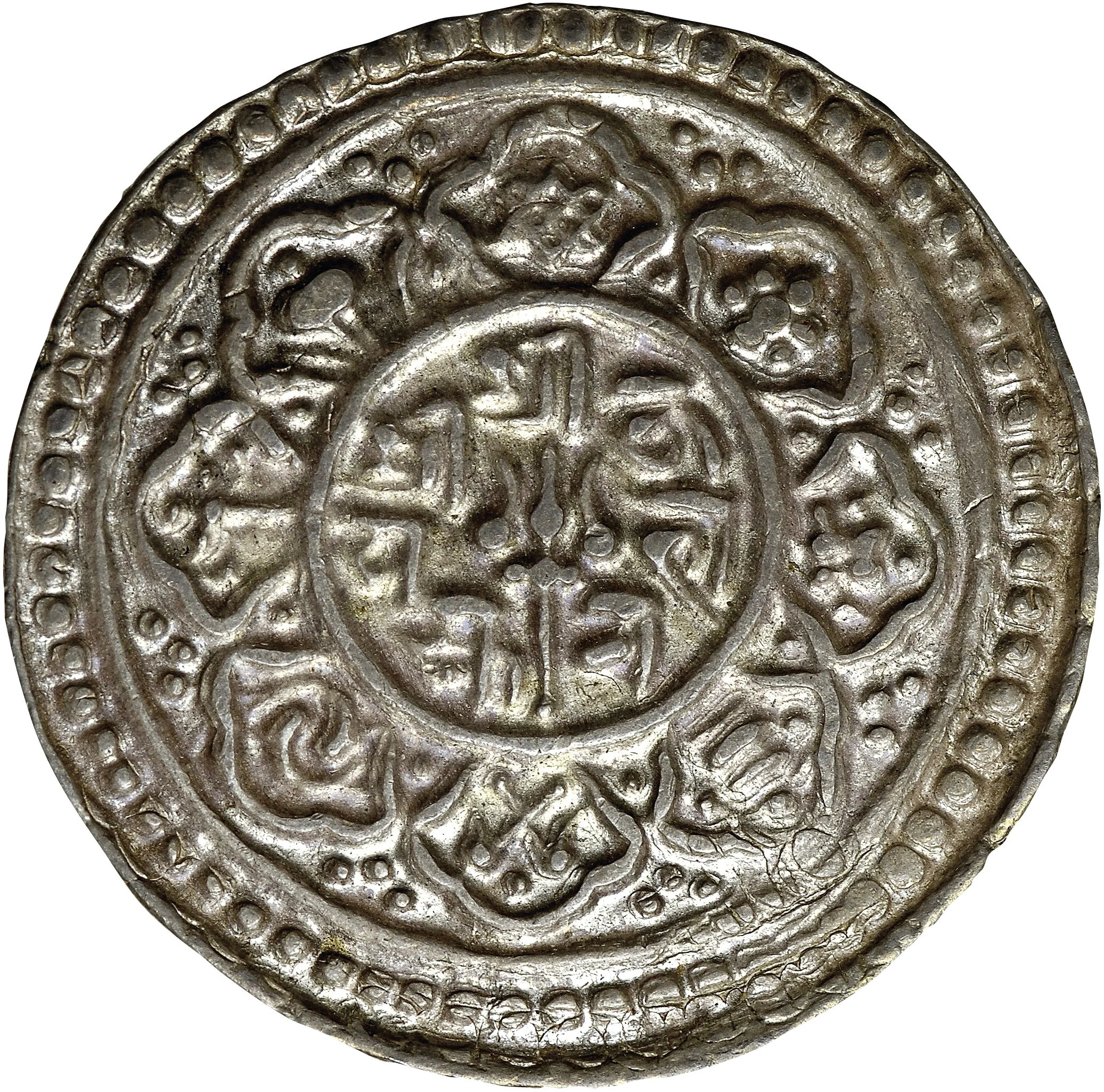
Obverse
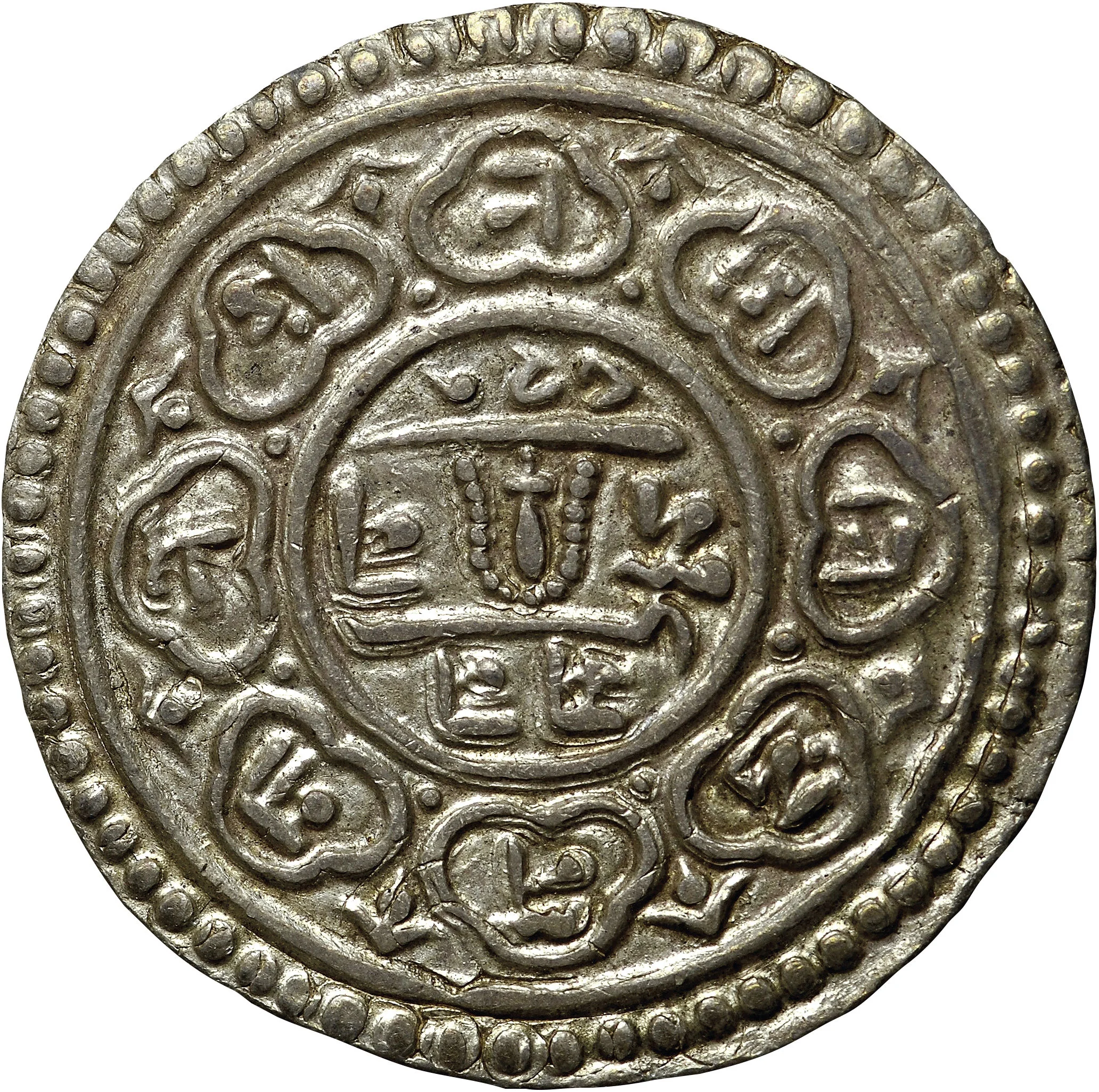
Reverse
Edge
Mintings
| Year | Mint Mark | Mintage | Quality | Collection |
|---|---|---|---|---|
| 1701 | — | — |
Historical background
In 1701, the Kathmandu Valley was not a unified kingdom but a collection of three rival city-states: Kathmandu, Patan, and Bhaktapur, each ruled by its own Malla dynasty king. This political fragmentation was directly reflected in the monetary system. While trade and cultural exchange flourished within the valley, each kingdom issued its own distinct silver mohar coins, often bearing the symbols and script of their respective rulers. This created a complex, multi-currency environment where coins from all three Malla kingdoms, along with older issues and foreign currencies, circulated simultaneously, requiring merchants and moneychangers (sarrāfs) to be adept at assessing weight, purity, and exchange rates.
The primary currency was hand-struck silver mohars, but the economy also relied heavily on cowrie shells for smaller, everyday transactions. The silver for coinage came primarily from trade with Tibet, where Newar merchants from the valley exchanged grain and manufactured goods for Tibetan silver. This external source was crucial, as the valley itself had no silver mines. The purity and weight of the coins were generally high, as the reputation of Malla coinage was vital for regional trade, but variations between the mints of the three cities could lead to minor disputes and arbitrage.
The monetary situation was stable but inherently localized. The system functioned effectively for the valley's internal economy and its trans-Himalayan trade networks. However, the lack of a unified currency was a symptom of the political division, and the constant potential for conflict between the kingdoms introduced an element of instability. Control over trade routes and the silver supply was a recurring point of contention, meaning the economic foundation, while robust in 1701, was always tied to the volatile political ambitions of the three competing courts.
The primary currency was hand-struck silver mohars, but the economy also relied heavily on cowrie shells for smaller, everyday transactions. The silver for coinage came primarily from trade with Tibet, where Newar merchants from the valley exchanged grain and manufactured goods for Tibetan silver. This external source was crucial, as the valley itself had no silver mines. The purity and weight of the coins were generally high, as the reputation of Malla coinage was vital for regional trade, but variations between the mints of the three cities could lead to minor disputes and arbitrage.
The monetary situation was stable but inherently localized. The system functioned effectively for the valley's internal economy and its trans-Himalayan trade networks. However, the lack of a unified currency was a symptom of the political division, and the constant potential for conflict between the kingdoms introduced an element of instability. Control over trade routes and the silver supply was a recurring point of contention, meaning the economic foundation, while robust in 1701, was always tied to the volatile political ambitions of the three competing courts.

💎 Extremely Rare