

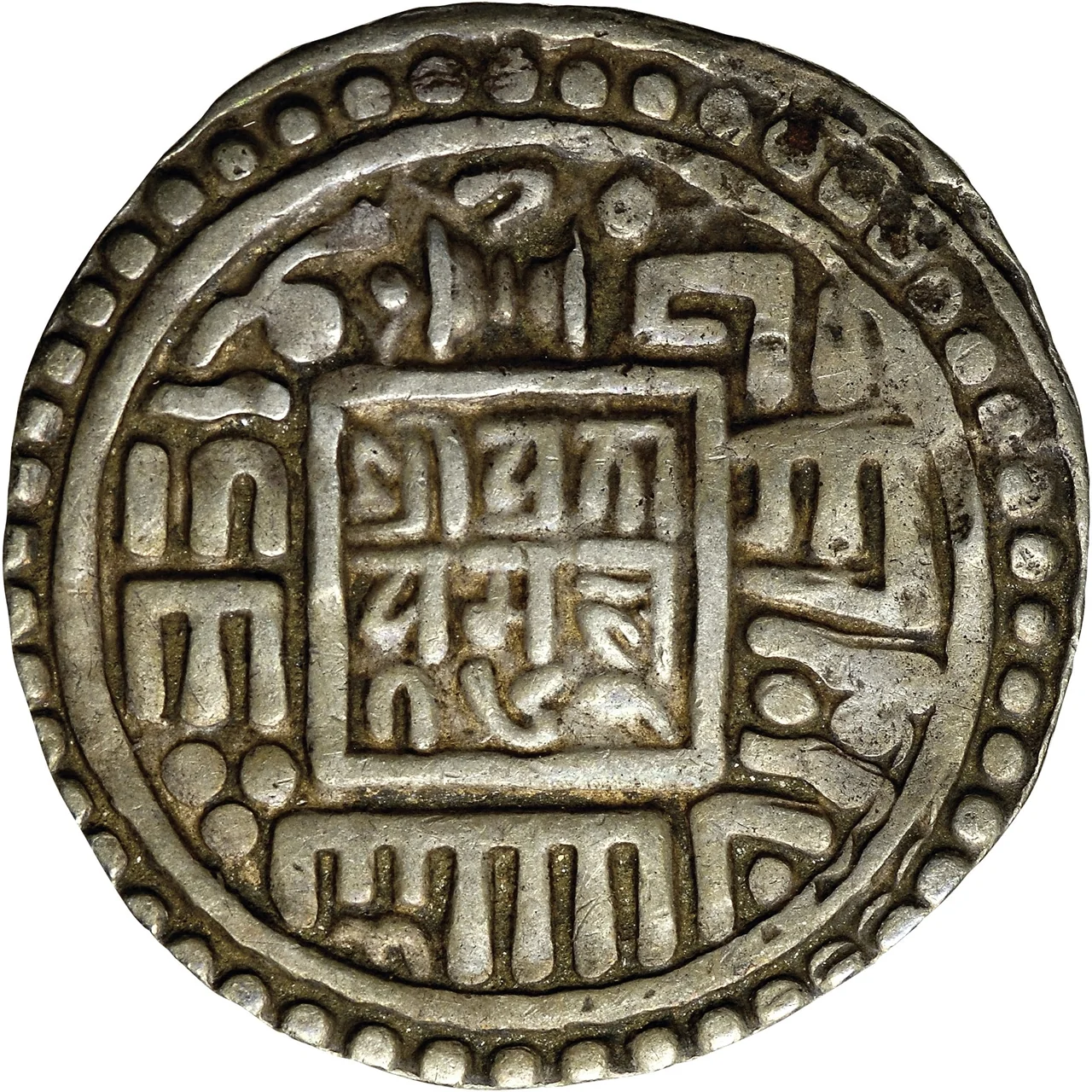
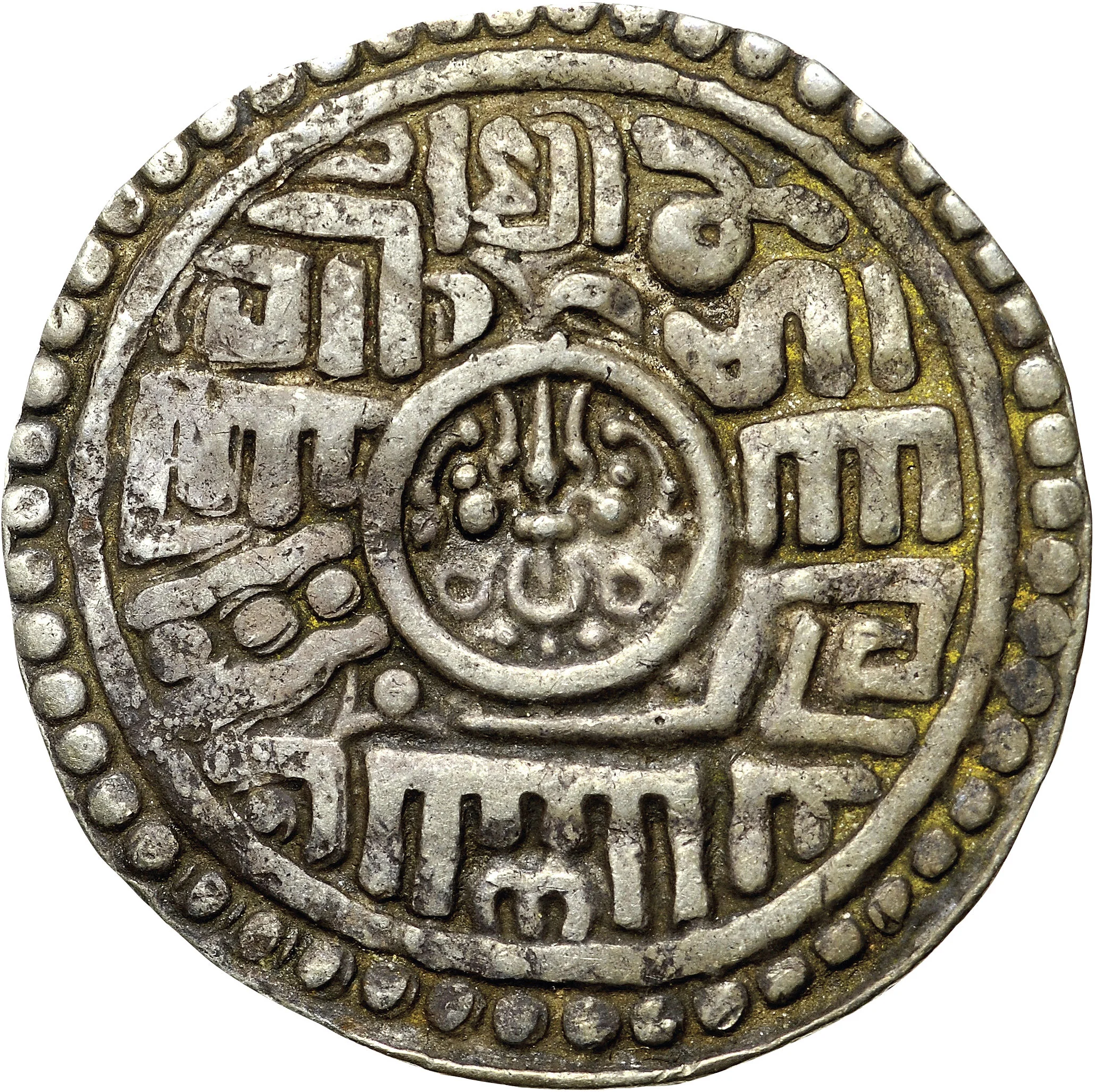
1 Mohar – Kathmandu Kingdom
Nepal
Context
Year: 1641
Nepal Sambat Year: 761
Country: Nepal 
Issuer: Kathmandu Kingdom
Ruler: Pratap Malla
Currency:
(1546—1932)
Demonetized: Yes
Material
References
KM: #Click to copy to clipboard163
Numista: #63052
Value
Bullion value: $15.44
Obverse
Reverse
Edge
Mintings
| Year | Mint Mark | Mintage | Quality | Collection |
|---|---|---|---|---|
| 1641 | — | — |
Historical background
In 1641, the Kathmandu Valley was not a unified kingdom but a constellation of three rival city-states: Kathmandu, Patan, and Bhaktapur, each ruled by its own Malla king. The currency situation was therefore complex and competitive, reflecting both the political fragmentation and the region's vibrant economic life. The primary circulating medium was the Mohar, a silver coin minted independently by each kingdom. These coins bore the symbols and inscriptions of their respective rulers, making them not just economic instruments but also tools of political propaganda and sovereignty. Alongside silver mohars, smaller denominations like dams (copper coins) facilitated everyday market transactions, while gold coins were reserved for state treasuries, large-scale trade, and religious donations.
The monetary system was deeply influenced by the valley's crucial position on the trans-Himalayan trade route between Tibet and India. This brought a steady flow of Tibetan silver and Indian rupees into the bazaars, creating a dynamic multi-currency environment where merchants had to be adept at exchange. The purity and weight of the Malla mohars were generally reliable, establishing trust in regional commerce. However, the lack of standardization between the three mints could lead to subtle variations in value, and the kings occasionally manipulated coinage for seigniorage, debasing the silver content during times of fiscal need to fund their incessant wars and grand building projects.
Despite the political rivalries, the economic interdependence of the three cities fostered a de facto monetary network. Coins from one Malla state often circulated in the others, accepted largely based on their intrinsic silver value. This period also saw the continued use of older, worn coins and even cowrie shells for the smallest transactions, indicating a layered monetary system. Thus, in 1641, the currency situation in the Kathmandu Valley was one of sophisticated fragmentation—a system where competing royal mints, cross-border trade currents, and local market needs created a diverse and resilient economic landscape on the roof of the world.
The monetary system was deeply influenced by the valley's crucial position on the trans-Himalayan trade route between Tibet and India. This brought a steady flow of Tibetan silver and Indian rupees into the bazaars, creating a dynamic multi-currency environment where merchants had to be adept at exchange. The purity and weight of the Malla mohars were generally reliable, establishing trust in regional commerce. However, the lack of standardization between the three mints could lead to subtle variations in value, and the kings occasionally manipulated coinage for seigniorage, debasing the silver content during times of fiscal need to fund their incessant wars and grand building projects.
Despite the political rivalries, the economic interdependence of the three cities fostered a de facto monetary network. Coins from one Malla state often circulated in the others, accepted largely based on their intrinsic silver value. This period also saw the continued use of older, worn coins and even cowrie shells for the smallest transactions, indicating a layered monetary system. Thus, in 1641, the currency situation in the Kathmandu Valley was one of sophisticated fragmentation—a system where competing royal mints, cross-border trade currents, and local market needs created a diverse and resilient economic landscape on the roof of the world.
✨ Legendary