

¼ Mohar – Kathmandu Kingdom
Nepal
Context
Year: 1649
Nepal Sambat Year: 769
Country: Nepal 
Issuer: Kathmandu Kingdom
Ruler: Pratap Malla
Currency:
(1546—1932)
Demonetized: Yes
References
KM: #Click to copy to clipboard169
Numista: #409631
Value
Bullion value: $3.92
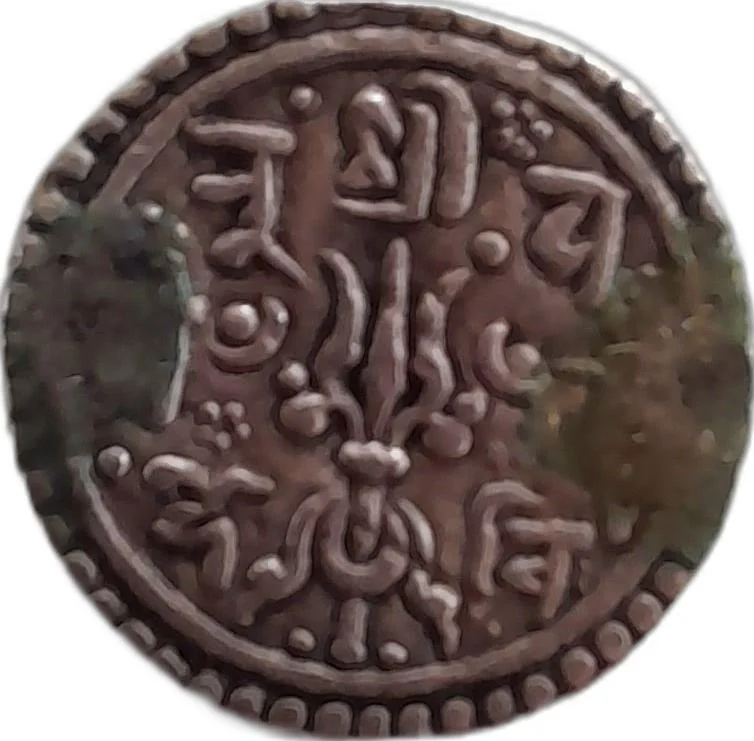
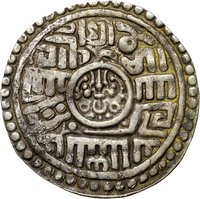
Obverse
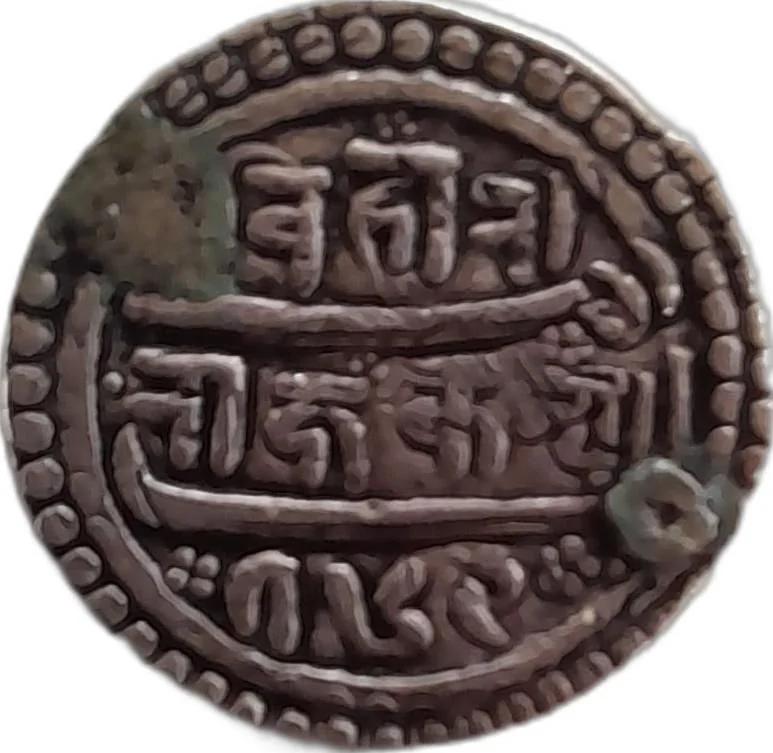
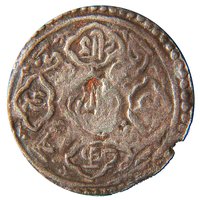
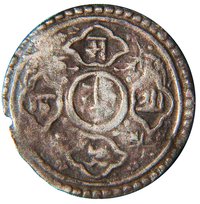
Reverse
Edge
Mintings
| Year | Mint Mark | Mintage | Quality | Collection |
|---|---|---|---|---|
| 1649 | — | — |
Historical background
In 1649, the Kathmandu Kingdom, one of the three rival city-states in the Nepal Valley (alongside Patan and Bhaktapur), operated under a complex and fragmented monetary system. The primary circulating currency was the Mohar, a silver coin minted by each kingdom with its own distinct designs and weights. The Kathmandu Mohar of this period typically bore symbols of the reigning Malla king, Pratap Malla (1641–1674), and Hindu and Buddhist iconography, such as the goddess Kali or the kalasha (vase of plenty). However, the purity and weight of these coins could vary, leading to subtle tensions in trade between the three kingdoms.
The economy was not monetized uniformly; alongside silver Mohars, older debased coins and even cowrie shells served as fractional currency for smaller, everyday transactions. Furthermore, long-distance trade, particularly the critical trans-Himalayan trade between Tibet and India that passed through Kathmandu, introduced foreign currencies into the mix. Tibetan silver tangkas and Mughal Indian rupees were commonly used by merchants, creating a de facto multi-currency environment. The Malla kings actively sought to control and profit from this trade, and coinage was a key tool of royal prestige and economic sovereignty.
Pratap Malla, a shrewd and culturally active ruler, understood the importance of a stable currency for both treasury revenue and commercial prosperity. His reign saw efforts to standardize minting, but the political fragmentation of the Valley prevented a unified monetary standard. Thus, the currency situation in 1649 was one of controlled heterogeneity—a royal coinage asserting local authority, yet pragmatically coexisting with ancient subsistence currencies and the powerful foreign silver flowing along the lucrative trade routes that made the kingdom wealthy.
The economy was not monetized uniformly; alongside silver Mohars, older debased coins and even cowrie shells served as fractional currency for smaller, everyday transactions. Furthermore, long-distance trade, particularly the critical trans-Himalayan trade between Tibet and India that passed through Kathmandu, introduced foreign currencies into the mix. Tibetan silver tangkas and Mughal Indian rupees were commonly used by merchants, creating a de facto multi-currency environment. The Malla kings actively sought to control and profit from this trade, and coinage was a key tool of royal prestige and economic sovereignty.
Pratap Malla, a shrewd and culturally active ruler, understood the importance of a stable currency for both treasury revenue and commercial prosperity. His reign saw efforts to standardize minting, but the political fragmentation of the Valley prevented a unified monetary standard. Thus, the currency situation in 1649 was one of controlled heterogeneity—a royal coinage asserting local authority, yet pragmatically coexisting with ancient subsistence currencies and the powerful foreign silver flowing along the lucrative trade routes that made the kingdom wealthy.
✨ Legendary